Pakistan's energy import dependency increased from 36.7 per cent in FY2024 to 41.1 per cent in FY2025. Petroleum products accounted for a major share of energy imports -- 25 per cent of the total.
PETROLEUM
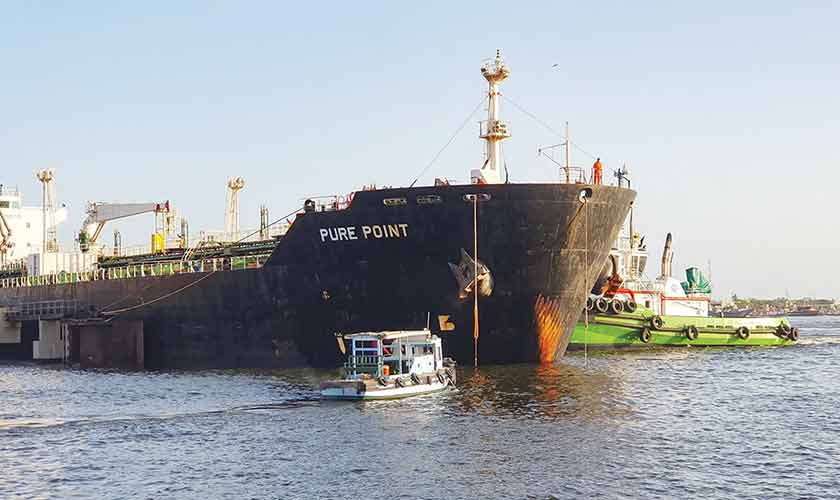
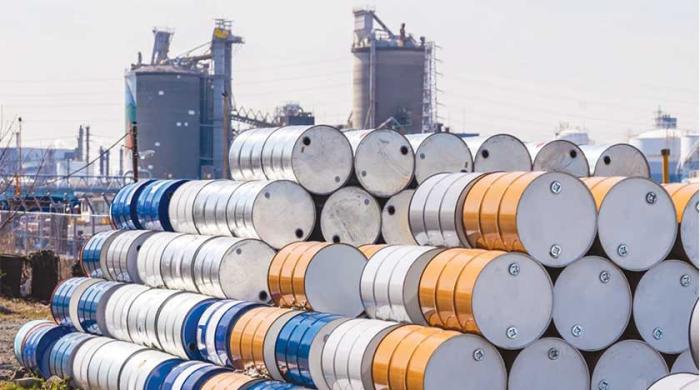
Pakistan's energy import dependency increased from 36.7 per cent in FY2024 to 41.1 per cent in FY2025. Petroleum products accounted for a major share of energy imports -- 25 per cent of the total.
About 49 per cent of petroleum products consumed in the country were imported in FY2025. Although Pakistan's import dependency for crude is even higher, 80 per cent in FY2025, it is cheaper to import crude as compared to refined products (petrol or high-speed diesel (HSD)) due to fundamental differences in shipping physics, supply chain flexibility, and processing costs.
For instance, crude oil is shipped in large tankers that hold over two million barrels, while refined products require smaller, specialised tankers, thereby increasing costs. During extreme market volatility, global shortages of refining capacity led to higher crack spreads (the difference between crude oil and finished fuels). For example, importers of refined products faced crack spreads of over $26 per barrel for petrol and $70 for high-speed diesel (HSD) during the current crisis. In contrast, crude oil importers only pay for the raw feedstock and processing costs. Importing crude allows a country to use its refining infrastructure, keeping added value within its domestic economy and also generating valuable byproducts such as asphalt and lubricants.
As a strategic industry, oil refining both influences and is influenced by global markets. For Pakistan, the refinery sector has significance far beyond fuel production. It lies at the crossroads of energy security, macroeconomic stability, industrial policy, transport logistics, defence preparedness and foreign exchange management. It can improve energy supply and stimulate economic activity across various sectors.
Pakistan has five refineries with a total annual refining capacity of 20.22 million tons. However, the utilisation has remained below 60 per cent over the last few years (55 per cent in FY2025). The status of Pakistan's refinery sector can best be described as having sufficient installed capacity but facing efficiency issues due to outdated technology, limiting its strategic value. These refineries are low-complexity hydro-skimming units that produce excessive furnace oil (FO), a fuel with declining local demand.
During the Iran-US war and the resultant disruptions in the Strait of Hormuz, Pakistan's refineries increased utilisation to nearly 80–100 per cent, raising their throughput significantly. This surge helped alleviate fuel shortages and reduce imports of HSD and petrol during the crisis. Support also came from alternative crude sourcing routes, such as Fujairah and Yanbu, and from temporary restrictions on FO exports, which encouraged higher local production.
PARCO is relatively the most advanced refinery, featuring diesel hydrodesulfurization (DHDS) units that produce low-sulfur, Euro-III-compliant HSD, with a 44.2 per cent market share in FY25. However, it cannot produce Euro-V-compliant products. While other refineries (except PRL) have also upgraded to some extent to DHDS technology, overall local production of high-value transport fuels remains limited. As a result, Pakistan imports about 70 per cent of its petrol and 29 per cent of its diesel from Gulf producers. Crude oil supplies may be available, but refinery inefficiencies force reliance on imported fuels, leaving the economy vulnerable.
On the other hand, Pakistan's refinery sector has remained under severe financial stress over the last few years due to declining FO demand in the power sector, with gross profit margins falling sharply from around 12 per cent in FY2022 to nearly 2.0 per cent in FY2025. The war stress-tested the system, proving that utilisation can rise and their profit margins also increase, but structural weaknesses remain unchanged.
Global experience shows that refinery modernisation succeeds best when backed by clear, time-bound government incentives and consistent policies. For example, India became a major exporter of refined products, while South Korea promoted cleaner fuels through tax and regulatory support
Increased refinery utilisation during the war is unsustainable due to outdated hydro-skimming technology and structural constraints that limit the production of high-demand fuels; higher throughput produces large quantities of unwanted FO. Operating continuously at high utilisation also increases maintenance costs, financial pressures, and operational risks for already-weak refineries, making long-term crisis-level production challenging. To improve energy resilience and reduce vulnerability to supply disruptions, modernisation with deep conversion units is essential.
Pakistan's refining sector lags significantly behind major regional competitors, such as India, South Korea and China, in terms of complexity, conversion capability, and product optimisation. For instance, Indian refineries generally maintain utilisation levels above 90 per cent, supported by integrated petrochemical chains, export capacity and flexible refining configurations.
The efficiency-complexity gap affects the flexibility of crude sourcing. For example, advanced Indian refineries can process a diverse range of grades, while Pakistan's refineries rely on lighter Gulf blends and struggle with alternatives such as Russian Urals crude. Another difference is in export competitiveness. India exports a range of refined petroleum products, while Pakistan mostly exports low-value FO and imports expensive petrol and high-speed diesel, reflecting limited value addition.
Pakistan's refining sector faces a ‘low-complexity trap’, where installed capacity exists, but technological limitations hinder efficiency and flexibility. While regional competitors have moved towards advanced deep conversion and petrochemical-integrated refining models. As a result, Pakistan's refineries offer limited energy security compared to those in more competitive systems elsewhere.
Recognising the significance of refinery upgrades, the government announced a Brownfield Refinery Policy in 2023, after four years of negotiations. But it has yet to be implemented. The policy is a strategic initiative driving a $6 billion modernisation of the ageing refineries. With tariff protections, duty-free imports of upgrading equipment, and escrow accounts managed by Ogra, this policy, once implemented, will eliminate outdated FO production by around 80 per cent, almost double petrol output, and increase diesel production by 47 per cent, significantly reducing import bills. Transitioning to deep-conversion technology will ensure compliance with Euro-V environmental standards, enhancing urban air quality, and structurally protecting the country's transport and supply chains from volatile global import shocks.
However, despite these strategic gains, refineries have delayed investments in upgradation projects due to severe financial headwinds stemming from tax-policy uncertainty and sales tax exemptions on petroleum products, which prevent them from reclaiming input taxes on heavy machinery.
The current government, following the recent crisis, has acknowledged the need to modernise refineries and is showing commitment to addressing tax and policy obstacles that have stalled upgrade projects. In addition to tax relief, investor confidence ultimately relies on overall policy stability, which must be guaranteed if the government is truly committed to implementing this policy.
Global experience shows that refinery modernisation succeeds best when backed by clear, time-bound government incentives and consistent policies. For example, India became a major exporter of refined products, while South Korea promoted cleaner fuels through tax and regulatory support.
Finally, the rise in electric vehicles has raised questions about the relevance of refineries. However, this view overlooks the broader role of modern refining. Beyond transport fuels, refineries supply feedstocks for petrochemicals, aviation, industry, construction, and numerous manufacturing sectors. The challenge is in transforming them into cleaner, more integrated, and technologically advanced industrial hubs capable of supporting both energy security and economic growth in a low-carbon future.
The writer is an economist and researcher with expertise in the energy sector, based in Islamabad.