Pakistan's ongoing engagement with the IMF is at a pivotal juncture. The completion of the third review under the 37-month Extended Fund Facility in May 2026, unlocking approximately $1.3 billion in combined disbursements under the EFF and the Resilience and Sustainability Facility, has been widely described as a validation of reform progress.
IMF PROGRAMME
Pakistan's ongoing engagement with the IMF is at a pivotal juncture. The completion of the third review under the 37-month Extended Fund Facility in May 2026, unlocking approximately $1.3 billion in combined disbursements under the EFF and the Resilience and Sustainability Facility, has been widely described as a validation of reform progress.
The IMF's own assessment acknowledges real gains: GDP growth has accelerated, inflation has been relatively contained, and Pakistan has recorded a primary fiscal surplus for the first time in years. Yet beneath this headline stability lies a more complicated reality. The structural reforms on which durable recovery depends remain incomplete, revenue collection has consistently underperformed its targets, and the burden of adjustment has fallen unevenly across the economy.
The $7 billion EFF, approved in September 2024, was built around four reform pillars: entrenching macroeconomic stability, broadening the tax base, restoring energy sector viability, and strengthening governance and social protection. A supplementary $1.4 billion Resilience and Sustainability Facility, focused on climate adaptation, reflects Pakistan's acute exposure to floods and extreme weather. Total IMF-related financing now stands at approximately $8.4 billion, of which around $4.5 billion has been disbursed. Meeting the conditions attached to remaining tranches will require sustained discipline in areas where political will has historically been the binding constraint.
The headline fiscal numbers reflect a genuine effort. A primary surplus of 1.3 per cent of GDP was achieved in FY2025, and the FY2026 primary surplus is projected at 1.6 per cent of GDP, both in line with programme targets. The current account moved into surplus for the first time in fourteen years, and foreign exchange reserves have been rebuilt from critically low levels.
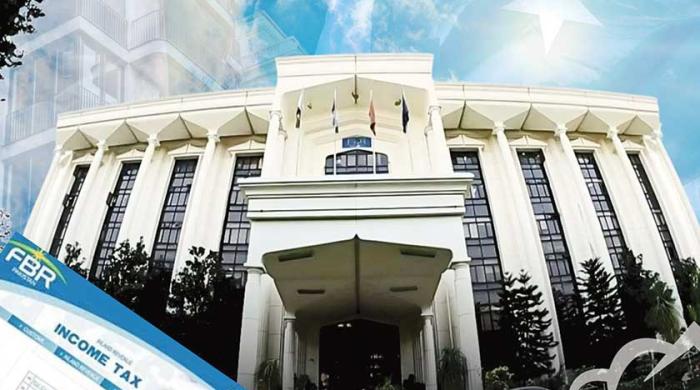
However, the FBR's persistent revenue shortfall cannot be minimised. The original FY2026 tax collection target of Rs14.13 trillion was revised down twice -- first to Rs13.97 trillion and then to approximately Rs13.45 trillion, reflecting a projected tax-to-GDP ratio of 10.6 per cent against a programme commitment of 11 per cent. In the first ten months of FY2026, the accumulated shortfall exceeded Rs683 billion against even the revised targets. Income and sales tax collections are growing at roughly half the rates required. The FBR transformation plan, covering stronger taxpayer audits, digital invoicing, and improved internal governance, is underway, but institutional change within the revenue authority has not kept pace with the scale of the collection challenge.
Pakistan's narrow tax base remains the single most important structural obstacle to fiscal sustainability. Large segments of the economy -- agriculture, retail, real estate, and significant portions of the services sector -- either fall outside the tax net or are taxed at concessionary rates bearing little relation to income earned. For FY2027, Pakistan has committed to targeting a primary balance of 2.0 per cent of GDP, supported by base-broadening measures and expanded spending on health, education, and social protection. The FBR revenue target for FY2027 stands at Rs15.56 trillion, requiring approximately 19 per cent growth over a base that is itself expected to fall short. Business representatives have called for budget targets grounded in economic reality rather than optimistic projections.
The FBR transformation plan, covering stronger taxpayer audits, digital invoicing, and improved internal governance, is underway, but institutional change within the revenue authority has not kept pace with the scale of the collection challenge
Agricultural income tax is one area where structural reform has recently advanced. Provinces amended their legislation to align with federal rules, with implementation beginning in January 2025. The newly established Tax Policy Office is now developing a medium-term tax reform strategy. Whether it receives the mandate and independence required to produce credible reform sequencing will be an important test of institutional seriousness.
Pakistan's power sector circular debt and the high cost of electricity remain among the most damaging structural problems in the economy. The government has introduced a Captive Power Plant levy to reduce gas subsidies to industrial users, scheduled to reach 20 per cent by August 2026. These are necessary steps, but their short-term effect is to raise manufacturing costs at a time when exporters already face serious competitiveness pressures. Unless inefficiencies in generation, transmission, and distribution are addressed structurally, tariff increases alone will not resolve circular debt; they will simply pass its costs onto industry and consumers.
Progress on structural benchmarks has been mixed. Nine benchmarks were met across earlier reviews, including the National Fiscal Pact and improvements to monetary policy safeguards. However, a continuous benchmark prohibiting tax amnesties was breached through concessions on sugar imports, and amendments to the Civil Servants Act and the Sovereign Wealth Fund Act were delayed. Each deviation, however contextually justifiable, erodes the signal of reform credibility the programme is intended to send to investors and creditors. Looking ahead, Pakistan's commitments include publishing a three- to five-year tax reform strategy, completing at least three priority FBR effectiveness reforms, and publishing senior civil servants' asset declarations. These are governance-oriented tests that go beyond fiscal arithmetic.
Five practical measures are essential. First, the FBR transformation must be accelerated with genuine institutional autonomy and transparent accountability for shortfalls. Second, the tax base must be broadened through the credible implementation of an agricultural income tax, the rationalisation of exemptions in retail and real estate, and the use of third-party digital data to capture undocumented income. Third, energy sector reform must address structural inefficiencies, not merely pass costs to industry through tariff increases. Fourth, federal-provincial coordination under the National Fiscal Pact must move from framework to operational reality. Fifth, the Tax Policy Office must be empowered to produce sequenced, publicly consulted tax reform, not simply an IMF reporting exercise.
Pakistan has achieved real macroeconomic stabilisation under its IMF programme, and that achievement should not be understated. But stabilisation is not reform and reform is not yet transformation. Three completed EFF reviews and $4.5 billion in disbursements represent confidence extended on the basis of demonstrated commitment. Whether that commitment now extends to the harder structural work, broadening the tax base, reforming energy and building genuinely autonomous revenue institutions, will determine whether Pakistan exits this programme on a durable growth path or returns, as it has before, to the precarious cycle of crisis and IMF support.
The cost of the latter will not be borne by policymakers. It will be borne by the businesses, workers and households who carry the heaviest burden of economic instability.
The writer is an advocate of the high court and a tax consultant.