Pakistan’s FY2026–27 budget risks deepening one of the country’s most dangerous economic contradictions: attempting to restore fiscal stability by intensifying taxation on the very sectors needed to generate investment, exports and long-term growth. That contradiction increasingly defines Pakistan’s economic predicament.
TAX REFORMS
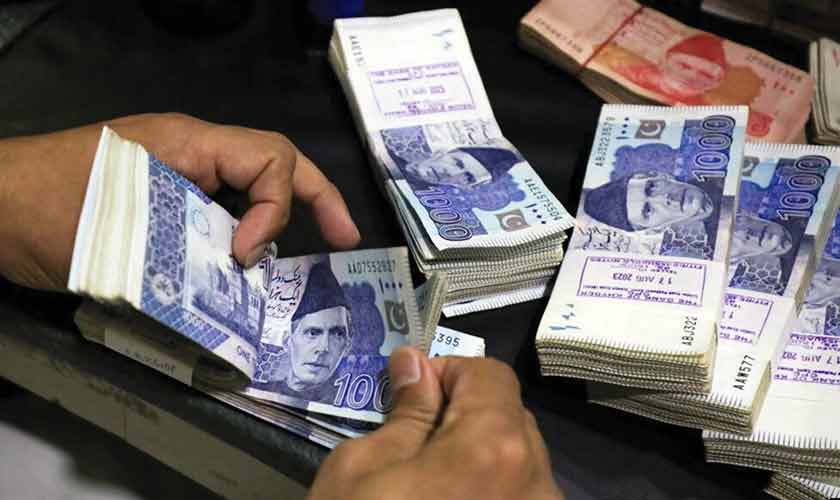
Pakistan’s FY2026–27 budget risks deepening one of the country’s most dangerous economic contradictions: attempting to restore fiscal stability by intensifying taxation on the very sectors needed to generate investment, exports and long-term growth. That contradiction increasingly defines Pakistan’s economic predicament.
That contradiction increasingly defines Pakistan’s economic predicament.
Over the past two years, the government has achieved a degree of macroeconomic stabilisation. Inflation has moderated from crisis levels, foreign exchange reserves have improved, the current-account deficit has narrowed, and immediate default fears have receded. Yet stabilisation alone does not constitute recovery in an economy still constrained by weak investment, low productivity and fragile private-sector confidence.
The deeper structural indicators remain troubling. Pakistan’s investment-to-GDP ratio remains stuck near 14 per cent, savings rates continue to weaken, exports remain vulnerable and economic growth remains insufficient to generate adequate employment opportunities for the country’s rapidly expanding youth population. No major Asian economy has historically achieved a durable middle-income transformation with investment rates persistently this low.
Yet rather than using this period of relative stability to accelerate structural reform, the state increasingly appears to be relying on intensified extraction.
The IMF-backed fiscal framework for FY2026–27 clearly reflects this. Pakistan has agreed to additional taxation and enforcement measures amounting to hundreds of billions of rupees, alongside a petroleum levy target approaching Rs1.73 trillion and an FBR revenue target exceeding Rs15 trillion. Provincial governments have likewise been tasked with mobilising over Rs400 billion in additional revenues through expanded taxation of services, agriculture and real estate.
The rationale behind this strategy is understandable. Pakistan’s fiscal position remains fragile, debt servicing consumes an overwhelming share of revenues, and repeated tax shortfalls have steadily eroded credibility with external lenders. The IMF therefore prioritises fiscal consolidation, reserve accumulation and macroeconomic discipline.
But fiscal consolidation without growth eventually becomes self-defeating.
Pakistan increasingly taxes visibility rather than prosperity. Salaried households, exporters, organised retailers and documented firms remain the easiest targets within an exceptionally narrow tax base, while large segments of wealth, land and informal economic activity continue to escape meaningful enforcement. Withholding and presumptive taxation now account for the overwhelming majority of federal revenue collection, effectively transforming advance extraction into a substitute for genuine tax reform.
The issue is not taxation itself. Functional states require revenue. The problem is the structure, predictability and credibility of Pakistan’s tax regime. Businesses make long-term investment decisions not merely on headline tax rates, but on confidence that policy will remain coherent, commercially rational and institutionally stable.
Pakistan’s present tax environment often sends the opposite signal.
The continuation of super taxes, extensive withholding regimes, turnover-based taxation, and exceptionally high effective energy taxation collectively weakens competitiveness and discourages reinvestment. Export-oriented industries repeatedly argue that Pakistan’s cumulative tax and energy burden now exceeds that of many regional competitors. Whether every industry estimate is entirely accurate is less important than the broader reality it reflects: investor confidence remains subdued because the private sector still does not perceive Pakistan’s economic environment as predictably growth-oriented.
The objective of fiscal policy cannot merely be extracting larger revenues from an already constrained economy. It must be creating the institutional conditions from which sustainable revenues naturally emerge: investment, productivity, formalisation and trust
Petroleum levies have quietly evolved into a parallel taxation regime compensating for weaknesses elsewhere in the fiscal structure. Yet excessive dependence on fuel taxation directly feeds into transportation costs, food inflation, industrial input prices, and household affordability, effectively transmitting fiscal stress across the wider economy.
This is particularly dangerous at a moment of heightened geopolitical uncertainty. Continued instability in the Middle East, especially surrounding Iran and Gulf energy routes, exposes Pakistan’s structural external vulnerabilities. The country remains heavily dependent on imported energy, Gulf remittances and short-term external financing. A sustained regional shock could rapidly destabilise inflation assumptions and fiscal calculations underpinning the budget itself.
The IMF increasingly recognises these trade-offs. Its recent guidance on global energy shocks argues that governments should focus on protecting vulnerable households through targeted support mechanisms rather than broad subsidies or artificial price suppression. Economically, that position is difficult to dispute. Blanket subsidies are fiscally unsustainable for heavily indebted emerging markets with limited fiscal space.
But Pakistan’s challenge extends beyond fiscal arithmetic. The deeper issue is institutional credibility and tax fairness.
Citizens are far more willing to tolerate difficult economic adjustments when they believe the burden is being distributed equitably. At present, many taxpayers increasingly perceive the opposite. The documented economy feels persistently overburdened while politically protected sectors remain comparatively insulated. IMF assessments themselves note the stark imbalance between heavily taxed petroleum consumption and extremely low effective taxation in sectors such as agriculture, despite their substantial contribution to economic activity.
Pakistan’s fiscal federalism structure has further complicated adjustment efforts. Since the expansion of provincial resource shares under the NFC framework, provinces have accumulated greater fiscal space, yet often underperform in revenue mobilisation across agriculture, services, and property taxation. The result is a structurally imbalanced system in which Islamabad bears disproportionate responsibility for macroeconomic stabilisation while revenue authority remains fragmented across multiple layers of government.
Here, Greece’s post-crisis recovery offers an important lesson. Fiscal rehabilitation did not emerge from taxation alone but from intelligently sequenced reforms: stabilisation first, institutional autonomy second and digital transformation third. Compliance improved not simply because enforcement intensified, but because institutional credibility strengthened. Pakistan often attempts the reverse approach, intensifying enforcement before building legitimacy.
Digital surveillance, banking scrutiny and increasingly aggressive enforcement mechanisms may improve short-term collection figures, but sustainable compliance ultimately depends on trust in institutions, consistency in policymaking, and confidence that taxation is linked to public value rather than to perpetual crisis management.
The broader risk is that Pakistan drifts into a low-growth, high-tax equilibrium: an economy periodically stabilised through external financing and emergency adjustment, yet unable to generate the investment, productivity and export dynamism necessary for durable prosperity.
Pakistan, therefore, faces a critical strategic choice. It can continue operating within recurring cycles of stabilisation and extraction. Or it can pursue the more difficult -- but ultimately more sustainable -- path centred on institutional reform, tax rationalisation, investment expansion, export competitiveness and broader formalisation.
The objective of fiscal policy cannot merely be extracting larger revenues from an already constrained economy. It must be creating the institutional conditions from which sustainable revenues naturally emerge: investment, productivity, formalisation and trust.
No state can sustainably tax prosperity into existence while simultaneously discouraging the conditions required to create prosperity in the first place.
The writer is a senior lecturer in finance, leading apprenticeships and partnerships at Birmingham City’s Business School. He posts on LinkedIn @dr-hafiz-muhammad-usman-rana