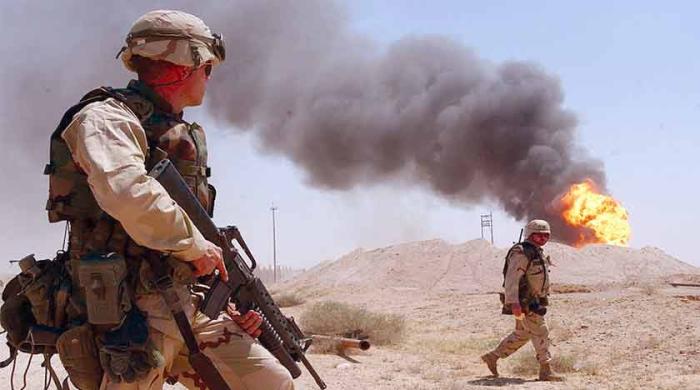
Recent global developments -- particularly war-related supply disruptions, the suspension of deliveries by QatarEnergy and the declaration of force majeure by international traders such as Vitol -- have exposed serious weaknesses in Pakistan’s LNG framework. While the entire system warrants a comprehensive overhaul, it is important to examine the issue holistically across the full contractual chain.
LNG CONTRACTS
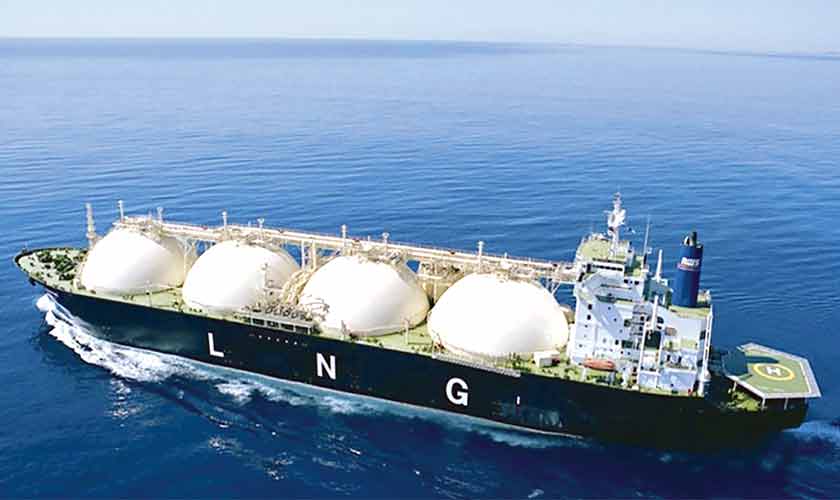
Recent global developments -- particularly war-related supply disruptions, the suspension of deliveries by QatarEnergy and the declaration of force majeure by international traders such as Vitol -- have exposed serious weaknesses in Pakistan’s LNG framework. While the entire system warrants a comprehensive overhaul, it is important to examine the issue holistically across the full contractual chain.
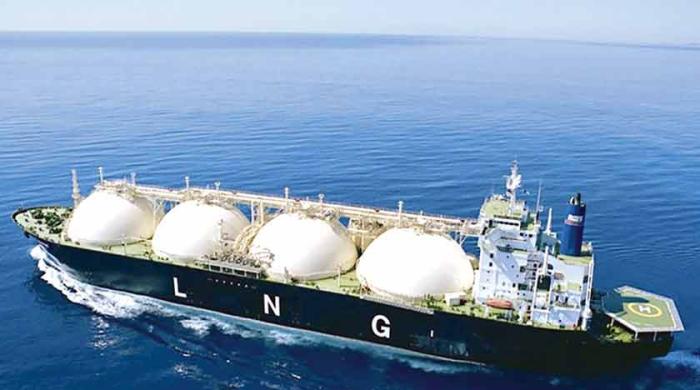
This includes long-term government-to-government supply agreements, procurements by Pakistan LNG Limited (PLL) and Pakistan State Oil (PSO), as well as terminal use agreements with private operators such as Engro Elengy Terminal and Pakistan GasPort Consortium.
Pakistan is bound by ‘take-or-pay’ agreements under which payments must be made to LNG terminals operating companies even if cargo does not arrive or facilities are not fully utilised. In contrast, international markets increasingly use more flexible ‘use-it-or-pay-less’ structures. For example, terminals like Gate Terminal in the Netherlands and Isle of Grain LNG Terminal in the UK link a significant portion of payments to actual usage or allow capacity resale. In Pakistan’s case, however, the overwhelming share of risk has been shifted onto the public.
A critical issue lies in the evolution of Pakistan’s LNG agreements. Earlier long-term arrangements, particularly government-to-government contracts, offered better alignment between supply and payment obligations, with some protection in the event of non-delivery. However, many later agreements, especially those involving spot cargoes and intermediary traders, weakened this alignment. In these structures, a supplier’s declaration of force majeure does not necessarily result in relief from Pakistan’s downstream obligations.
Similarly, earlier frameworks showed a comparatively better linkage between terminal utilisation and payments, whereas later arrangements, although they had better headline prices politically/economically and secured additional supply, were more rigid in volumes and had a weaker institutional counterparty, PLL, rather than PSO with a stronger balance sheet. Regardless, both contracts lack strong linkage to terminal/payment flexibility and increasingly locked Pakistan into rigid capacity payments regardless of actual throughput. While neither model fully meets global best practices, the later agreements -- due to greater rigidity and weaker risk pass-through -- are more disadvantageous.
Although force majeure clauses exist in contracts, they are not operationally effective because they are not implemented on a “back-to-back” basis across the supply chain. If an upstream supplier declares force majeure, the benefit is not automatically transmitted downstream. In contrast, global LNG players such as Shell and TotalEnergies structure contracts where force majeure provisions are more symmetrical, clearly defined, and enforceable across the chain. As a result, Pakistan continues to bear financial burdens even in times of war or crisis.
Private terminal operators in Pakistan are guaranteed profits in dollars and are largely insulated from operational and market risks. Internationally, payments are often linked to performance or actual utilisation, but in Pakistan, profits are privatised while risks are borne by the national exchequer, in reality, by the people of Pakistan. Readers must be recalling the IPP-related contractual issues the nation is still suffering from. It looks like these agreements were concluded in desperation, haste, without skilful negotiation and with politics above national interest and corruption; perhaps most or all of these factors were at work.
Pakistan also suffers from a lack of strategic flexibility. Cargoes cannot be easily cancelled, suppliers cannot be readily switched and volumes cannot be quickly adjusted. Globally, buyers maintain flexibility through diversified sourcing, spot markets, and portfolio contracts, whereas Pakistan remains locked into a rigid and constrained system.
Pakistan can consider a model of structured competition among public sector entities, drawing lessons from China’s state-led energy framework. In China, companies such as China National Petroleum Corporation, China Petroleum & Chemical Corporation and CNOOC Limited operate as separate commercial players
These contracts are governed under foreign laws, with disputes subject to international arbitration. This limits Pakistan’s policy space and increases exposure to significant financial penalties.
If Pakistan’s parliament truly represents the people, it must immediately undertake a comprehensive review of all LNG agreements through its committees, across the supply chain. There is a need to ensure fair risk-sharing, introduce flexible “use-it-or-pay-less” mechanisms, and make force majeure provisions effective through proper back-to-back structuring. LNG procurement must become more diversified and commercially flexible and all agreements should be presented transparently to the public.
The more likely course available at this time is through negotiations. However, for any future agreements/contracts, a thorough, transparent process must be adopted. Otherwise, the burden will continue to fall on the people while decision-makers evade accountability.
As Pakistan considers moving toward LNG market liberalisation, it must proceed with caution. While liberalised markets offer competition, flexibility, and access to diverse supply sources, introducing them into a structurally rigid and fragmented system could worsen existing inefficiencies. Without reforming legacy contracts, aligning risk across the supply chain and strengthening regulatory capacity, liberalisation may simply transfer risk from the state to weaker domestic players while exposing the country to greater price volatility. True reform lies not just in opening the market, but in correcting its foundations.
As Pakistan considers moving towards LNG market liberalisation, it must proceed with caution. While liberalised markets offer competition, flexibility, and access to diverse supply sources, introducing them into a structurally rigid and fragmented system could worsen existing inefficiencies. Without reforming legacy contracts, aligning risk across the supply chain, and strengthening regulatory capacity, liberalisation may simply transfer risk from the state to weaker domestic players while exposing the country to greater price volatility. True reform lies not just in opening the market, but in correcting its foundations.
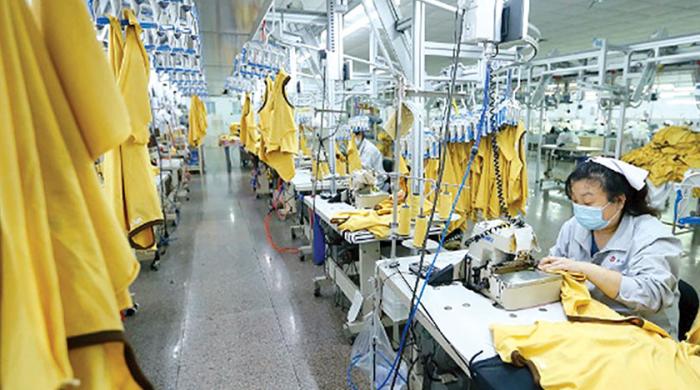
Pakistan can consider a model of structured competition among public sector entities, drawing lessons from China’s state-led energy framework. In China, companies such as China National Petroleum Corporation, China Petroleum & Chemical Corporation and CNOOC Limited operate as separate commercial players, competing in procurement and efficiency, yet functioning within a unified national strategy and under strong state coordination. This approach creates internal performance pressure while ensuring that national energy security and risk management remain centrally controlled.
Another model, close to what is practised in China, where state entities CNPC, Sinopec and CNOOC Limited compete in procurement, pricing and efficiency, but within a national strategy framework. It is a managed competition rather than liberalisation. It can be adapted for Pakistan by allowing entities like Pakistan State Oil and Pakistan LNG Limited to operate in parallel under clearly defined rules, with transparent benchmarking of pricing, reliability, and contract quality. However, such competition must be carefully managed through strong regulatory oversight, harmonised contractual frameworks and coordinated infrastructure access. Without these safeguards, competition could lead to fragmentation and increased risk; with them, it can drive efficiency while preserving national interest.
These are not merely technical issues; it is a question of economic justice. When profits are guaranteed in dollars while losses are borne by the Pakistani public, this is not a functioning market but a transfer of risk from the powerful to the people. Pakistan must move towards a framework in which contracts are fair, risks are shared and the national interest remains paramount.
The writer is a freelance contributor.