During Ramazan, a few minutes before Maghrib, the hunger feels sharper, cravings are at their peak, the throat feels dry, the air and aroma in the house carry a quiet kind of anticipation.
RAMAZAN SPENDING
During Ramazan, a few minutes before Maghrib, the hunger feels sharper, cravings are at their peak, the throat feels dry, the air and aroma in the house carry a quiet kind of anticipation.
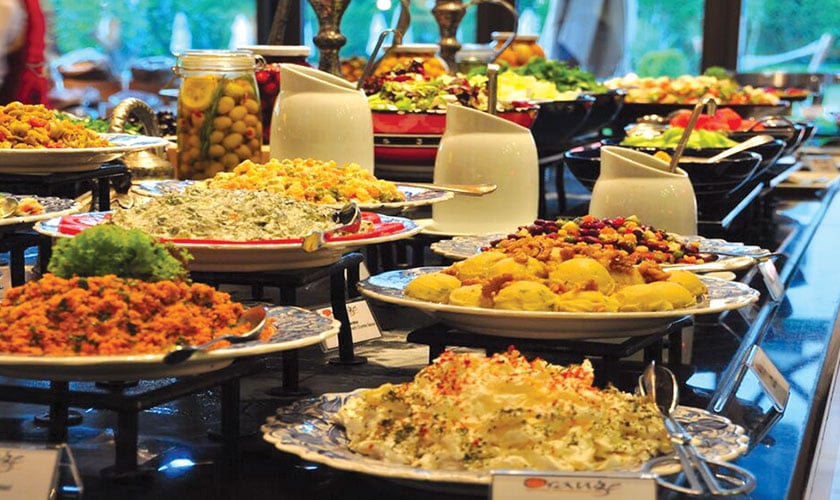
But in many Muslim homes, another ritual has joined these during Ramazan: young people reach for their phones, not to check the time, not to read a prayer, but to scroll. A glossy Instagram reel appears. A restaurant buffet, a camera glides over kebabs, desserts, karahi, naan, fruit chaats, drinks and platters arranged like luxury. A voice calls it “Worth it!” another calls it “The best Iftar in town!”
A new survey from Islamabad and Rawalpindi finds that food influencers and Instagram reels spark desire, but price and value still decide where young Pakistanis break their fast. And just like that, the question of where to break the fast is no longer only a family decision; it is also a digital one. The survey suggests that Instagram food vlogging has become a significant way for young people to discover Iftar buffets. The findings also show that Pakistani youth remain firmly grounded in reality when it comes to buffet spending. Price, variety, and value still dominate the final decision.
According to the survey data I collected, 94.7 per cent of respondents said they use Instagram and 73.6 per cent said they use it several times a day. This level of daily exposure matters. Nonetheless, only 33.6 per cent of respondents said they trust food-vlogging Instagram influencers, and their posts significantly influence their decision to try a specific Iftar buffet.
Influencers may shape attention, but they do not shape the final verdict. If Instagram and food content are everywhere, why does the trust remain limited? This is where the story becomes more investigative than celebratory. Young audiences may be watching, but many do not fully believe. Global scholarship supports this pattern. Studies show that influencer impact depends on credibility and perceived authenticity, not just popularity or visibility.
In the Ramazan economy, when restaurant prices can be inflated and dining out is a luxury for many in Pakistan, scepticism is not only rational; it is also protective. Nearly four out of five respondents stayed within the Rs1000-3000 range. Even when Instagram sells the fantasy of luxury, the public still negotiates with inflation, salaries,and household constraints. The reel may be cinematic, but the economy is not.
Eighty-six per cent of respondents agree that Iftar buffets have become popular due to social media. This suggests that Instagram’s greatest influence may not be financial but cultural. In major cities across the Middle East, Southeast Asia, and North Africa, and in diaspora communities in Europe and North America, Ramazan has increasingly become a season of online display. Iftar spreads are photographed, edited, and posted. Restaurants compete through visuals. Yet Pakistan carries a sharper edge.
For society, the question is larger and more sensitive. For influencers, the findings raise questions of ethics and responsibility. Audiences are increasingly aware of paid promotions, exaggeration, and selective storytelling. The research delivers a direct message to restaurants; that influencer marketing may bring attention, but it will not save a poor offering. When the act of breaking the fast becomes a luxury reel, what happens to the spirit of simplicity that Ramadan teaches?
Is it really worth it? Young Pakistanis are neither naive nor easily controlled. They are curious, digitally active and visually driven, yet remain careful and sceptical.
Behind every reel is a real person, behind every buffet is a budget, and behind every Iftar is a hunger that is not only physical but also moral. Ramazan in urban Pakistan is experienced less at dining tables and more on screens. Ramazan has always been more than a meal; it is a month where faith softens the heart, hunger sharpens gratitude and the tables become a place of community and togetherness.
Still, beneath the commercial goals of social media, influencers and restaurants, the young people may be tempted by narratives, but they are not easily fooled by them. This is not just consumer behaviour: reels may introduce the buffet, but the real decision is still made with careful thought and that, perhaps, is where religious tradition quietly endures.
The writer is a media
officer at the Pakistan
Institute of Development Economics (PIDE).
He can be reached at: [email protected]
Even when Instagram sells the fantasy of luxury, the public still negotiates with inflation, salaries,and household constraints. The reel may be cinematic, but the economy is not