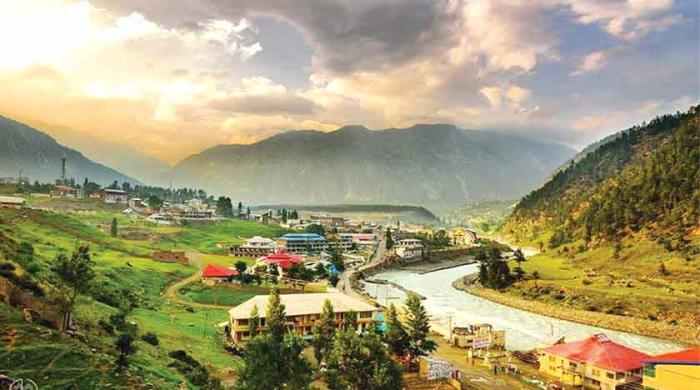
Pakistan does not need a fresh lesson in digital hustle. It already has millions of people earning from laptops for clients they may never meet. AI is giving many of them a path out of pure service work and into ownership.
FREELANCE INDUSTRY
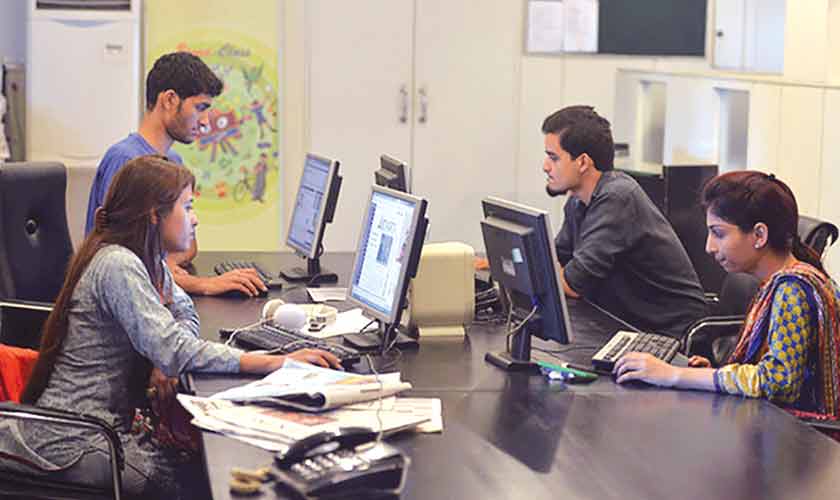
Pakistan does not need a fresh lesson in digital hustle. It already has millions of people earning from laptops for clients they may never meet. AI is giving many of them a path out of pure service work and into ownership.
The numbers show why this matters. Pakistan-based freelancers brought in $400 million during the first nine months of the 2025 financial year, and ICT exports reached $2.825 billion in the same July to March period. By March 2025, more than 30,000 IT and ITeS companies were registered in the country.
That is already a meaningful digital economy. Yet the bigger story is that AI can help turn a large freelance market into a builder economy for more people to create products, software tools, and companies of their own.
Pakistan has already secured a serious place in global digital labour. Payment infrastructure leaders rank it fourth globally for software development and technology freelancing. Industry observers has long described the country as one of the world’s major freelance talent pools.
Still, scale alone does not create leverage. Many freelancers still operate within discrete project cycles that generate income but offer limited scope for recurring revenue, brand equity or long-term enterprise value.
Here, AI starts to alter the equation. A 2025 study of 4,867 developers, conducted with participants from Microsoft and Accenture among others, found that access to GitHub Copilot increased completed tasks by 26.08 per cent in ordinary business settings. The strongest gains were found among less experienced and more junior developers. This especially matters in a market like Pakistan, where young digital talent is entering global work at scale.
The effect is not limited to coding. For a freelancer or a three-person remote team, tools that speed up execution can expand the kinds of businesses possible. A solo developer can ship a stronger prototype in days. A marketer can test more campaigns in the same week. A designer can move from first concept to polished draft at a speed that used to belong to larger agencies.
The old freelance model rewards availability and speed, while the next one rewards ownership. People who have spent years solving the same client problems are now better positioned to turn that experience into niche software products, AI-enabled automation services and remote-first ventures with recurring revenue models.
The country’s most interesting startup story may not begin with a venture-backed founder in a major capital. It may begin with a freelancer in Lahore, Karachi, Islamabad or Faisalabad
This matters because AI lowers the cost of experimentation. Code, support scripts, landing pages, product copy, onboarding flows and internal documentation can all be built faster than before. A freelancer who once sold the same fix again and again can now package that knowledge into something that scales.
The concern is well-founded. The harder problem is friction. Pakistan’s digital workers have already shown they can win clients abroad. But can they build consistently in an environment with connectivity issues and payment bottlenecks that still slow them down?
The concern has proved to be real. Internet disruptions were damaging freelancer productivity, client trust, and the wider digital economy, with industry estimates suggesting losses of up to $300 million. When a country’s online workforce depends on reliability, even brief instability carries a real cost.
There are also signs that the state has started to understand the scale of the opportunity. Pakistan’s federal cabinet approved the National AI Policy 2025 as a roadmap for adoption, skills development, commercialisation and AI-focused institutions. The policy does not address execution directly, but it signals that digital growth is now being treated as a national economic strategy.
The global economy still tends to look at Pakistan and other countries as outsourcing markets. The view is getting dated. AI is to increase the output of individuals and small teams. And countries with deep freelance talent can begin exporting products, systems, and intellectual property.
Pakistan is a strong example -- the components are there. It has a large youth population, a generation that competes globally, and a real export base. The next step is to retain more of that value through building companies on top of the existing service economy.
A first generation of Pakistani digital workers demonstrated that overseas clients could be won on quality and cost. The question now is whether a second can convert that track record into durable enterprises.
The country’s most interesting startup story may not begin with a venture-backed founder in a major capital. It may begin with a freelancer in Lahore, Karachi, Islamabad or Faisalabad who has encountered the same client problem repeatedly, and eventually resolves to solve it systematically, at product scale.
The writer is the COO of MEXC.