As Pakistan Idol 2025 edges closer to the Top 12, Episodes 15 and 16 unveiled a shift that felt both organic and hard-earned.
‘It’s A Private
Emotion That Fills You Tonight’
Music thrives in the raw space between the intimate and the collective. It gives shape to feelings that resist simple expression and allows private emotion to become something shared, understood and held close. It passes through generations, steeped in tradi-tions, yet is continually ref-reshed each time a young artist finds their own voice within its embrace.
Platforms like Pakistan Idol amplify this vital process, offering a forum where personal histories, rich cultural memories of past generations and national taste converge in a thrilling moment. Each contestant steps forward with a poignant sense of possibility, inviting audiences to witness more than a mere display of skill. They witness an evolution.
Shows built around music inevitably carry weight far beyond simple entertainment. The stage transforms into a small ecosystem of heartfelt expression, resolve and fierce talent. A single powerful voice can carry the memory of childhood melodies, forgotten icons once cherished at family gatherings and the quiet comfort of songs heard during formative years. Viewers respond not just to vocal clarity and notes but to the unspoken stories conveyed through every nuanced delivery and poise. When musicians sing with heartfelt honesty, the distance between artist and audience begins to close. In those ephemeral instances, the music belongs to all of us. What began purely as a showcase of technical ability has developed into something far richer.
‘For The Love You Bring Won’t Mean
A Thing Unless You Sing, Sing, Sing, Sing’
The Top 8 female contestants stepped into Episodes 15 and 16 not simply as capable singers but as emerging artists learning to blend passion and raw narrative into their evolving craft. That profound humanity is ultimately what elevates a decent act to something that truly lingers in the soul.
The Gala Rounds emphasised that while technique forms the essential foundation, true artistry grows from genuine sentiment, intense feeling and the audacity to take creative chances.
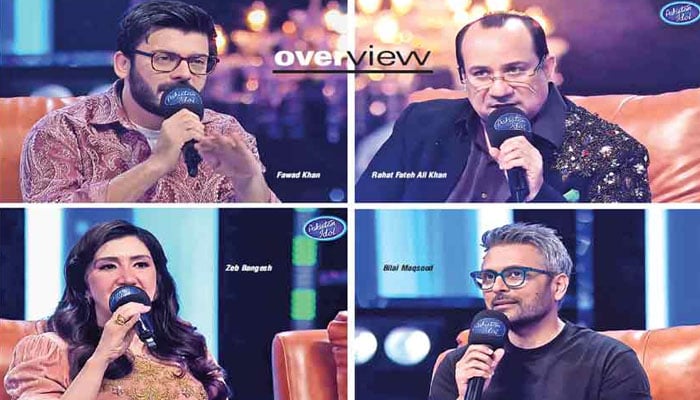
Each contestant faced the formidable judges Rahat Fateh Ali Khan, Bilal Maqsood, Zeb Bangash and Fawad Khan, seeking both validation and the rare opportunity to understand critique with genuine openness. Their interactions with the panel revealed a powerful learning curve.
The judges offered a balance of insight and guidance and supported these emerging voices without ever pulling them down. Rahat connected performances to classical expression’s end-uring rules. Bilal focused sharply on tone and creative originality. Zeb emphasised narrative coherence and emotional storytelling while Fawad drew attention to commanding stage presence and bold interpretive choices. Together they created a layered, supportive environment where contestants were encou-raged to go beyond the limits of their talent and cross the rubicon.
Episode 15 opened with a rousing medley by the Top 7 female contestants, their har-monies measured and marked by a degree of self-awareness. The poignant absence of the dynamic fifteen-year-old Faryal Amber, recovering from health concerns, was acknowledged and her presence was genuinely missed.
It’s Only Right That You Should Play The Way You Feel It
The contestants adjusted to the gap with remarkable maturity, highlighting the strong unity and sisterhood that has grown within the group.
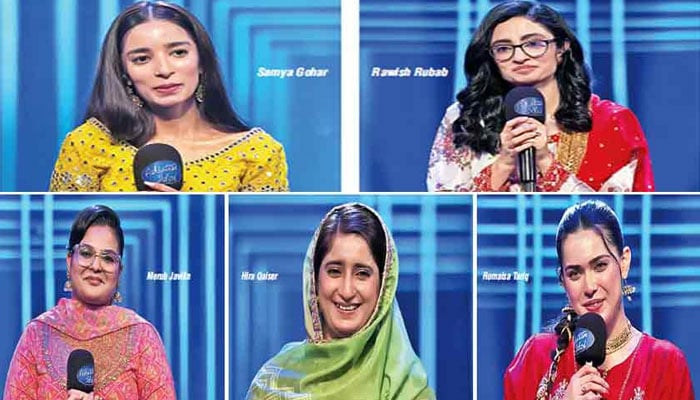
The evening found its emotional arc with Samya Gohar, who made her Gala Round debut with ‘Chait Chadya Ke Tenu’ by Humaira Channa. Her tone carried quiet assurance and her measured pauses gave the delicate song room to breathe. Her grasp of the melody felt entirely intuitive. Bilal noted that the song sat naturally within her unique vocal quality while Rahat praised her interpretive sensitivity of the tune. Zeb gently echoed the spirit of Nayyara Noor without ever suggesting mere imitation and Fawad appreciated the powerful calm with which she comm-anded the stage. The high point arrived when Rahat connected her with Humaira Channa in real time. The call became more than a mere surprise, it formed a living thread of artistic conti-nuity. Channa’s heartfelt words that Samya had sung with ‘depth and detail’ marked a symbolic passing of encouragement from one generation to the next.
Tarab Nafees followed with ‘Maan Main Uthi Nayi Tarang’ by Madam Noor Jehan. Her delivery carried a serene clarity that unfolded without force. Watching a new generation interpret songs associated with this icon beautifully illustrated that these voices are gone but not forgotten.
The presence of her father, Ustaad Nafees Ahmed, added weight to the occasion. Rahat spoke of being drawn inevitably to her flow. Bilal encouraged her evident progression, while Zeb admired her subtle articulation. Fawad described her perfor-mance with the vivid metaphor of “a deer running in a garden”, capturing the freshness that defined her delivery. The cheering from her peers, especially Samya and Meerub, reflected the supp-ortive, communal energy that shapes ensemble growth.
Where Tarab brought calm, Maham Tahir delivered sheer intensity through ‘Dildar Sadqe Lakhwar Sadqe’ by Madam Noor Jehan. She moved between shifting emotional shades with raw conviction. What resonated most powerfully was her candour.
She allowed her deeply personal grief to inform her delivery without ever over-whelming it, producing an act that felt raw yet perfectly composed. The judges instantly recognised the delicate balance she maintained between vulner-ability and discipline.
Episode 16 continued the forward momentum with brighter arrangements and more varied moods. Meerub Javilin opened with ‘Bichren Gay Na Hum Kabhi’ by Mehnaz and Alamgir from Aina (1977). Her rhythmic clarity and playful timing positioned her as a natural, engaging performer. Fawad appreciated the thought-ful song selection and Bilal acknowledged the sheer joy she visibly brought to the stage. Rahat noted her steady impro-vement and Zeb highlighted her unique ability to evoke the nostalgic, warm quality of classic Pakistani cinema.
Romaisa Tariq followed with ‘Sun Ve Bilori’ by Madam Noor Jehan. The song demanded technical control and emotional reach and she balanced both while bringing her own take to the original, showcasing her growing individuality. Fawad praised her natural ease and Bilal noted her thoughtful approach to the material. Zeb and Rahat recognised her ability to explore expressive nuance without losing essential tech-nical stability.
Rawish Rubab then perfor-med ‘Hamari Sanson Mein Aaj Tak’ by Madam Noor Jehan. She moved through phrasing with meticulous control and main-tained a restrained emotional palette.
Zeb and Fawad remarked on the distinct, memorable charac-ter of her voice while Bilal appreciated her careful handling of intricate technical detail.
The final performance of the night belonged to Hira Qaiser, who performed ‘Jindiye Hun Te Magroon Leh Ja’ by Madam Noor Jehan. Her sincerity and powerful command of the lower register shaped the performance. The judges praised her rich tone and unwavering focus. For her exceptional interpretation, she earned the Rising Star title for the episode.
What mattered far more than any title was the quiet, steely confidence she brought to the stage which marked her genuine progress.
‘There’s A Starman Waiting In The Sky, He’s Told Us Not To Blow It ‘Cause He Knows It’s All Worthwhile’
Across both episodes a clear set of expectations became unmistakable. Contestants were persistently urged to be ver-satile, sincere and boldly inter-pretive and they responded beautifully.
Episodes 15 and 16 under-scored that Pakistan Idol 2025 is about far more than merely discovering good singers. It is about cultivating mature artists who can honour tradition while shaping their own compelling artistic language.
In the end, these episodes reminded us that music endures by forging lasting connections between the past and future, judges and artists and the stage and the audience. It is at this critical intersection that the show becomes an experience, something deeply felt, carried forward and never forgotten.