From debut album release to comeback records and finding new voices, here’s what caught our eye this week
Pakistan Idol journey continues to shape the voices of tomorrow
Music’s Everywhere All At Once
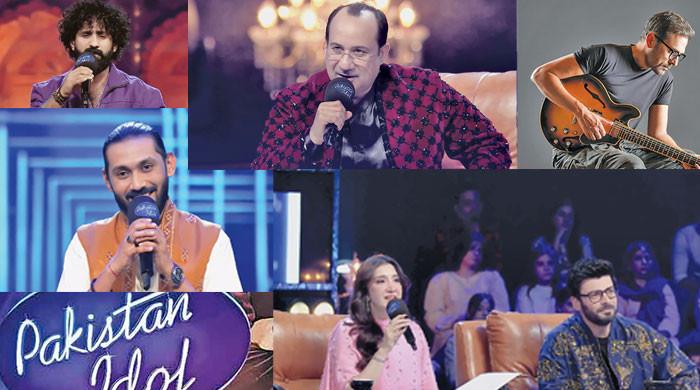
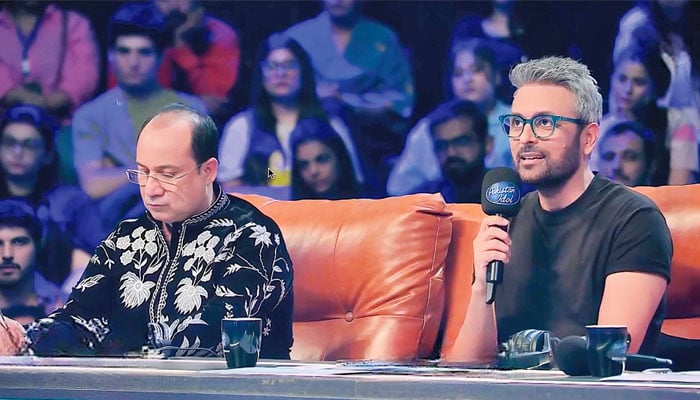
Across Episodes 17 and 18, Pakistan Idol unfolded with the ease of a show fully aware of its place within Pakistan’s musical landscape. It moved between nostalgia and reinvention without feeling divided, as if the past and present were simply two hands coming together. These episodes did more than spotlight talent. They gently reminded viewers of the long line of artists whose work still hums beneath every note we hear today.
Episode 17 began with a tribute that felt both intimate and expansive. The show honoured Haniya Aslam, a singer-songwriter and producer whose quiet brilliance has left an indelible mark on Pakistani music. Her journey was shaped by discipline and an unshakeable belief in craft. After emerging with Zeb as one half of Zeb and Haniya, she found her true calling behind the console, working as a sound designer, engineer and producer at a professional level. In an industry where women were rarely seen steering sound, Haniya carved room for herself and for those who followed.
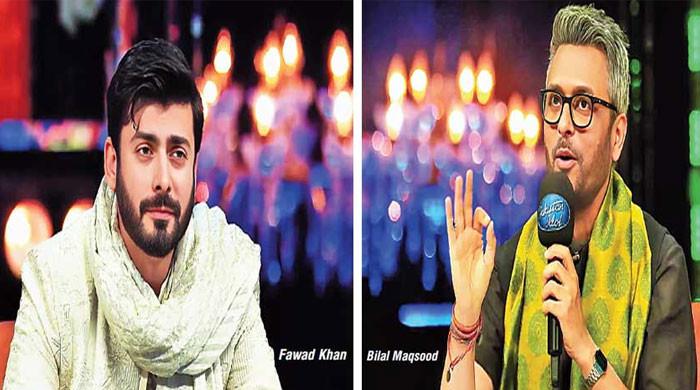
The judges spoke of her with a softness reserved for those whose presence lingers long after they are gone. Fawad Khan acknowledged the women carrying forward the legacy she helped create, while the host reminded viewers that she widened the door for women to step into production. Zeb, who shared a deep creative bond with her, offered perhaps the most touching reflection, “I have collaborated with many musicians worldwide, but she is truly one of the best songwriters I have ever known. I am blessed to have spent the first 15 years of my career with one of my most treasured friends.”
Music’s Everywhere All At Once

In honouring Haniya, the show also acknowledged the lineage of women who built the foundations she stood on. From Fareeda Khanum to Iqbal Bano, from Reshma to Abida Parveen, from Nazia Hassan to Mehnaz, and into the present with Natasha Baig, Aima Baig, QB, Momina Mustehsan, Zoe Viccaji, Meesha Shafi and judge Zeb Bangash, the episode became a quiet tapestry of voices. It closed with a nod to Madam Noor Jehan, whose influence still flows through every genre Pakistan has produced since.
Episode 18 carried that spirit by honouring Roshan Ara Begum, linking Haniya’ legacy to a broader arc of artists who shaped the very soul of Pakistan’s classical tradition. It felt less like a segment and more like an ongoing conversation about the women who kept the country’s music move forward.
Across both episodes the contes-tants offered performances that reflected the expanding creative confidence of this season.
Samya Gohar delivered a warm and spirited rendition of Naheed Akhtar’s ‘Suno Suno Jo Tum Kaho’. There was charm in her ease and a sincerity in her delivery that suggested she is beginning to understand who she is as an artist. Aryan Naveed approached Alamgir’s ‘Hum Chalay Tou Hamare Sang’ with both enthusiasm and measured thought, showing a willingness to experiment with texture and tone. Merub Javilin brought precision to Mehnaz Begum’s ‘Mai Jis Din Bhula Dun’, her vocals steady and assured, reminding us how classically rooted singing can create calm amid a competitive stage. Zain Baloch closed Episode 17 with an energetic take on Alamgir’s ‘Keh Dena’, his rock influenced carrying the audience along with him.
Episode 18 opened with Nabeel Abbas who delivered Saleem Raza’s ‘Ae Dil Kisi Ki Yaad Mein’ with emotional clarity.
He balanced technique with feeling and reinterpreted a familiar song with a sense of ownership. Romaisa Tariq paid tribute to Nazia Hassan with a bright and youthful take on ‘Dil Mera’, honouring Nazia’s pop legacy without falling into imitation and offering a modern sensibility. M. Ibrar Shahid approached Attaullah Khan Esakhelvi ‘Dilri Luti Tain Yar Sajan’ with earnestness and composure that made his performance resonate. The night closed with Tarab Nafees who sang Iqbal Bano’s ‘Payal Mein Geet Hai Cham Cham Ke’ with sweetness and grace. The judges praised her natural tone and her ability to connect with listeners without relying on theatrics.
Together these episodes revealed the evolving identity of the show. Episode 17 leaned into heritage through Haniya Aslam’s story and music that reminded viewers of the artists who shaped the nation’s sound. Episode 18 shifted into versatility and reinterpretation, allowing the contestants to reimagine classics in ways that reflected their individuality. What remained constant was the show’s belief in the next generation. Instead of treating the classics as relics, the contestants approached them as living works, ready to be rediscovered. Pakistan Idol continues to show that Pakistan’s musical future is full of promise, shaped by voices willing to listen to the past while building something distinctly their own.
Each performance, tribute and moment of growth served as a reminder that Pakistan Idol is more than a competition.
It is a bridge between eras, a point where recollection and reinvention intersect and where the country’s musical story continues to be written one performance at a time.

Ali Zafar and Ali Haider collaborate on ‘Zalim Nazron Se’
Music’s Everywhere All At Once
Ali Zafar steps back into the centre of the musical conversation after 15 years away from studio albums and his return arrives wrapped in memory, melody and a touch of over the top spectacle. His latest single ‘Zalim Nazron Se’, a reinterpretation of Ali Haider’s 1994 hit, pairs him with the ‘90s pop favourite for a project that gestures towards the past but feels stuck in the present, neither recapt-uring the charm of the original nor offering a compelling reinvention.
The song itself reaches further back than the ‘90s. The earliest version, sung by Jawaid Akhtar in 1979 with lyrics by Roshan Naginavi, has long held a place in Pakistan’s musical archive. Revisiting it, Zafar positions the collaboration as a meeting point between heritage and a new generation. In press statements he referred to Haider as “an icon who shaped the soundtrack of our youth,” a sentiment echoed by Haider who called the experience “truly special.”
The accompanying music video reaches for the golden era of Pakistani pop but lands closer to a glossy pastiche. Retro styling, choreographed sequences, flashy cars and repeated close ups of both singers feel more like aesthetic nostalgia than a confident creative statement. Shot in Los Angeles, it is larger in scale than most cont-emporary productions, yet ambition often overwhelms coherence. Fans have called the track a “nostalgic yet energetic revival,” but the chemistry between the singers and the balance between tribute and modernity would have benefitted from a subtler approach.
Today’s listeners may not feel the same emotional pull towards Vital Signs, Nazia Hassan, Junoon or even Ali Haider because they have their own icons.
Past success does not automatically guarantee relevance in a music land-scape reshaped by younger artists.
The collaboration falls short in execution. The visuals feel garish and the sound is underwhelming because volume does not equal impact. Compared with previous work of either artist, it reads as an ambitious effort but not particularly memorable. Some musicians reinvent themselves with intent, as seen with Faisal Kapadia, while others like Atif Aslam remain consistently sought after without relying on reinvention. Ultimately, it is the music that ensures an artist’s legacy.
The inclusion of female dancers deserves criticism, as their presence seems driven more by visual emb-ellishment than by meaningful choreography, reducing them to props rather than participants. The project leans too heavily on nostalgia as a catch-all solution for sonic and visual shortcomings. The intention to bridge generations is evident, but the execution never quite lands.
The truer measure of resonance will come with Ali Zafar’s full album, expected later this month. With a tentative December 20 release date, we will soon see how this chapter settles into Pakistan’s ever shifting musical narrative.
Asim Azhar Reclaims His Voice with Asim Ali in a Triumph of Honesty and Creativity
Music’s Everywhere All At Once
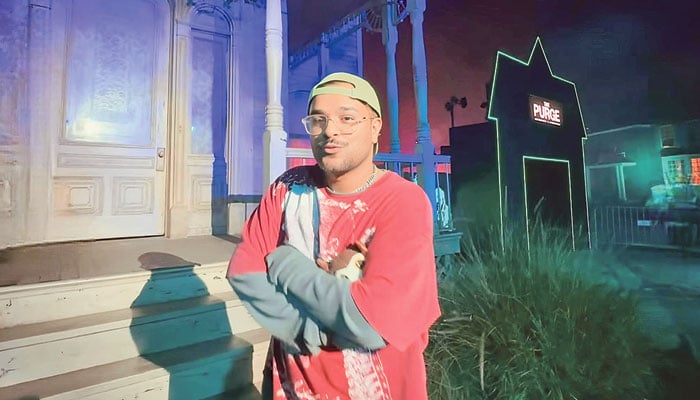
Pakistani pop sensation Asim Azhar has unveiled his first fully independent album, Asim Ali, a work he describes as his “most honest album yet.” But honesty here is not merely a descriptor, it is a quiet declaration, a careful unfurling of the self into public space. Beyond the melodies, the album marks a new chapter that speaks of courage, creativity and the subtle alchemy of reinvention.
The album features ten tracks including ‘Asim Ali’, ‘Khabbay Sajjay’, ‘Na Ja’, ‘Changes’, ‘Lost n Found’, ‘Sugar Rush’, ‘Jind Mahi’, ‘Pari’, ‘U Got This’ and ‘Strangers’, the latter a collaboration with rapper Talha Anjum. Each song offers a glimpse into landscapes both familiar and uncharted.
From the very first moments, the album’s launch was steeped in intimacy, with Azhar sharing the final masters with his mother, veteran actor Gul-e-Rana. This tender gesture highlights the family support that has shaped his journey.
In reintroducing himself as Asim Ali, Azhar emphasises a renewed sense of ownership over his work. He positions this album not merely as a set of songs but as a “true debut,” asserting that creative freedom allows a more unfiltered articulation of self.
Fans have responded enthusiastically, drawing comparisons to global icons while recognising Azhar’s uniquely Pakistani voice. Social media buzz around tracks like ‘Strangers’ and nostalgic nods to his career highlights illustrate the connection fans feel to both his music and his personal journey. The album already set new records for pre-saves, reflecting the public’s eagerness to embrace his independent vision.
Ultimately, Asim Ali is a testament to artistic bravery, emotional honesty and personal evolution. It charts Azhar’s journey from chart-topping pop star to independent artist unafraid to reveal his most intimate self.
The album redefines his musical identity while inviting audiences into a space of shared reflection, where authenticity is as resonant as melody. In Asim Ali, Azhar reminds us why his music continues to linger long after the notes fade, easing itself into the consciousness of a generation.