Print Story
X




Child labour is closely linked with poverty, educational exclusion and household vulnerability
| E |
very year, Pakistan observes the World Day Against Child Labour with renewed commitments to protect children from economic exploitation. Yet despite decades of laws, policies, research and advocacy, millions of children continue to work across the country. The question is no longer whether child labour is a problem or how to address it. The real question is why progress remains so limited.
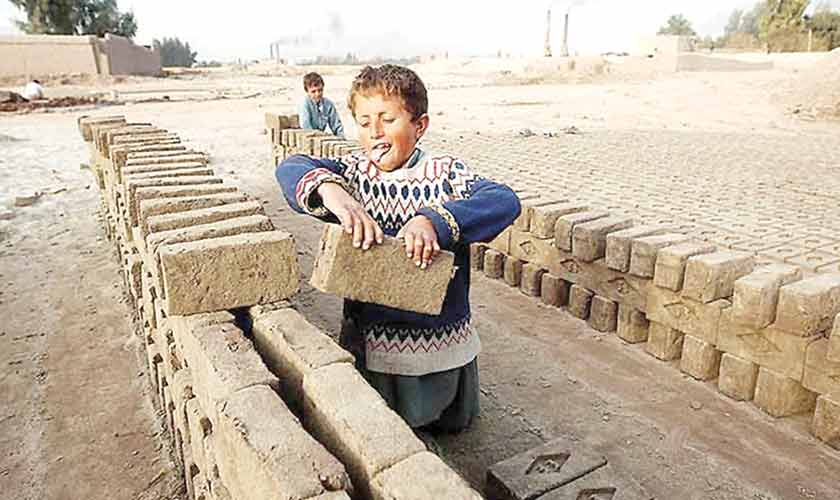
What makes this situation particularly troubling is that Pakistan no longer suffers from a lack of information. Following decades without nationally representative data after the country’s first Child Labour Survey in 1996, provinces have, since 2018-19, conducted child labour surveys using internationally recognised methodologies with technical support from the UNICEF. Recent child labour surveys conducted across Pakistan’s provinces and Islamabad Capital Territory estimate that 8.6 million children are engaged in child labour nationwide. The Punjab alone accounts for more than six million of those cases.
We already know what drives child labour. It is closely linked with poverty, educational exclusion, household vulnerability, economic shocks and long-term physical and mental health consequences. The challenge, therefore, is no longer understanding the problem. It is acting on what we already know.
Over the past decade, Pakistan has had no shortage of studies, policy recommendations, legal frameworks and action plans on child labour. National human rights institutions, international organisations and civil society actors have consistently highlighted the reforms needed to address the issue. More recently, the Marrakech Framework for Action, adopted at the 6th Global Conference on the Elimination of Child Labour, reinforced the importance of integrated responses, accountability, and measurable outcomes. Yet progress remains limited because implementation is fragmented.
Pakistan’s response suffers less from the absence of laws or institutions and more from the inability to make existing systems work effectively. Labour Departments, child protection institutions, education authorities, social welfare services and local administrations often operate within their own mandates, with limited coordination and shared accountability.
This disconnect is particularly visible at the district level, where children identified in labour frequently fall between institutional mandates and responsibilities. Too often, interventions occur in isolation rather than through a coordinated system that follows a child from identification to rehabilitation and reintegration. As a result, no single institution is fully accountable for ensuring that a child removed from labour does not return to it.
The problem is compounded by weak accountability. For years, policymakers argued that reliable child labour data was unavailable. Today, provinces possess extensive survey evidence. However, the data is not being used systematically to guide prevention efforts, identify high-risk cosmmunities, monitor outcomes or evaluate whether interventions are actually working. How many children permanently exit labour each year? How many return to schools? How many re-enter the workforce after the reported intervention? These are fundamental questions, yet clear answers remain difficult to find.
The institutional shortcomings tell only part of the story. Child labour is also rooted in deep household vulnerabilities. Provincial surveys consistently show strong links between child labour and poverty, low adult educational attainment, household instability, economic shocks and climate-related disruptions. Importantly, even some households receiving social protection support continue to rely on children’s labour, suggesting that income transfers alone are insufficient to address the structural pressures pushing children into work.
Addressing these challenges does not require another round of recommendations. Pakistan already possesses many of the necessary laws, policies and institutional arrangements. What remains missing is operational coherence and sustained implementation. Provincial child labour elimination action plans should include clear timelines, dedicated budgets, formal coordination arrangements, mechanisms for meaningful engagement of civil society organisations and designated lead institutions responsible for monitoring progress across sectors.
Children identified in labour must also be systematically integrated into formal child protection and referral systems to ensure rehabilitation, education reintegration, psychosocial support and long-term monitoring beyond initial rescue or withdrawal. Responses must recognise that children enter labour through different pathways of vulnerability and exploitation, requiring individualised assessment, tailored rehabilitation pathways, family support and sustained reintegration measures rather than one-size-fits-all interventions. Effective case tracking and information-sharing, supported by integrated digital systems, will be essential to sustaining these efforts across labour, child protection, education and social welfare institutions.
Child labour prevention must become part of broad social protection, disaster-response and climate resilience efforts, particularly in communities affected by climate-related displacement, economic shocks and environmental stress. At the same time, more comprehensive “cash-plus” approaches that combine income support with school retention, rehabilitation and family-level support services are essential to reduce long-term reliance on children’s labour.
Ultimately, meaningful progress against child labour will require sustained political ownership and executive-level prioritisation. Pakistan does not lack evidence, laws or recommendations. It lacks the coordinated action needed to translate them into results. Until that changes, millions of children will remain trapped between policy commitments on paper and the realities they face every day.
The writer is the executive director of Search for Justice. He has over 19 years of experience in human rights, particularly in child protection policy, governance and institutional reform. He can be reached at [email protected]