Print Story
X




Women and gender activists brave threats and obstacles to raise their voices
| T |
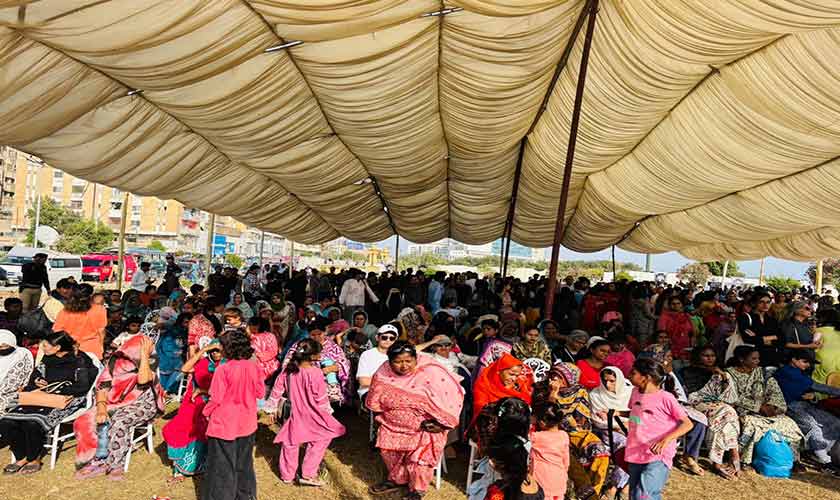
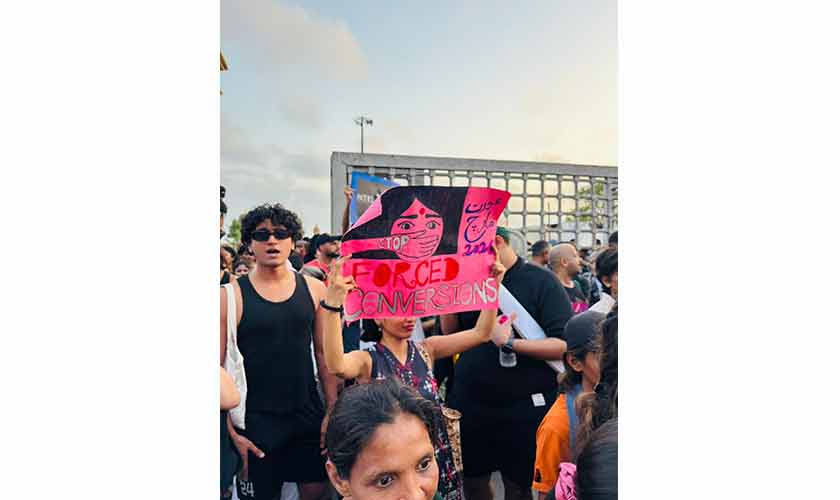
he streets of Karachi looked quite different. Women in colourful dupattas walked together holding placards. Solidarity slogans echoed all around. Girls and women of all ages, including mothers accompanied by young children were marching in the same direction. They were joined by several transgender rights activists. Placards and banners carried strong messages like:
“My Body, My Choice”
“Equal Pay, Equal Rights”
“Stop Violence”
“Child Marriage is Another Name for Rape”
“We Are Also Equal Citizens”
The march was a powerful show of people demanding equality, respect and freedom in Pakistan’s largest city.
Many of the participants were first-timers. Some of the girls walked with their arms around one another’s shoulders. Some transgender women marched quietly. They carried a flag they held high.
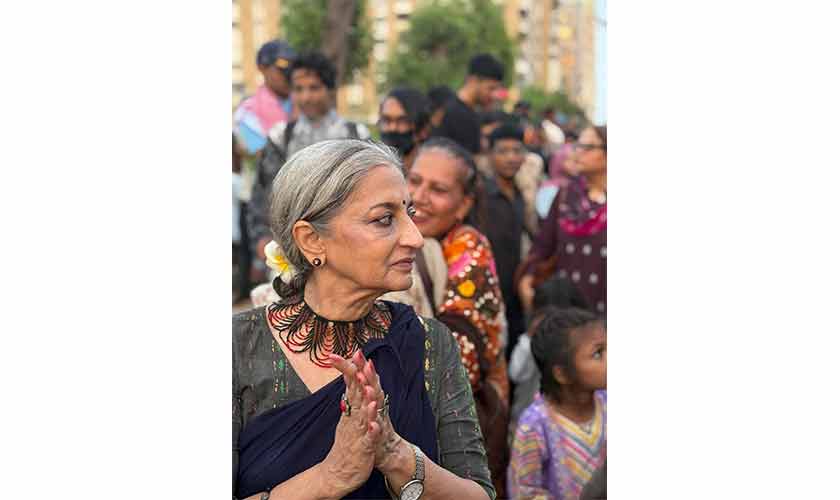
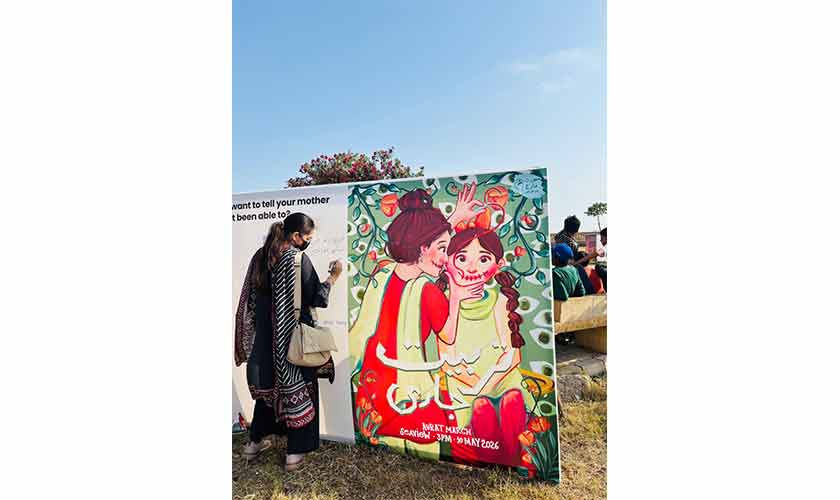
Since 2018, Aurat March has been organised on March 8, the International Women’s Day, in several cities of Pakistan including Karachi, Lahore and Islamabad. This year the Karachi march was not held on that date on account of Ramazan. Instead, the organisers settled on May 10 to link it to Mother’s Day.
Artist Sheema Kermani, one of the main organisers of Karachi Aurat March, told The News on Sunday about the difficulties they had faced:
“When the second march happened, some mischief mongers edited our videos, attributing to us statements that we had never made. They spread lies about us and endangered our lives. Our movement risked a serious setback. Therefore, we asked the government to arrest those people. What they had done was clearly a cybercrime.”
She said most of the opposition to Aurat March came from so-called religious hardliners. Aurat March has always spoken out against forced conversions. This is a particularly serious issue in Sindh where many vulnerable Hindu girls have been abducted, forcibly converted to Islam and ‘married.’
“We knew there were powerful people behind them. We had to look for support and protection wherever we could find it.”
She said the government was mostly cold towards Aurat March because it always supported oppressed groups. “For eight years now, we have supported all kinds of movements facing state oppression.”
She said she did not see asking for security as a favour. “When we ask the government for protection, we’re not asking for a favour. It is their constitutional duty to protect all peaceful citizens, including us, human rights defenders.”
This year, the march was held at Karachi’s seafront. The participants included working-class women from some of Karachi’s informal. A symbolic funeral for patriarchy was a part of the event. The participants carried pictures of some TV presenters they accused of making derogatory remarks about women.
Arrest and detention
Earlier, a police team had stopped Sheema Kermani and some colleagues, forced them out of their cars and detained them for some time.
This year, the march was held at Karachi’s seafront. The participants included working-class women from informal settlements.
Kermani later said, “It was so unnecessary. Why did they need to enter our vehicles? First they put four male officers in my car while I was driving. When I shouted and some journalists came over, they replaced them with policewomen. They knew it was illegal.”
She added, “The government has no justification for what they did. Later they apologised, but I still want to know who ordered the action and why? We haven’t got any answers yet.”
She said she was also disappointed with the language the police officials used.
“They claim that the policemen are trained on gender issues; I noticed no sign of that. One of the officers said, ‘Break her legs. Drag her. What does she think of herself. Her voice sounds like a donkey.” I replied, ‘Yes, I’m a donkey, but you are the ones misbehaving.’”
How it started
Qurat Mirza, who has always been a part of Aurat March recalled for TNS:
“In 2018, we called all feminist groups including the Women’s Action Forum and the Tehreek-i-Niswan. We held a meeting and decided to organise a march on March 8, the International Women’s Day. That’s where Aurat March got its name.”
She also described the organisational structure. “It’s very loose and flexible. Every year there is a new organising committee. People volunteer. There is no permanent office.”
The march in 2018 surprised many people. The participants didn’t talk about familiar women’s issues; they also raised questions about class, budgets and social problems.
Qurat said she was surprised by the stipulations in this year’s No Objection Certificate:
“They added some conditions that had not been there earlier, forbidding ‘objectionable clothing’ and restrictions on who we can express solidarity with.”
She asked rhetorically, “If a woman talks about domestic violence or honour killing, is that ‘objectionable’? If a girl in Thar wears traditional clothes, is that objectionable? The state should have the same rules for men and women.”
Uzma Noorani from Women’s Action Forum said the 2018 march was the most successful one. “Everyone had complete freedom to speak about their problems. Women spoke against patriarchy, domestic violence and harassment. A large number of girls joined the movement that year,” she said.
She compared the resurgence in the feminist movement with past activism. “We had fought against dictatorship earlier. To see women raising their voices against those in power is refreshing.”
She also said, “Many good laws have been made since 2013-14. However, making laws is not enough; they must be enforced.”
She said she was disappointed with the current government. “We expected this government to support women’s rights. Instead, they are putting unacceptable conditions on Aurat March. We reject those conditions completely.
“We will keep resisting oppression… Women are equal citizens and have every right to speak.”
The NOC
The Sindh government NOC this year made the permission conditional: there would be no anti-state slogans, objectionable clothing or promotion of LGBTQ issues.
Sheema Kermani said she received the NOC over WhatsApp. She said she refused to sign it.
When the march took place there was no participation by radical Baloch and Sindhi groups and there was little talk about ‘missing persons.’
Minority issues
Minority March’s Sajal Shafique was particularly critical of the government. “Whose religious sentiments is the government protecting? Those wanting to marry 10-year-old girls? Those ones who burnt churches in Jaranwala? The people who kidnap young Hindu and Christian girls, forcibly convert them, and ‘marry’ them?”
She said the oppression of religious minorities in Pakistan came close to genocide.
The writer is a freelance journalist and researcher. She can be reached @FehmidaRiaz