Print Story
X




SBP’s new framework allows teenagers to independently own and operate bank accounts and digital wallets.
| W |
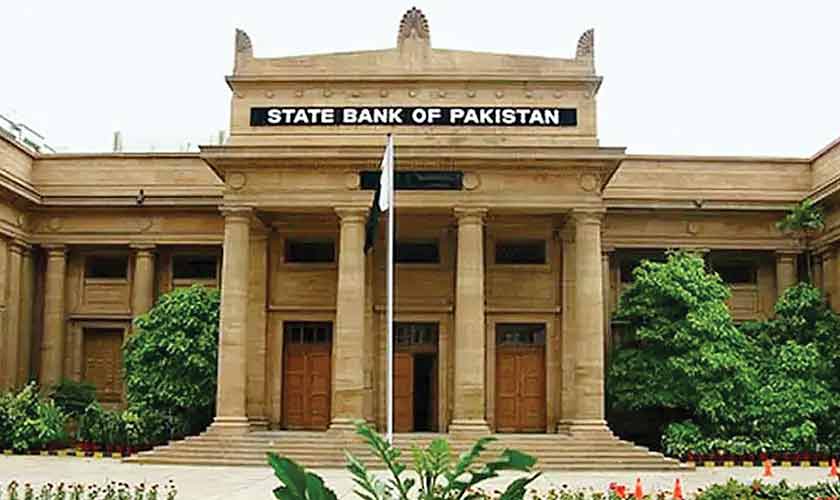
hen a country says it wants a digital economy, it cannot exclude millions of teenagers. That is why the State Bank of Pakistan’s latest move matters. On April 1, the SBP announced a new framework that allows teenagers to independently own and operate bank accounts and digital wallets.
The central bank presented it as a move toward financial literacy, safer saving and greater participation in the formal economy. It said Pakistan had around 26 million people in the 13-to-18 age group. Account ownership has already reached 67 percent of the adult population. Pakistan has thus formally acknowledged a fact: teenagers are not future users of money; they are the current users. The financial system has to deal with that reality.
The most important point is that “independent operation” does not mean “anything goes.”
The account or wallet is opened in the teenager’s name, either individually or jointly and in Pakistani rupees. It can receive the rupee equivalent of foreign remittances. It comes with physical or virtual debit cards and online or app-enabled banking. The teenager’s identity is to be verified through biometrics where applicable, or through an alternate NADRA-based identity verification process.
The parent or guardian is still pulled in through applicable due diligence, including a declaration about source of funds. The SBP has also barred cheque books, negotiable instruments and credit or overdraft facilities. It says the account will convert into a regular one once the holder reaches the age of majority. So the design provide for greater freedom within a controlled frame.
This is a commendable decision. Teenagers already receive pocket money, school support, gifts, freelance income and, sometimes, small business earnings. The question is not whether they handle money. It is whether they handle it in cash, through borrowed adult accounts or within a formal system that leaves a trail. That distinction matters. The FDIC has said that financial education combined with real account experience at an early age can shape a young person’s financial identity, attitude and habits for life. FATF’s 2025 guidance makes a similar point from the other side: bringing more people into the formal financial sector through proportionate, risk-based controls can strengthen both inclusion and financial integrity. This does not mean that every teen account is an automatic success. It means that exclusion is not automatically safer. In many cases, it is simply less visible.
International experience shows that the best systems do not ask whether teenagers should bank. They ask how teenagers should bank. In the United Kingdom, the pattern is staged independence. NatWest says children aged 11 to 15 need to apply with a parent or guardian; while 16- and 17-year-olds can open online accounts themselves. Lloyds says 13- and 14-year-olds can apply online but must complete the process at a branch with a parent or guardian; 15- to 17-year-olds can apply by themselves. HSBC’s MyMoney current account is for ages 11 to 17. It gives the young customer a debit card and online access, and is built so the child can only spend what is already in the account. HSBC also says that if the child is under 16 and comes into a branch, a parent or guardian must be there. The British lesson is clear: give young people real banking tools, but increase independence gradually and prevent borrowing risk.
The United States is even more interesting. It separates legal possibility from market practice. Federal guidance from FinCEN says the Customer Identification Program rule does not bar a minor from opening an account. If a minor opens an account, then the minor is the bank’s customer. In retail banking, most major US institutions still prefer adult-linked structures. Capital One’s MONEY Teen Checking is a joint account where the child gets a debit card and sign-in while the parent gets visibility and control. Chase High School Checking is for ages 13 to 17 with a parent or guardian as co-owner. Chase highlights no overdraft fees plus account alerts for parents. Huntington says anyone under 18 must open the account in person with a co-owner over 18. US Bank says a 17-year-old can open Smartly Checking with a parent or guardian as co-owner. Bank of America is a little more flexible, allowing teens aged 16 and above to apply as sole owner for one account type, while also offering a parent-owned Family Banking option with additional oversight and controls. So the American story is not one of blanket prohibition. It is one of caution.
The UAE sits even further toward the guardian-led side, although its products are modern and digital. Emirates NBD says a minor account must be opened by the child’s guardian at a branch. Emirates Islamic says the ALPHA Youth Account must be opened by the child’s legal guardian, and that only the parent can open the account and manage its settings and controls, even though the child can access the account digitally and use a debit card within limits. Mashreq’s Neo NXT gives the teenager a debit card and app login, but the parent can set weekly or monthly allowance, set spending controls, view transactions, receive OTPs for online transactions and money transfers; and remains liable to the bank. Liv Lite openly says the child learns to manage money under the parent’s guidance and control, with separate apps for parent and child. Mbank allows minors to use the app, but only after access is granted by the father or legal guardian, who can also change transaction limits. The UAE lesson is simple: teach independence, but do not remove the adult rail.
That brings us to the core question: does this raise the risk of money laundering, benami activity or the parking of undisclosed family income in children’s names? The honest answer is that the risk is real, but it is not automatic. In fact, formalisation can reduce opacity, because money moving through a monitored account is easier to track than money moving in cash or through someone else’s account. FATF’s 2025 guidance explicitly says financial inclusion and the fight against financial crime are mutually supportive when governments use proportionate, risk-based controls.
SBP already requires valid identity records, biometric verification or reliable alternate verification in many cases; disallows fictitious or numbered accounts; requires due diligence for associated persons who exercise control over an account; and asks institutions to collect and assess source-of-income or source-of-funds information. The framework also lists family members, guardians, stipends and social benefits as possible funds providers that can be documented. SBP’s AML regulations also require ongoing monitoring to ensure transactions match the customer’s risk profile and source of funds, real-time sanctions screening and automated transaction monitoring systems capable of generating meaningful alerts. On top of that, the SBP has required biometric verification for all cash-in and cash-out transactions at branchless banking agents and asked providers to strengthen automated monitoring of those transactions. On paper, that is a serious compliance foundation.
However, no serious analyst can pretend that the risk is imaginary. Pakistan’s Financial Monitoring Unit has already documented misuse of low-profile accounts, including student accounts. In its strategic analysis of housewife and student accounts, the FMU said it received about 302 suspicious transaction reports related to student accounts during the review period. The red flags included transaction activity that did not match the customer profile, links to virtual assets, high-value cash transactions, frequent foreign remittances and high turnover in personal accounts.
The FMU also found that out of 318 reported students, 127 had no tax record. Even more revealing, the reported ‘student’ category in some suspicious cases ranged from age 17 to 60; and the highest share was in the 30-to-45 bracket. That tells us something important: low-risk labels can be abused. If that has already happened with student accounts, then teen accounts will also need close monitoring, especially because SBP’s new framework allows receipt of the rupee equivalent of foreign remittances. A small, quiet account with a weak profile can become an attractive place to hide money that does not fit the declared story.
This is why the design choices in the SBP framework matter so much. It is smart that the new teenager product is debit-led, not credit-led. It is smart that cheque books and overdrafts are barred. It is smart that the account will later be converted into a regular account instead of living forever in a grey youth category. Pakistan should also remember how cautious its own earlier EMI rules were. Under the 2023 EMI regulations, minor wallets had to be linked to the parent or guardian’s wallet; basic minor wallets were capped at Rs 50,000 monthly load with a Rs 10,000 daily cash-withdrawal limit; the parent or guardian had to provide a written or digital undertaking; and the provider had to deploy automated transaction monitoring for ML and TF risks. The new teenager framework is clearly more open than that older linked-wallet model. That is not necessarily a problem. It just means post-opening controls now matter more than ever.
If Pakistan wants this policy to work, it should borrow the strongest practical habits from abroad. The UAE model shows the value of adjustable card limits, guardian notifications, transaction controls and parent-side visibility. Mashreq lets parents set allowances, spending controls and receive OTPs. Mbank lets the guardian change limits. Emirates Islamic keeps key controls with the parent. The US market shows similar logic through joint ownership, alerts, no overdraft fees and parental oversight in products from Chase and Capital One. Pakistan does not need to copy those systems entirely. But it would be wise to build some of the same guardrails around teenage independence: stricter checks on repeated third-party inflows; faster escalation of remittance-heavy behavior; suspicious-activity alerts tied to age and declared profile; optional parent alerts even when the teen is the primary user; and merchant or transfer restrictions that can be loosened gradually as the customer gets older and the account history becomes cleaner. Independence works best when it is visible, limited and reversible.
There is another lesson from the research: early access is useful, but access alone is not magic. A Federal Reserve study on US minor bank account laws found that easier access to independently owned accounts did increase account ownership among teenagers aged 16 to 19. But by age 24, those young adults were banked at similar rates to peers from states that did not allow minors to own accounts independently. The study also found a more mixed long-run picture, including greater use of some costly non-bank services later on, lower credit scores and more loan delinquencies at ages 21 to 24. That does not mean the SBP is wrong. It means that policymakers should stop acting as if a bank account by itself creates wisdom. A bank account is a tool. The outcome depends on the rules around the tool, the quality of monitoring and whether financial learning grows alongside access.
The SBP has taken a bold step. Pakistan must treat this as supervised independence, not adult banking in a school uniform. Pakistan’s framework appears more liberal than the UAE’s guardian-first model and, in day-to-day operation, broader than much of the mainstream US retail practice. The UK comes closest, but even there independence is usually staged more clearly by age. That makes Pakistan’s choice ambitious. Ambition is not the problem. Weak control is. Done well, this reform can bring teenage money out of cash, reduce reliance on borrowed adult accounts, build confidence and create cleaner data trails for the formal economy. Done badly, it can create a fresh channel for proxy transactions, undeclared income and quiet abuse of low-profile accounts.
The writer is a chartered accountant and a business analyst.