Print Story
X




Maliha Rao’s Dark Tales of Wonder opens a thrilling new chapter for Pakistani speculative fiction
| T |
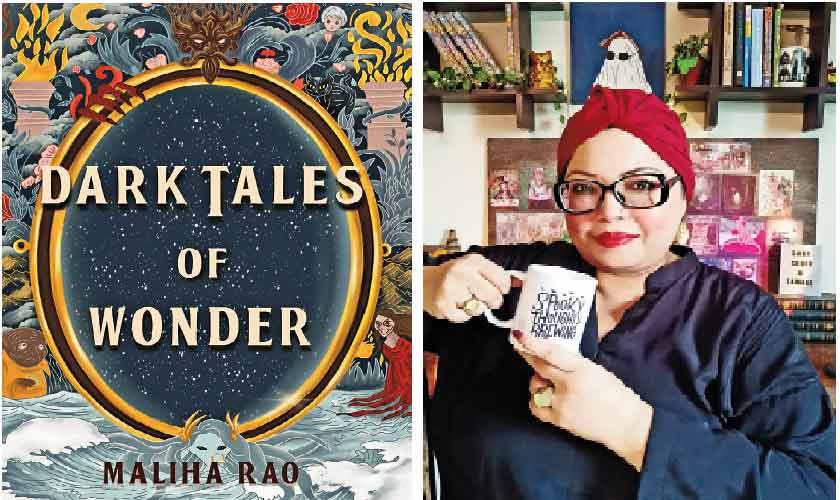
here is something especially thrilling about seeing a writer take the stories we grow up hearing in hushed tones, the warnings, the whispered folklore, the ghostly legends that live somewhere between memory and myth, and turn them into something fresh, immersive and fiercely imaginative. That is exactly what Maliha Rao achieves with Dark Tales of Wonder, a debut collection that pulls from the rich well of South Asian folklore and transforms it into a world of eerie beauty, unsettling mystery and dark delight.
At a time when so much contemporary fiction plays it safe, Rao chooses to step into the shadows, and in doing so gives Pakistani speculative fiction something it has needed for a long time: a bold, confident voice that is unafraid to let the fantastical take centre stage. The result is a book that feels atmospheric and culturally resonant while also managing to be playful, eerie and at times genuinely unsettling.
The title itself gives a clue to what the book is trying to achieve. Dark Tales of Wonder is not horror in the conventional sense. It is not interested in relentless dread or blood-soaked spectacle. Instead, Rao’s stories exist in that liminal space where wonder and fear overlap, where the supernatural is both terrifying and fascinating and where folklore becomes a vehicle not only for suspense but also for emotional depth. There are ghosts, demons, jinn and strange creatures, yes, but these beings are never reduced to clichés. They carry personalities, motives, anxieties and sometimes even humour.
That tonal duality is perhaps one of the strongest aspects of the book. Rao understands that horror can be atmospheric without being severe. Some of the most memorable moments in Dark Tales of Wonder don’t come from overt terror but from the uneasy feeling that something is slightly off. There is a kind of narrative mischief running through the stories, a crooked smile beneath the darkness. That balance between menace and whimsy gives the writing texture, and it is what keeps the book from slipping into predictability.
One of the standout examples of this is Crumbs and Creatures, a story that has already emerged as a favourite among readers. On paper, the premise sounds delightfully absurd: a jinn with a biscuit addiction. But in Rao’s hands, what could have been played purely for humour becomes something much richer. The story carries both levity and unease, and the whimsical central idea is handled with enough sincerity to make it emotionally engaging. It is a reminder that fantasy, especially when rooted in myth and oral tradition, works best when the bizarre is treated with conviction. Crumbs and Creatures captures the spirit of the book beautifully: imaginative, eerie and unexpectedly charming.
Then there is It Lingers, which leans more directly into supernatural horror. A family battling a demonic entity could easily fall into genre tropes, but Rao grounds the story in emotional tension and familial dynamics, making the horror feel intimate rather than theatrical. The use of ritual, legacy and inherited fear gives the story its weight. The monster may be supernatural, but the emotions around it are deeply human. That human core is what makes the strongest entries resonate.
Another notable highlight is The Wrath of Boyo, praised by many readers for its haunting use of setting. Here, the landscapes of Hunza become as vital to the storytelling as the supernatural forces at work. Rao demonstrates a sharp understanding of atmosphere, using place not just as a backdrop but as emotional terrain. The result is a story that feels expansive and eerie at once, evoking both beauty and dread. It is in stories like this that Rao’s commitment to grounding fantasy in local environments really shines.
That grounding is arguably the defining strength of Dark Tales of Wonder. Rao’s work feels deeply rooted in Pakistani and South Asian cultural textures. The supernatural elements do not feel imported or derivative. They emerge organically from the region’s folklore traditions. Jinn, demons and mystical beings are not presented as exotic curiosities but as part of a living narrative tradition, one that still lingers in the margins of everyday life.
This cultural specificity gives the book its identity. For readers familiar with the oral storytelling traditions of the subcontinent, there is an immediate sense of recognition. The whispers of childhood stories, warnings passed down through generations, strange tales attached to certain places or rituals, Rao taps into that collective memory and reimagines it with contemporary narrative flair. For international readers, the book offers an entry point into a world of supernatural storytelling that remains underrepresented in mainstream fantasy and horror.
Importantly, Rao avoids turning folklore into mere aesthetic decoration. The myths matter. The creatures have histories, categories and lore attached to them, which is where the glossary included in the book becomes such a thoughtful addition. In speculative fiction, world-building is everything, and Rao takes that responsibility seriously. The glossary deepens the reading experience by giving context to the supernatural entities featured in the stories. It also reinforces one of the book’s implicit goals: preservation through storytelling.
This desire to preserve and celebrate folklore without freezing it in nostalgia is what gives Dark Tales of Wonder its relevance. Rao is not merely reproducing old myths. She is animating them for a modern audience. The stories move through urban and domestic spaces as well as contemporary realities while still drawing from ancestral lore. That blending of old and new gives the book freshness.
What also stands out is Rao’s instinct for character. Even within the short story format, her protagonists feel textured enough to matter. There is emotional architecture beneath the supernatural framework. Whether it is fear, grief, longing or resilience, the stakes are clear. That matters because fantasy and horror only land when the human element is convincing. Rao seems to understand that monsters are only effective when readers care about the people facing them.
There are moments where the book feels uneven. Some stories carry more emotional and atmospheric force than others, and a few do not linger as long after the page is turned. This is hardly unusual in a debut collection, especially one working across multiple tones and narrative registers. What matters more is that the highs are genuinely memorable and the overall vision remains coherent. Even where individual stories vary in impact, the world Rao is building remains compelling.
And that world is significant beyond the book itself. Dark Tales of Wonder feels like an important step in the evolution of Pakistani genre fiction. For too long, local literary production has privileged realism as the primary mode of “serious” writing. Fantasy, horror and speculative fiction have often been sidelined or treated as niche. Rao’s debut pushes back against that limitation by demonstrating that folklore-driven fantasy can be literary, culturally rich and emotionally layered.
That may be one of the book’s most meaningful achievements. It expands the imaginative possibilities of what Pakistani fiction can be. It signals that our stories do not need to be confined to realism to be authentic. Folklore, fantasy and horror are just as capable of reflecting cultural truths, anxieties and desires.
Rao’s own background perhaps makes her particularly suited to this kind of storytelling. With decades of experience in digital communication, brand storytelling and creative strategy, she clearly understands narrative momentum and audience engagement. But what elevates the work beyond technical competence is her affection for the strange. There is real delight in these stories. Even in their darkest moments, they are driven by curiosity and imaginative generosity.
That spirit makes Dark Tales of Wonder an exciting debut. It is a book that knows its audience but also seeks to expand it. It offers enough chills for horror readers, enough world-building for fantasy readers and enough cultural texture for anyone interested in South Asian storytelling traditions. More than that, it offers something still too rare in local publishing: confidence in the power of speculative fiction.
In the end, Dark Tales of Wonder succeeds because it understands that fear and wonder are often two sides of the same coin. The stories invite readers into worlds that unsettle, but they also invite fascination. They remind us that the monsters in our folklore are not just creatures to be feared but are carriers of memory, mystery and meaning. For a debut, that is no small achievement.
With Dark Tales of Wonder, Maliha Rao has not only delivered an engaging and atmospheric collection, but she has opened the door to a richer future for Pakistani speculative fiction. One hopes this is only the beginning.
Dark Tales of Wonder is an exciting debut. It is a book that knows its audience but also seeks to expand it. It offers enough chills for horror readers, enough world-building for fantasy readers and enough cultural texture for anyone interested in South Asian storytelling traditions. More than that, it offers something still too rare in local publishing: confidence in the power of speculative fiction.”