Print Story
X




The comparisons between Baby Boomers and Gen-Z are not a new phenomenon
| T |
he debate about Baby Boomers and Generation-Z has gained significant attention in recent weeks. While this may sound like a new subject to some people, this is not the first time such comparisons have sparked conversations.
The generational divide is evident. There are signs also of a kind of hostility among the youth towards the older generation. I believe that this reflects a general frustration and anger directed at a failing political system, which poses a significant barrier to societal progress and prosperity.
Gen-Z is defined as the cohort of people born between 1997 and 2012. They were preceded by the Millennials and succeeded by Generation Alpha. While this labeling is a relatively recent phenomenon, it has gained widespread acceptance with the rise of social media. Gen-Z is distinctly characterised by its upbringing in the digital age. As a result, typical members of Gen-Z and Gen Alpha tend to think differently from their predecessors.
As a faculty member at a university, I find teaching undergraduate students a rewarding experience. Coming from the Millennial generation, I actively engage with social media in a manner similar to recent generations. However, I often perceive a gap between the thinking habits of my students and those of their instructors. One significant challenge I face is assigning reading materials. I have noticed that many new students delay reading assignments until they acclimate to our department, especially in my class where reading is a crucial requirement. I frequently hear students voice a preference for video content or reels over traditional reading suggestions.
This decline in reading habits is quite evident. To some, it highlights a troubling lack of depth and critical thinking among the relevant individuals, regardless of their age or generation. While the reality of digitisation—and accompanying advancements such as artificial intelligence—cannot be ignored, seeking to entirely replace reading and writing with video content or writing tools like ChatGPT will be misguided. The diminishing culture of reading adversely affects the youth, with political implications that are equally concerning.
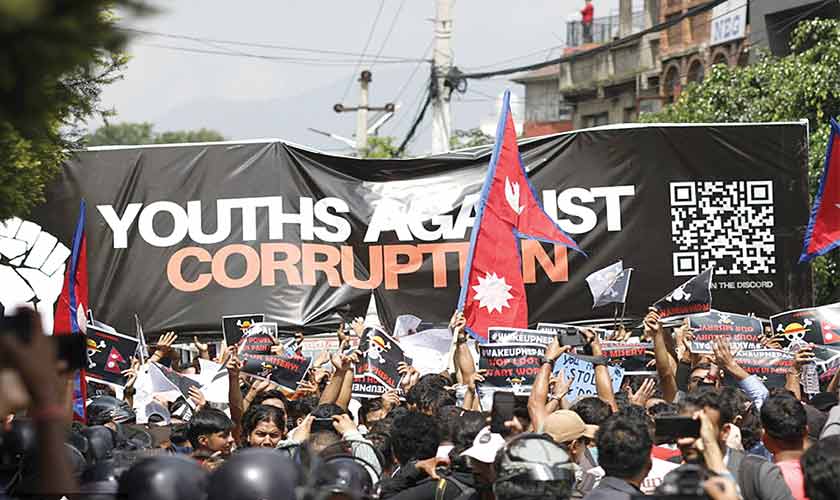
In recent years, we have observed political uprisings spearheaded by the youth in Sri Lanka, Bangladesh and Nepal. These movements have been applauded by many intellectuals in Pakistan and beyond. A pertinent question is: were these uprisings long-lasting movements or mere outbursts of anger? I believe that the frustrations expressed by the youth are genuine. However, the way these were expressed is open to debate. In Sri Lanka and Bangladesh, the discontent was driven primarily by economic issues. In Nepal, although economic factors too were at play, the unrest surged following a ban on social media.
The decline in reading habit is evident. To some, it highlights a troubling lack of depth and critical thinking among individuals. While the reality of digitisation cannot be ignored, it would be misguided to completely replace reading and writing with video content or writing tools like ChatGPT.
In Pakistan, it is crucial to note that the youth constitute 64 percent of the population. There is an acute realisation in the country that if the youth were to express their anger in ways akin to their counterparts in Bangladesh, Sri Lanka and Nepal, that could lead to considerable problems. Consequently, the authorities have been striving to prevent Pakistan from reaching a point of no return.
It is important to recognise that the youth demographic, on which political opposition is apparently counting, lacks maturity. Many of them do not engage with the political history of Pakistan or other nations. Instead, they often rely on social media and accept its narratives. This tendency stems from a lack of engagement with historical and political theories that could provide a more nuanced understanding of political leadership, which often prioritises its own interests over the well-being of the constituent populace. Recently, I compared the behaviours of individuals from various generations—Boomers, Millennials and Gen-Z—and was struck by the clear generational gap.
I noticed that progressive forces, particularly Left-leaning political parties, have struggle to engage the youth with their ideology, despite its potential to resonate economically. Their methods of mobilisation, such as reading and study circles, fail to hold the interest of a broad segment of Gen-Z. This gap has been exploited by populists, including some representatives of the older generation who have managed to attract a significant portion of the young population. In my view, these leaders offer little more than superficial analysis and unrealistic hopes for the younger generation.
It is imperative for progressive forces to reassess their political strategies to connect with the youth of the country. A look at India provides a valuable example. Left-leaning groups there actively engage in educational institutions like the JNU. I believe that the Left can offer viable and enduring solutions to the challenges faced by all citizens, including Gen-Z. If they do not act smart, there is a risk that young people may be misled, possibly allowing populists with religious idiom to gain influence. Historically, students have played a pivotal role in determining which political party governs in Bangladesh.
In Pakistan, it is essential for the youth to move beyond the cyclical power struggles of the three dominant parties and those supported by non-representative forces. Instead, the youth should unite with senior progressive leaders and intellectuals to shape the future of the country.
The writer is an assistant professor and chairman of the Department of History and Pakistan Studies at Aror University of Art, Architecture, Design and Heritage, Sukkur. He can be reached at qasim_shu2016 @yahoo.com