Print Story
X




A long-term commitment to providing sustainable livelihoods requires skills development, economic opportunities and community engagement
| I |
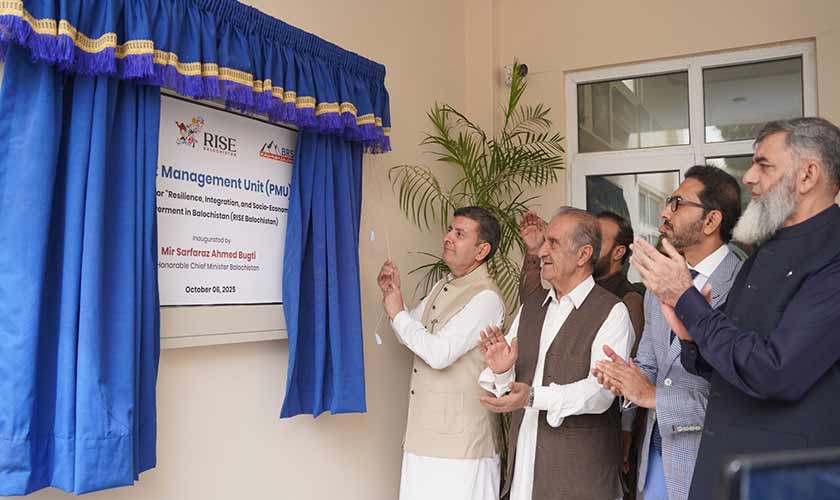
n response to Balochistan’s pressing socio-economic and climate-related challenges, the provincial government, under the leadership of Chief Minister Mir Sarfaraz Ahmed Bugti, has focused on youth empowerment by launching the Resilience, Integration and Socio-Economic Empowerment programme. This one-of-its-kind initiative provides skills training and livelihood opportunities to young people from the unrest-affected province, with a strong emphasis on gender balance, marking a significant policy shift in addressing poverty, youth marginalisation and gender inequities.
Balochistan’s socio-economic indicators have long highlighted persistent challenges related to poverty, youth and gender.
A United Nations Development Programme report has ranked Balochistan last among Pakistan’s provinces, placing it in the low human development category. The report also ranked the province last on the Youth Development Index (YDI), the Labour Development Index (LDI), and the Gender Inequality Index (GII). In addition, the report placed Balochistan with the highest rates of multidimensional poverty, with over two-thirds of its population classified as multi-dimensionally poor.
Another 2025 research article by the Institute for Strategic Studies, Research and Analysis the National Defence University, Islamabad, highlights that Balochistan, covering 43 per cent of Pakistan’s land and home to six per cent of its population, faces severe climate impacts. The paper mentions extreme weather events, such as the 2022 floods, damaged Balochistan’s infrastructure and disrupted connectivity. Rising temperatures, erratic monsoons and melting glaciers threaten livelihoods. Climate change, the paper says, has also intensified water scarcity, crop losses and migration to urban areas, placing additional pressure on resources and infrastructure in the arid province.
The Balochistan Gender Parity Report, 2024, highlighted persistent gender inequities in the province. Female literacy, the report says, remains low at 36.8 per cent and women’s workforce participation is limited to 5.5 per cent. The report also notes that women earn significantly less than men and are largely engaged in unpaid or dependent forms of work, with limited access to independent and high-wage employment.
Recently, the incidence of droughts has increased in Balochistan, affecting livelihoods and socioeconomic conditions.
According to Balochistan’s Provincial Disaster Management Authority, droughts have intensified, with the number of drought-affected districts increasing from eight to eleven during the year, according to a Meteorological Department advisory. The affected districts are Quetta, Pishin and Qila Abdullah in Quetta division; Mastung in Kalat division; Gwadar, Kech and Panjgur in Gwadar division; and Chagai, Washuk, Nushki, and Kharan in Rakhshan division. There was some rainfall in 2025 but it was insufficient to alleviate the drought. Research is currently under way to assess the rising severity of drought and food insecurity.
Recent studies emphasise the need for a people-centred and proactive disaster management approach in Balochistan to address climate change.
RISE amid challenges
Chief Minister Mir Sarfaraz Ahmed Bugti has underscored his government’s commitment to youth empowerment with the launch of the Resilience, Integration and Socio-Economic Empowerment programme. Billions of rupees has been allocated to provide young people with interest-free loans, skills development and support to refine their business models, marking a long-term commitment to sustainable livelihoods.
The chief minister has said that, in partnership with BRSP, the government will provide interest-free loans, business development support and skills training to enable the youth to become economically self-reliant. He describes RISE as a long-term investment in the province’s future.
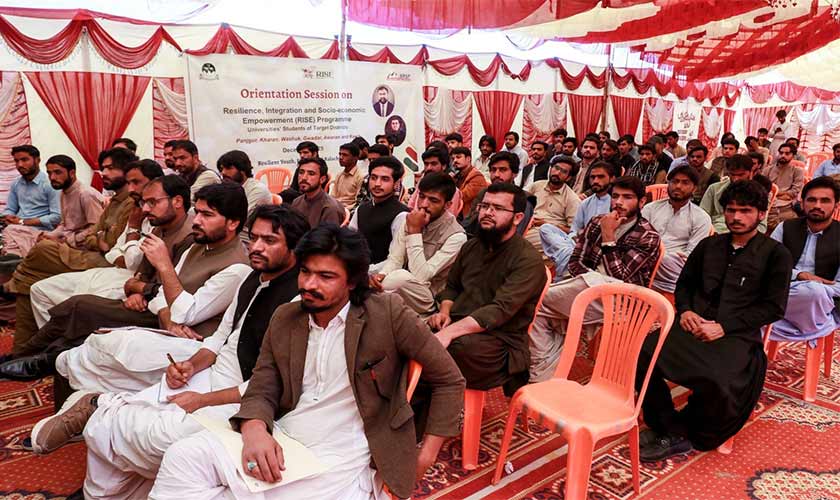
Implemented by the Balochistan Rural Support Programme across six districts—Panjgur, Kharan, Washuk, Gwadar, Awaran and Kech—the initiative aims to strengthen communities socially and economically. Socially, RISE is to engage nearly 380,000 households; empower the youth and women; and promote civic participation. Over 900 young people are stepping into leadership roles; 180 community-based organisations are being strengthened to sustain development efforts.
Economically, RISE aims to support nearly 80,000 households through skills training, enterprise creation and access to financial services. More than 57,000 families are establishing micro-enterprises, 4,320 youth are receiving technical and vocational education and training (TVET), and infrastructure projects are generating opportunities for 16,500 households. Partnerships with financial institutions, including Akhuwat, will provide 12,000 young entrepreneurs with interest-free loans.
Dr Tahir Rasheed, the BRSP chief executive officer, has described RISE as a landmark initiative reflecting the government’s confidence in partnering with a non-profit organisation for an innovation-driven youth programme. He says it goes beyond conventional livelihoods by focusing on wealth creation and youth entrepreneurship to enable young people to create jobs for others. He emphasises the chief minister’s view that talent exists across Balochistan and reports that the initiative has elicited interest from other provinces, challenging some long-held perceptions about Balochistan. He says RISE will support the youth in six districts through business incubators and induction into value chains in agriculture, livestock, fisheries, eco-tourism, climate-smart initiatives and the blue economy. The BRSP, he says, providing office facilities and staff support as an in-kind contribution.
Chief Secretary Shakeel Qadir Khan says that RISE is tailored to the province’s youth, with targeted interventions based on skills mapping to ensure meaningful impact. With Rs 16 billion earmarked, including Rs 3.5 billion for the current year, the programme is a phased, long-term effort to build resilient communities.
By combining skills development, economic opportunities and community engagement, RISE Balochistan is laying the foundation for a more inclusive and prosperous province.
The writer is a Karachi-based journalist and researcher, X handle @asifaidris