Print Story
X




Why Pakistan must outlaw partially hydrogenated oils
| P |
artially hydrogenated oils (PHOs), the primary source of industrially produced trans-fatty acids (iTFAs), are a deadly threat affecting our nation’s diet. This danger was brought to attention by Pakistan Youth Change Advocates through their TRANSFORM Pakistan campaign. Their advocacy is backed by credible evidence and research that has confirmed that iTFAs are not just a small concern but a public health hazard so significant that we cannot tolerate their continued presence in our food supply.
Cardiovascular disease is rampant in Pakistan. It claims more than 200,000 lives every year. Scientific studies clearly show that iTFAs increase “bad” cholesterol, undermine “good” cholesterol and contribute to heart attacks and strokes. These are not naturally occurring fats but artificial ones, added by industry to cut costs and extend the shelf life of their products. The fact that we are knowingly exposing our citizens to a substance that has no health benefit and causes real harm is unacceptable.
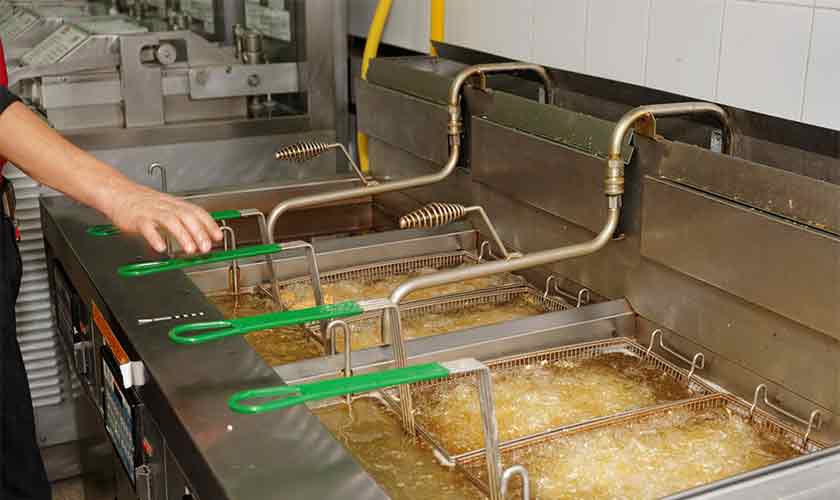
Earlier this year, the Pakistan Standards and Quality Control Authority took a step in the right direction by passing a regulation that limited the incidence of industrial trans fats to 2 per cent of the total fats across all food categories. While this regulation is an important safeguard, it is not sufficient on its own. The production of industrially produced trans fats is directly linked to the process of partially hydrogenating edible oils. PHOs are not an incidental contributor to the problem — they are the problem. The very purpose of partial hydrogenation is to generate trans fats in oils. With a national iTFA limit already in place, there is no longer any technical or economic justification for continuing a process that creates harmful fats.
This is why relying solely on a 2 per cent iTFA regulation may have limited impact in short term. The limit restricts the amount of trans fats permitted in all foods. It does not prevent manufacturers from continuing to produce or use PHOs in the first place. As long as partial hydrogenation remains legal, trans fats will continue to enter the food supply — especially through street foods that are difficult to monitor. The informal food sector serves millions of Pakistanis daily, particularly low-income communities. The lack of stringent oversight makes them vulnerable to continued exposure.
Scientific studies clearly show that iTFAs increase “bad” cholesterol, undermine “good” cholesterol and contribute to heart attacks and strokes. These are not naturally occurring fats but artificial ones, added by industry to cut cost and extend the shelf life of their products.
A legislative ban on PHOs, therefore, is essential. By eliminating the very process that creates trans fats, we close the door at the source and protect consumers across all segments of society. Dual protection — retaining the 2 per cent limit while banning PHOs outright — is the only way to ensure that iTFAs do not continue to find their way into our diets through unregulated channels.
Inspired by PYCA’s TRANSFORM Pakistan campaign, and fortified by personal research, we have already taken this fight to the Senate and filed a question to be raised formally, urging that legislation be introduced to ban partially hydrogenated oils completely. However, this is not only a challenge for the Senate. National and Provincial Assemblies must also take up this cause. Every region of Pakistan requires its own law that enshrines the protection of its people; only then can we ensure a consistent, nationwide ban.
Industry will argue that there are barriers: cost, supply chain constraints and the technical difficulty of switching to safer alternatives. These arguments may have held water in the past, but they no longer stand. Healthier oil technologies are now well within reach for manufacturers, whether large-scale producers or smaller bakeries. What they need now is clarity, a firm legal deadline and a fair transition pathway. With a legislative ban, their role in reformulating becomes not just a moral imperative, but also a business certainty.
If the parliament and provincial legislatures act together, we can enact a ban that will save lives, reduce health costs and protect our people, especially those who lack the means to choose healthy foods. Let us pass legislation banning partially hydrogenated oils, complement it with the existing PSQCA limit and close the door on industrial trans fats once and for all.
Our citizens deserve nothing less than safe food. Our children deserve a future without preventable heart disease.
Bushra Anjum Butt, a member of the Senate of Pakistan, is an advocate for public health and education reforms