Print Story
X




Rethinking how we acquire wild animal for our zoos
| Z |
oos have a profound role in public education. Every year, just a handful of the country’s leading zoos receive 10 to 15 million visitors. This is an enormous platform for shaping public attitudes and behaviour toward wildlife and environmental conservation that must be used responsibly.
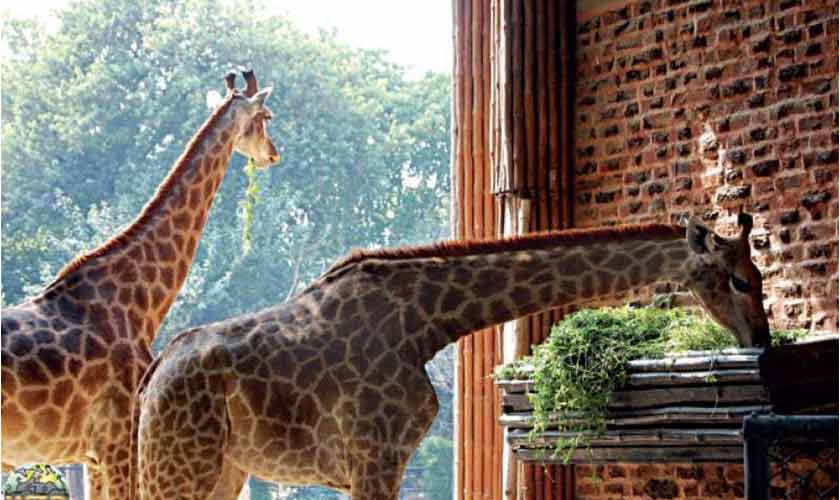
While this educational potential is undeniable, there are serious concerns about how large ungulates, particularly giraffes have done in Pakistan’s zoos. Elephant deaths have, rightly, drawn public outrage. But giraffes—the tallest, gentlest and most elegant of creatures - have largely slipped through the cracks.
Since 2007, Pakistan has imported 12 giraffes. Nine of them have died; four of the six giraffes at Peshawar Zoo; two of three imported to Lahore in 2018; and all three giraffes imported in 2007 to Lahore Zoo. Earlier, in 2000, a female giraffe died at Lahore Zoo. These deaths were due to varied causes—heart failure, blood parasites, diarrhoea. In Pakistan’s entire history of keeping giraffes, there has only been a single record of breeding: a calf born in Karachi Zoo in 1966, who sadly didn’t survive. One could mention that in some African countries, giraffes are legally hunted for trophies under economic or food security justifications. But here, we must focus on our own house and make improvements.
Lahore Zoo Safari is now preparing to receive 12 more giraffes. The Punjab Wildlife and Parks Department has established a world class facility, a spacious enclosure over an acre of outdoor paddock dotted with trees and a generously sized indoor holding with fans and cooling systems. The veterinary facilities are modern, and I have personally met both the young vet at Lahore Zoo and the senior veterinarian Dr Rizwan Khan at Safari: both are competent and highly committed.
The fundamental issue is how wildlife is procured in Pakistan. Under the Public Procurement Regulatory Authority rules, wildlife purchases are treated like any other commodity—like office furniture or generators. This system may ensure transparency, but it utterly fails when applied to living, endangered animals. Under current rules, the lowest bidder wins. That “bidder” is often an animal dealer—a middleman with little accountability. These dealers behave like covert agents. They provide minimal information about the source, health or history of the animals or transportation routines. They routinely cut corners—using damaged crates, forging documents and bypassing standard procedures. They sometimes charter private aircraft to avoid IATA’s Live Animal Regulations, approved under CITES—the Convention on International Trade in Endangered Species. This isn’t speculation. The last time giraffes arrived at Lahore Zoo, their crates had damaged floors, resulting in hoof injuries and maggot infestations. Their suffering during transport is difficult to even imagine, predisposing them to health complications later.
We must stop treating endangered wildlife as replaceable inventory. Giraffes are not machines with warranty periods. Every death is a tragedy—not just for the animal, but also for the credibility of our conservation and public education systems.
The upcoming shipment offers a grim example. The zoo has asked for 12 giraffes, but the dealer is supplying 15. Why? To compensate for possible deaths during the quarantine period—because the dealer is contractually obligated to replace any losses. This mindset treats giraffes like spare parts, not sentient beings.
Giraffes are Appendix II species under CITES, meaning their trade is allowed but must be strictly regulated. Yet these regulations are frequently sidestepped.
Giraffes are often loaded three per crate. Loading can take 2-4 hours. Most aircraft can accommodate a maximum internal height of ~3 metres, a 3-year-old female giraffe can exceed 3.2m, which may mean that a giraffe of that age would be cramped in a stressful position. Mostly giraffes are transported at a younger age to meet the height restrictions and guidelines, provided the dealer is ethical and following the guidelines. Improper hydration, overheating or stress during this stage can be fatal.
CITES permits must not be issued to intermediaries or facilities sourcing through dealers. At the upcoming CITES COP20 in Samarkand (November–December 2025), a proposal to delist giraffe populations in eight African countries (Angola, Botswana, Eswatini, Malawi, Mozambique, Namibia, South Africa and Zimbabwe) from Appendix II must be strongly opposed. Such moves increase the risk of exploitation by dealers and threaten animal welfare.
Within Pakistan, we need separate rules to acquire wildlife. It should not be treated as tendered goods. A separate procurement process, governed by ethical standards and veterinary oversight, must be created for live animals, preferably prohibiting wild caught animals and only allowing captive bred animals, acquired through zoos. Transport logistics must follow IATA Live Animal Regulations without exception. Before acquiring a species a thorough evaluation should be conducted of the previous experience and suitability.
We must stop treating endangered wildlife as replaceable inventory. Giraffes are not machines with warranty periods. Every death is a tragedy—not just for the animal, but also for the credibility of our conservation and public education systems.
The writer is associated with the WWF-Pakistan.