Islamabad: Experts have called for an integrated economic governance framework to help Pakistan break free from recurring cycles of economic instability, emphasising that sustained growth would only be possible through policy coherence, institutional coordination and long-term reforms.
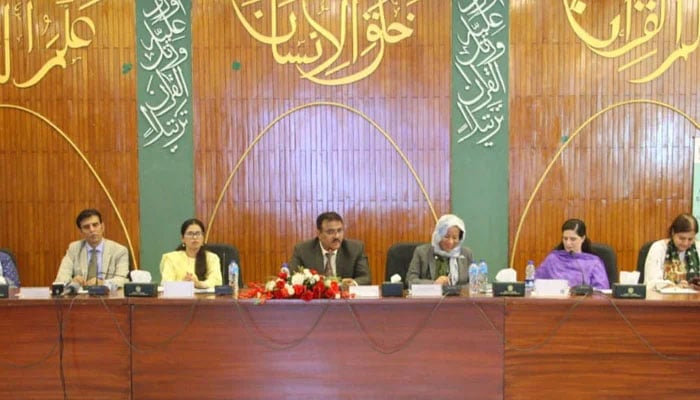
They were speaking at a consultation on "Pakistan's reform agenda for integrated economic governance," jointly organised by Sustainable Development Policy Institute (SDPI) and Friedrich-Ebert-Stiftung (FES) here Monday.
Senior economist Dr Aliya Hashmi emphasised the need for clearly defined national growth targets supported by a comprehensive reform agenda, implementation framework and effective monitoring and evaluation mechanisms.
She said Pakistan must prioritise the creation of productive employment opportunities for its rapidly growing youth population, warning that improvements in GDP figures alone would not deliver meaningful development without quality job creation.
She also stressed the importance of increasing women's participation in the labour force, noting that greater female employment had contributed to lower fertility rates and stronger economic outcomes in several regional countries, including India.
Dr Muhammad Ali Talpur, Joint Chief Economist, ad Ministry of Planning, identified political instability, weak policy coordination and lack of continuity as major obstacles to effective economic governance.
He said significant reforms had already been undertaken, including separating tax policy from tax administration within the Federal Board of Revenue (FBR), reflecting the government's recognition of structural weaknesses. He added that the National Economic Council, as the country's highest planning forum with representation from both federal and provincial governments, was well positioned to promote coordinated national development planning and strengthen integrated economic governance.