Islamabad:Pakistan will remain unable to effectively control infectious diseases or prepare for future pandemics unless provincial health departments, District Health Offices (DHOs) and major public and private hospitals routinely share disease surveillance data with federal health authorities, public health experts warned on Monday.
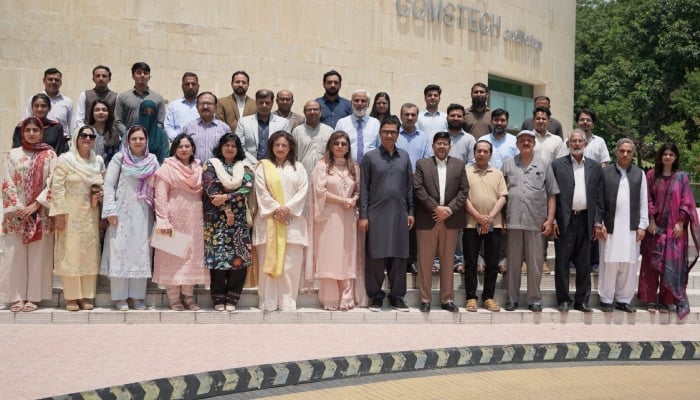
The concerns were raised during a two-day consultative workshop on developing a One Health Joint Action Plan and Regulatory Mechanism for Islamabad as a Model District, jointly organised by the Health Services Academy (HSA) and the Pakistan One Health Alliance (POHA) at the COMSTECH Secretariat.
Experts said several provincial health departments, including Punjab, the District Health Office (DHO) Islamabad and major public and private hospitals either do not routinely share or inconsistently report surveillance data to the National Institute of Health (NIH), leaving authorities without complete information needed for timely detection and control of disease outbreaks.
They said the problem extends beyond coordination between the federal and provincial governments. Even within the Punjab Health Department, several institutions, vertical programmes and projects operate in silos and do not routinely exchange surveillance information with one another, resulting in fragmented data systems that weaken outbreak detection.
The experts cited dog bite cases, rabies and other infectious diseases, including HIV, as examples of institutional fragmentation. They noted that data on dog bites, rabies deaths and laboratory-confirmed infections remain scattered among hospitals, district health authorities, municipal bodies and animal health institutions.
The participants also expressed serious concern over the widespread and largely unregulated use of critically important antibiotics in poultry, livestock and fisheries. They warned that antibiotics reserved for treating severe infections in humans are increasingly being used as growth promoters in food-producing animals, accelerating antimicrobial resistance (AMR) and reducing the effectiveness of life-saving medicines.
They further warned that unless antibiotic stewardship is extended beyond hospitals to the agriculture, livestock and fisheries sectors, Pakistan could face an increasing burden of drug-resistant infections that are becoming more difficult and expensive to treat.
The inaugural session was chaired by Prof Dr Ramesh Kumar, Dean of Public Health at HSA, who said the One Health approach was no longer a choice but a necessity for protecting human, animal and environmental health.
National Coordinator of the One Health Workforce Development Project, Prof Dr Tariq Mahmood Ali, said Pakistan urgently needed a competent and resilient workforce capable of responding to pandemics, zoonotic diseases, antimicrobial resistance and other public health emergencies.