ISLAMABAD: A possible breakthrough may be taking shape in the India-Pakistan diplomatic stalemate, with unconfirmed reports suggesting that New Delhi has floated a proposal through Track-II channels to restore the Indus Waters Treaty (IWT) in return for Pakistan reopening its airspace to Indian commercial airlines.
While neither government has acknowledged the reported proposal, diplomatic sources say the idea surfaced during the recent Track-II engagements involving retired diplomats, military officials and policy experts from both countries, held on the sidelines of a dialogue in Sri Lanka.
If pursued, the proposal could mark the first indication of a potential trade-off between two of the most contentious issues that emerged after last year’s military confrontation — India’s suspension of the Indus Waters Treaty and Pakistan’s closure of its airspace to Indian carriers. Pakistan barred Indian airlines from using its airspace following the conflict, forcing them onto significantly longer routes to Europe, North America and parts of the Middle East. Aviation industry estimates suggest the restrictions have cost Indian airlines millions of dollars in additional fuel and operating expenses, while also increasing flight times.
According to the unverified reports, New Delhi has informally conveyed that it would be willing to revisit its suspension of the World Bank-brokered treaty and permit the natural flow of rivers if Islamabad agrees to lift restrictions on Indian overflights. The reported proposal is understood to form part of a broader confidence-building framework rather than a formal diplomatic initiative. Although, the reported proposal has generated interest in diplomatic circles, there has been no official confirmation from either New Delhi or Islamabad that such an offer has been made or is under consideration.
When contacted, Syed Mehr Ali Shah, Additional Secretary and spokesperson for the Ministry of Water Resources, said he was unaware of any such development. “I am not aware of any such development,” Shah told The News when asked whether India had indicated its willingness to restore the Indus Waters Treaty in exchange for Pakistan reopening its airspace.
The Indian media earlier confirmed that Track-II discussions involving Indian and Pakistani participants had recently taken place in Sri Lanka, where regional security, crisis management and bilateral issues were discussed. However, participants described the meetings as informal.
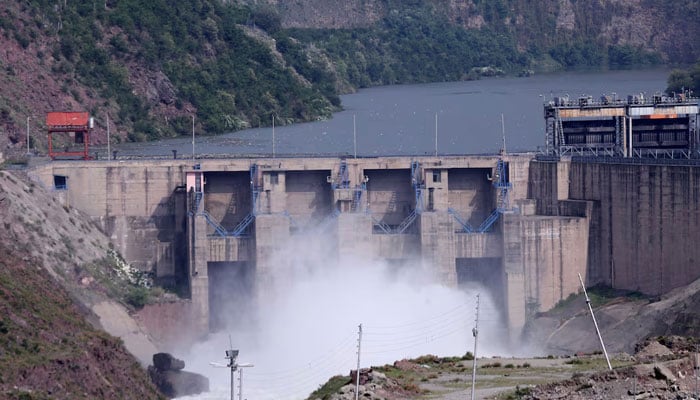
The Indus Waters Treaty, signed in 1960 under the World Bank auspices, has survived wars and prolonged periods of hostility between the two neighbours. However, India placed the 1960 Indus Waters Treaty in abeyance on April 23, 2025, following the Pahalgam attack in Indian-held Kashmir, while Pakistan has maintained that the treaty remains legally binding and cannot be unilaterally suspended. Diplomatic observers say Track-II channels are often used to quietly test ideas before they graduate to formal negotiations. Whether the reported “water-for-airspace” formula represents a genuine backchannel initiative or simply an exploratory concept remains to be seen.