ISLAMABAD: The reopening of the Strait of Hormuz augured well with a dramatic reversal in global commodity markets, bringing relief to governments, businesses and consumers after more than 100 days of war and disruption.
Oil prices have collapsed from wartime highs, LNG prices are falling, shipping lanes are reopening and inflation pressures are beginning to ease. Yet the economic scars of the conflict remain significant, with economists estimating that the world economy has already suffered between $500 billion and $900 billion in losses during the roughly 100-day crisis.
Had the conflict continued and the Strait of Hormuz remained largely closed for another year, the consequences would have been far more severe. Several economic models projected annualised losses of approximately $2 trillion, while some worst-case scenarios suggested damage could have reached $3-3.5 trillion, equivalent to wiping out the entire annual economic output of a major industrial nation. Such a prolonged disruption would have likely pushed several economies into recession, triggered a fresh inflation surge and severely disrupted global trade.
The reason for the concern was straightforward. The Strait of Hormuz normally carries approximately 20 million barrels of oil per day, nearly one-fifth of global oil consumption, as well as a substantial share of the world’s liquefied natural gas exports. When traffic through the strait collapsed, markets feared the biggest energy shock since the 1973 oil crisis.
At the height of the conflict, Brent crude surged to $115-120 per barrel, while some investment banks warned that prices could exceed $150 per barrel if the disruption persisted. LNG prices also spiked as traders feared interruptions to exports from Qatar, one of the world’s largest LNG suppliers. Tanker freight rates increased several-fold, while prices for fertilisers, petrochemical feedstocks, sulfur, aluminum and other industrial commodities rose sharply because Gulf producers play a critical role in global supply chains.
Today, the picture looks dramatically different. Brent crude has fallen to $73.84 per barrel, down more than 40 percent from its wartime peak. US benchmark WTI crude trades at $70.17 per barrel, while UAE Murban crude has declined to $67.24 per barrel, already approaching the range many analysts consider the long-term equilibrium price. Oman crude stands at $69.67, while Russia’s Urals benchmark has fallen to $64.42 per barrel.
Natural gas and LNG markets are also signaling that the worst may be over. The Japan-Korea LNG benchmark, one of the most important indicators of Asian gas prices, has declined to $15.74 per MMBtu, while European Dutch TTF natural gas trades around €14.03 per megawatt-hour. US gasoline futures have fallen to $2.88 per gallon, and heating oil prices have eased to $3.13 per gallon. These declines indicate that the wartime energy premium is rapidly disappearing from global markets.
The sharp drop in commodity prices reflects growing confidence that the Strait of Hormuz will remain opened and that Gulf energy exports will continue recovering. However, the market is not yet fully back to normal.
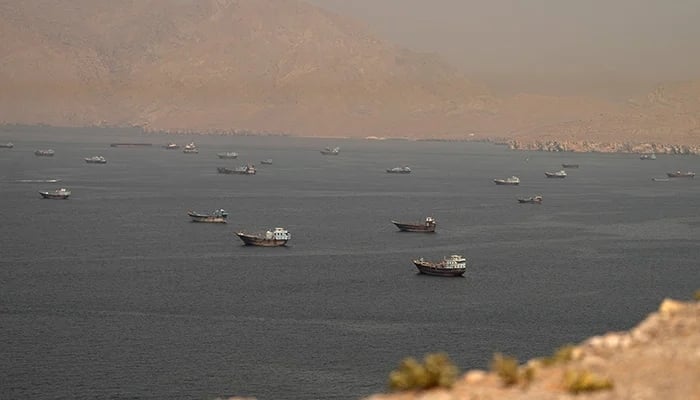
Before the conflict, approximately 125 ships per day transited Hormuz. Current traffic remains significantly below normal levels. Hundreds of merchant vessels remain delayed, while more than 100 loaded oil tankers carrying roughly 120 million barrels of crude are still working through the backlog created by the closure. Insurance premiums for Gulf shipping also remain elevated, adding costs throughout the energy supply chain.
Another key challenge is refining capacity. Industry estimates indicate that more than 3 million barrels per day of Middle Eastern refining capacity was temporarily shut down during the conflict, while approximately 1.9 million barrels per day remains offline. Major facilities in Saudi Arabia, Kuwait, the United Arab Emirates and Bahrain experienced damage or operational disruptions.
Repair efforts are progressing. Industry forecasts suggest refinery systems could recover to approximately 70 percent of normal capacity within six to eight weeks, while 90-95 percent recovery is expected within 40-60 days. Near-full restoration may require three to six months, and complete logistical normalisation could extend into early 2027.
The return of refining capacity is crucial because it will determine how quickly oil prices move back towards pre-war levels. Most analysts now expect Brent crude to trade between $68 and $75 per barrel during late summer and autumn. If refinery repairs continue smoothly, shipping traffic normalises and geopolitical tensions remain contained, Brent could return to the $65-70 per barrel range by the end of 2026, effectively restoring pre-war market conditions.
The economic benefits of lower energy prices will gradually spread across the world economy. During the conflict, higher fuel costs pushed up transportation expenses, manufacturing costs and food prices, contributing an estimated 0.5-0.8 percentage points to global inflation. The reversal in energy prices is now expected to ease those pressures.
Economists estimate that sustained oil prices near $65–70 per barrel could reduce inflation by approximately 0.1–0.2 percentage points in the United States, 0.1–0.3 points in the United Kingdom, and 0.1–0.2 points in Japan. China is expected to experience a smaller benefit because inflation there was already subdued.
The biggest winners are likely to be major energy importers such as India and Pakistan. India could see inflation decline by 0.2-0.4 percentage points, while Pakistan could experience a reduction of 0.5-1.5 percentage points due to lower fuel import costs and reduced pressure on its currency and current account balance.
For Pakistan, every sustained $10 decline in oil prices translates into hundreds of millions of dollars in annual savings on the national import bill. A return to Brent prices of $65–70 per barrel could, therefore, save the country several billion dollars compared with wartime conditions. India, one of the world’s largest oil importers, could save tens of billions of dollars annually.