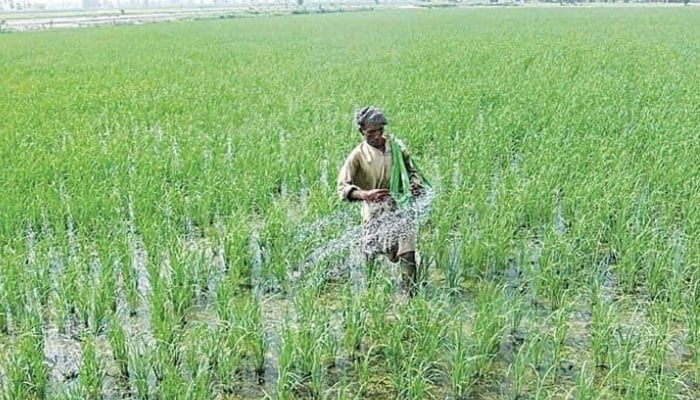
LAHORE: The Punjab Irrigation Department on Wednesday notified revised water rates (Abiana) for the province, implementing flat charges that give benefit to growers cultivating water-guzzling crops like sugarcane and rice.
According to a notification issued under Section 49 read with Section 136 of the Punjab Irrigation, Drainage and Rivers Act, 2023, flat-rate assessments for the kharif and rabi seasons have been significantly revised.
With immediate effect, the governor of Punjab has set new Abiana rates for the kharif season at Rs1,650 per acre. For the rabi season, it is Rs850 per acre. This supersedes the previous notification dated December 5, 2023.
The department also fixed additional rates. For sanctioned garden supplies, the rate will be Rs2,000 per acre per annum. For state-owned lift irrigation, the rate will be Rs2,250 per acre per annum.
The secretary of the Punjab irrigation department issued the notification in this connection on Wednesday, June 24 (2026).Commenting on the revised upward water rates, President of Kissan Ittehad Pakistan (PKI), Khalid Khokhar, condemned the steep rise. He said that the government should have given some relief to growers instead of further burdening them with an increase in the cost of production, which is, according to him, already on the higher side compared with regional countries.
He said the government should have introduced crop-based agriculture, arguing that a flat rate would benefit water-guzzling crops like sugarcane and rice. He said that farmers growing less water-intensive crops would bear a greater financial burden than under the flat-rate system.
Farooq Bajwa, the founding president of the Punjab Water Council, said that a significant increase in water rates means farmers will have to pay more to irrigate their crops. According to him, the water rate has been increased by up to fourfold under the new rates. He added that kharif rates are about 94 per cent higher, which makes sense because water use is much higher in summer crops.
Orchards are hit hardest, as water rates surged by Rs 1650 + Rs 2000 = Rs 3650/acre in kharif. That’s why orchard farmers often push back on Abiana. The lift irrigation penalty is steepest, having increased to over Rs 4,000 per acre. He concluded that the decision shows the government is passing on electricity/pumping costs altogether to users.