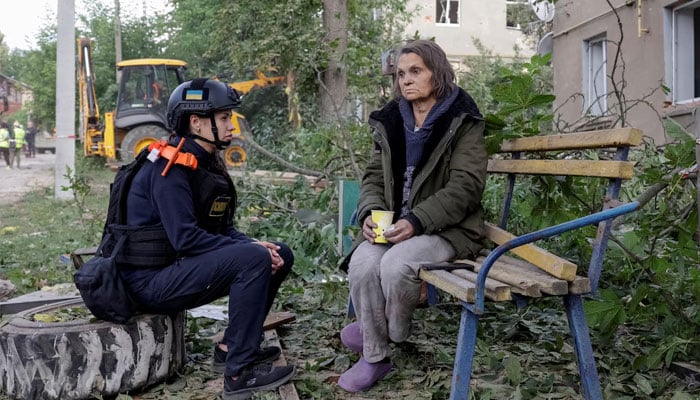
KYIV: Ukraine’s stronger position in the war with Russia has yet to relieve the humanitarian crisis felt by millions of displaced Ukrainians and worsened by a plunge in aid spending, the head of the International Rescue Committee said.
Ukraine has slowed Russia’s advances on the battlefield to a virtual halt in recent months, prompting G7 leaders to recognise at a summit last week that momentum in the war has shifted.
Speaking during a visit to Ukraine, David Miliband, the IRC’s president and CEO, said it was still vital to recognise the impact of aid cuts, led by the US, that has halved the IRC’s budget in the country to a current estimate of $20 million in 2027 from $40 million last year.
“It feels particularly important at a time when there is this new sense of a different geopolitical narrative to recognise the brutality and strain that’s being faced by millions of Ukrainians,” Miliband said on Saturday, World Refugee Day.
The UN calculates roughly 118 million people are displaced globally, often as a result of conflict, violence and persecution. Ukraine accounts for around 10 million, with nearly four million of those internally displaced inside the country.
“These historic highs speak to what we call the new world disorder,” Miliband said, citing the impact of more than 60 wars, as well as disease and natural disasters. “There are more shocks and fewer shock absorbers. And money is one of the absorbers.”
The Trump administration has drastically reduced foreign aid and dismantled the US Agency for International Development, prompting other nations to also cut aid spending.
In Ukraine, the IRC helps to provide mobile medical help to commuanities living close to parts of the 1,200-kilometer frontline. It provides trauma support to vulnerable children and women who have suffered abuse.
Miliband said one of the less discussed aspects of the conflict was the impact on the population’s mental health after more than four years of war.
Redirecting even a small part of the billions of dollars in military support provided by Ukraine’s allies toward humanitarian aid and psycho-social support could have an enormous impact in maintaining the resilience of society, he said.