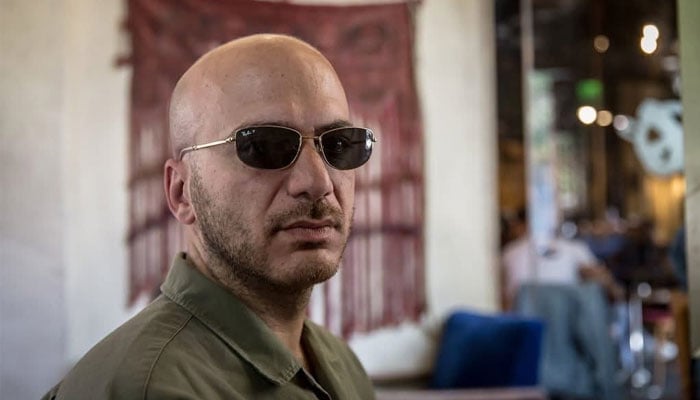
DAMASCUS: Syrian-British activist Hassan Akkad announced on Sunday that he had been released, days after his campaign group said Syrian authorities had arrested him in apparent connection to his online activities.
“I´m back home safe and sound. My heartfelt gratitude goes to everyone who supported me and my family during this period. More soon,” he wrote on Instagram, where he has more than 200,000 followers.
Akkad, who was detained for a time at the outset of the country´s civil war in 2011, had been urging influential figures to honour donation pledges to a public development fund established after the December 2024 toppling of Bashar al-Assad.
Akkad´s arrest had sparked criticism, recalling for some the practices of the former government.
Two of his close friends had told AFP that he was arrested at a cafe while they were watching football together.
The “Give Us the Money You Owe” campaign, which Akkad launched two months ago, had issued a statement after his arrest saying “the allegations appear to be connected to Hassan´s public statements and online activity”.
In recent videos, Akkad had sarcastically urged businessmen, ministers and influential figures close to the new authorities to pay donations they had pledged -- with the aim of kickstarting reconstruction -- at fundraising events after current President Ahmed al-Sharaa came to power.
Among them was businessman Mohammad Hamsho, whose name was closely associated with the former government and who was under US and European sanctions, but who this year reached a financial settlement with Syria´s new authorities.
Earlier this month, Akkad had complied with a summons from the government´s Cybercrime Administration following complaints including from a media figure close to the authorities, according to the campaign.
Akkad, who arrived in Britain as a refugee in 2015 before obtaining citizenship, said he would stop posting content after the summons, saying he had received death threats through social media.
Syria´s new Islamist authorities have sought to present a flexible and open governance model, but several measures they have taken have raised concerns among activists and rights advocates about restrictions on personal freedoms.