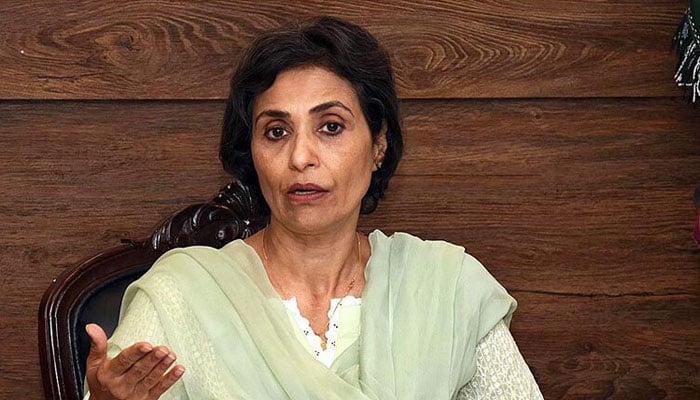
Islamabad : Federal Ombudsperson for Protection Against Harassment (FOSPAH) Fauzia Viqar has called for stronger institutional responses to ensure justice for women remains fast, fair and accessible across the Organisation of Islamic Cooperation (OIC) member states.
Addressing the second meeting of the Sub-Committee on Women’s Rights convened and chaired by her virtually under the OIC Ombudsman Association, Fauzia highlighted three critical areas -- analysing complaint trends, evaluating redress mechanisms and identifying key legal and policy gaps.
She reiterated the need to ensure that ombudsperson institutions respond effectively to women’s complaints and precisely pinpoint where current policies fail to protect them.
The ombudsperson renewed Pakistan’s steadfast commitment to leveraging its regulatory expertise via the OICOA Sub-Committee platform to spearhead advocacy for continuous structural reforms and safeguard the dignity and economic self-determination of women globally.
The OICOA Sub-Committee on Women's Rights is a dedicated body created to harmonise legal frameworks, strengthen grievance mechanisms and advance gender justice across member states.
The virtual assembly served as a high-level diplomatic and legal forum to evaluate, consolidate and bolster protections for women in the workplace and secure their foundational socio-economic rights.
The international session witnessed participation from the heads of ombudsman institutions and distinguished delegates from Iran, Turkiye, Azerbaijan, Togo, Bahrain and Benin, alongside representatives from the ombudsman offices of Pakistan's Punjab and Khyber Pakhtunkhwa provinces. Tanzania and Rwanda participated as observers.
The meeting aimed to strengthen cooperation on women’s rights and gender responsive governance across OIC member states.
Central to the proceedings was the formal presentation of a comprehensive diagnostic compendium drafted by FOSPAH.
The compendium provided a rigorous comparative analysis of existing statutory frameworks across OIC jurisdictions, systematically identifying legal lacunae while offering a blueprint for harmonising institutional mechanisms against gender discrimination and for the promotion of women’s access to rights.
Commending the initiative, OICOA executive secretary Almas Ali Jovindah noted that the compendium was “far more than a static inventory of regional laws; it presents an empirical blueprint of how various states operationalise administrative justice.”
He highlighted innovative practices across member states, including technology-enabled protection mechanisms, legislative reforms addressing gender-based violence, political participation measures and expedited access to justice for women.
Addressing the meeting, High Commissioner of Rwanda Harerimana Fatou underscored her country’s commitment to gender equality, stating that “from the village to the center, the State of Rwanda has generated gender responsive budgets.”
She emphasised the importance of addressing barriers to girls’ education and strengthening collaboration among OICOA member states to advance educational opportunities for women and girls.
During deliberations, participants engaged in an exhaustive exchange of regional laws and policies, administrative best practices and collaborative methodologies aimed at enhancing systemic accountability.