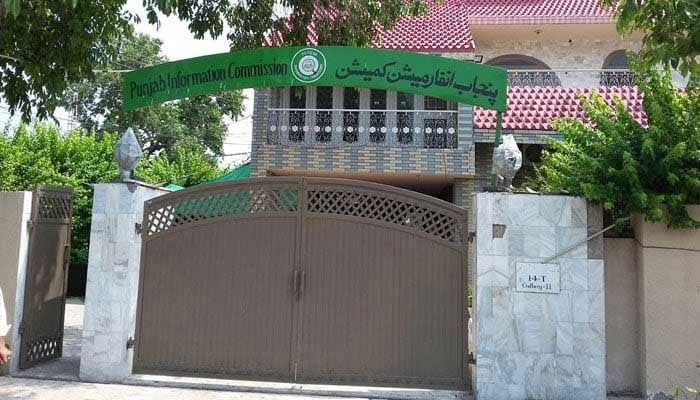
LAHORE: Despite having one of the country’s comparatively stronger right to information (RTI) laws, Punjab continues to face significant implementation gaps, with only 52 per cent of legally mandated information currently available on government websites, according to recommendations presented by the Free and Fair Election Network (FAFEN).
The recommendations emerged from a concurrent session on “Strengthening Punjab RTI Law and Practice” during the National Conference on Countering Disinformation through Accessible and Reliable Government Information held in Islamabad on Thursday.
Participants observed that while the Punjab Transparency and Right to Information Act (PTRIA), 2013, provides a robust legal foundation through provisions such as proactive disclosure, designation of public information officers (PIOs), a 14-working-day response period, public-interest override of exemptions, penalties for non-compliant officials, electronic record maintenance and annual reporting requirements, implementation remained uneven across public bodies.
FAFEN shared findings from an assessment of 253 public bodies’ websites, revealing that only 52pc of information required under Section 4 of the law had been proactively disclosed online.
The session highlighted widespread institutional unawareness regarding statutory obligations. More than 80pc of assessed public bodies appeared unaware of the requirement under Section 9 to submit annual reports by Aug 31 each year.
Experts noted that although the Punjab Information Commission (PIC) is mandated to facilitate implementation, training, awareness and enforcement, its authority to ensure system-wide compliance remains insufficiently defined. Enforcement mechanisms are largely complaint-driven rather than based on regular institutional monitoring.
To address these shortcomings, participants recommended amending Section 6 of the Act to explicitly empower the PIC to issue binding compliance directions regarding proactive disclosure and annual reporting obligations. They also proposed mandatory periodic compliance reviews, standardised disclosure and reporting checklists, sustained training programmes for PIOs and senior officials, and incorporation of compliance and monitoring targets into a five-year strategic plan.
The session also underscored weaknesses in the legal framework governing digital transparency. Participants pointed out that the Act does not explicitly require public bodies to publish information online, resulting in inconsistent disclosure practices that are often difficult for citizens to locate, search or understand.
Recommendations included amending Section 4 to make website-based proactive disclosure mandatory, requiring information to be published in searchable, accessible and, where feasible, machine-readable formats, and granting the PIC authority to inspect websites and issue binding corrective directives.
Concerns were also raised regarding definitional ambiguities within the law. Key terms such as “working days”, “record”, “document”, “employee”, “official” and “online complaint” remain undefined or inadequately defined, creating room for inconsistent interpretations and delays in information disclosure.
Participants recommended expanding the definition of “public body” to include all departments covered under the Punjab Rules of Business as well as private entities receiving public contracts, subsidies, concessions, rebates or government funds. They further proposed broadening the definition of the right to information to encompass information that is understandable, analysed and disaggregated for public use.
Institutional independence of the Punjab Information Commission emerged as another major concern. Speakers argued that appointments and removals of information commissioners remain largely under executive control, with limited parliamentary oversight. The controversy surrounding the removal of a commissioner in 2023 was cited as evidence of the commission’s institutional vulnerability.
The conference recommended establishing a bipartisan consultative committee of the provincial assembly for appointments and removals, prescribing statutory timelines for filling vacancies, ensuring due process in removal proceedings and creating an independent Punjab Transparency and RTI Fund to guarantee financial autonomy.
Participants also highlighted the absence of standardised information management systems across public bodies. They observed that government institutions often upload isolated documents instead of maintaining organised, searchable datasets, while common standards for indexing, metadata, document naming, update schedules and plain language summaries remain lacking.
To improve information management, amendments to Sections 6 and 8 were proposed to empower the PIC to prescribe binding minimum standards for record-keeping and disclosure, conduct periodic inspections and require searchable databases, clear indexing systems, explanatory metadata and regular updates. Capacity building programmes for PIOs and record-management personnel were also recommended.
The conference further identified the absence of whistleblower protection provisions as a critical weakness in Punjab’s RTI framework. Participants warned that citizens, journalists, civil society activists and public officials seeking information related to corruption, abuse of authority or misuse of public resources may face harassment, intimidation, administrative pressure or professional repercussions.
It was noted that applicants’ personal details had, in some cases, appeared in official reports, decisions and online records, discouraging the use of RTI mechanisms for exposing wrongdoing.
To address these concerns, participants proposed introducing dedicated legal protections for individuals seeking or disclosing information in the public interest, prohibiting retaliation and victimisation, and requiring confidentiality safeguards for applicants requesting sensitive information.
The session also called for harmonisation of RTI laws across all provinces and regions in line with national and international best practices. Participants stressed the need to fill civil society seats in information commissions across Pakistan on an urgent basis, ensure wider public access to federal and provincial gazettes through online platforms, and incorporate RTI obligations into civil servants’ training curricula and refresher courses.
They further recommended regular coordination and sensitisation sessions between the Punjab Information Commission, district administrations and provincial secretaries, stronger enforcement of service delivery related penalties, and greater inclusion of citizens’ and civil society organisations’ views in RTI policymaking.
Speaking during the conference, the Chief Information Commissioner Punjab committed that the Punjab Information Commission would independently conduct proactive disclosure assessments of public bodies and take corrective measures, including direct engagement with departmental heads.
The commission also pledged to develop information management and information sharing standards in collaboration with civil society organisations and circulate them among public bodies for voluntary adoption until legislative amendments make such standards mandatory.