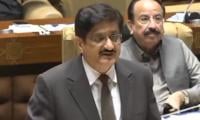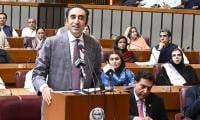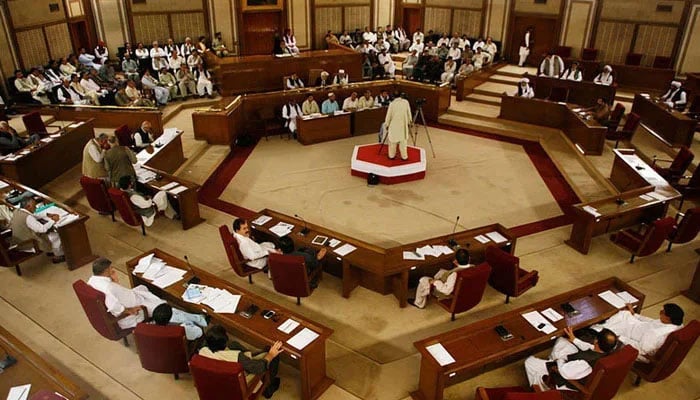
QUETTA: A heated debate began in the Balochistan Assembly on Thursday over the provincial budget for the fiscal year 2026-27, with treasury and opposition lawmakers presenting sharply contrasting views on development priorities, federal funding cuts, and governance challenges.
Government members defended the budget, calling it the best possible under difficult financial conditions, while opposition lawmakers accused both the federal and provincial governments of neglecting their constituencies and depriving the province of its rightful share of resources.
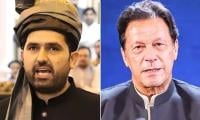
Opening the debate, Opposition Leader Mir Younas Aziz Zehri criticized the budget, saying it lacked any major development projects for Balochistan and argued that the Rs206 billion development allocation was insufficient for a province of its size and needs.
He rejected allegations that corruption in development funds was linked to lawmakers, stating that elected representatives only propose projects while government departments are responsible for execution. “If corruption occurs, it happens at the departmental level,” he said.
Zehri also claimed that the federal government had reduced Balochistan’s budget by Rs63 billion, calling it unfair treatment compared to other provinces. He pointed out that even a single department in Punjab receives a budget equivalent to Balochistan’s total development allocation.
He expressed concern over delays in long-running projects, particularly the Chaman-Karachi highway, which has been repeatedly inaugurated but remains incomplete. He urged the government to prioritize ongoing schemes, improve school funding, and ensure equal distribution of resources across all districts.
Criticising the law and order situation, Zehri noted that despite large allocations for security in the outgoing and upcoming budgets, peace remained elusive. He also raised concerns over the recent use of force against protesting teachers, calling for dialogue instead of baton charges and tear gas.
He further questioned the government’s promise of 5,000 jobs, saying thousands of vacancies announced last year remain unfilled despite applicants completing tests and paying fees. He urged Chief Minister Mir Sarfraz Bugti to investigate delays in recruitment.
Speaking on border closures, Zehri stressed the need to reopen trade routes in Chaman, Taftan, Washuk, Panjgur, Turbat, and Gwadar to boost commerce and generate tax revenue.
National Party President Dr Abdul Malik Baloch strongly rejected both the federal and provincial budgets, describing them as disconnected from the realities of Balochistan.
He said the province’s core issue was the denial of political rights and control over its resources. He argued that despite Balochistan’s vast wealth in minerals, fisheries, and natural gas, its revenues were collected elsewhere, particularly in Lahore and Karachi.
Dr Malik said Balochistan contributes significantly to the national economy through projects like Saindak Copper-Gold Project, Sui Gas Field, and Hub Power Company, yet remains underdeveloped.
He warned against attempts to roll back the 18th Constitutional Amendment or alter the NFC Award, saying such moves would deepen political unrest. He also criticized the absence of meetings of the Council of Common Interests for over 15 months.
Dr Malik highlighted the worsening security situation, the issue of enforced disappearances, and what he called extrajudicial killings in districts like Turbat and Panjgur. He stressed the need for political dialogue and strategic governance rather than security-driven policies.
Provincial Education Minister Raheela Hameed Durrani defended the budget, calling it realistic and tax-free. She said allocations for community schools, school upgrades, universities, scholarships, and youth development initiatives reflected the government’s commitment to progress.
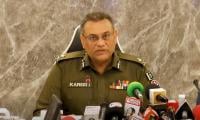
Home Minister Mir Ziaullah Langove said the budget was balanced despite economic hardships, noting a 30 percent increase in health spending and a 15 percent increase in education funding. He said strengthening the Counter Terrorism Department and recruiting special forces were vital for improving security.
Langove also revealed that the federal government had initially planned to cut Rs94 billion from Balochistan’s share, but negotiations by the chief minister and chief secretary reduced the cut to Rs58 billion.
Other lawmakers, including members of Jamiat Ulema-e-Islam, Awami National Party and independent ministers, criticized the limited development funds and complained of neglect of their constituencies.
The session highlighted deep concerns over Balochistan’s economic future, resource control, and federal-provincial relations. The assembly session was later adjourned until Friday morning.