Islamabad:Pakistan must shift from reactive disaster relief to climate-risk management as climate shocks threaten agriculture, food security, rural livelihoods and economic stability.
These warnings came from experts at a roundtable on “Climate risk and agriculture sector output: policy pathways for Monsoon 2026 and beyond,” hosted here by Pakistan Institute of Development Economics (PIDE).
Registrar PIDE Dr Nasir Iqbal said climate change was no longer only an environmental concern but a challenge of productivity, inflation, employment, public finance and growth. “The next economic crisis may begin not with a failed bank, but with a failed monsoon,” he warned.
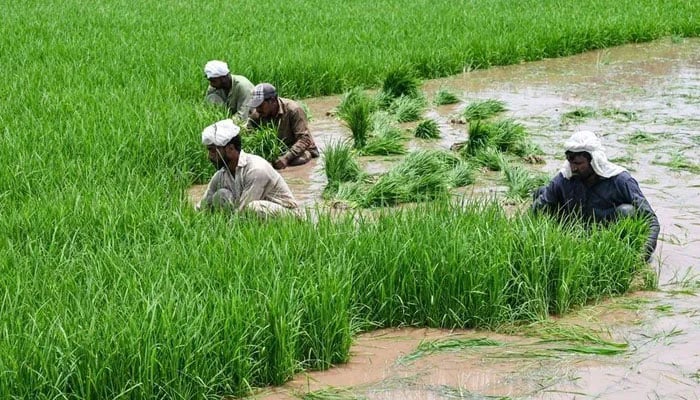
Agriculture contributes about 23.4 percent of Pakistan’s GDP and supports more than 33.1 percent of its workforce, yet remains severely exposed. Nearly 70 percent of farmers cultivate fewer than five acres, while less than two percent of agricultural losses are insured, he said. “Every rupee spent rebuilding is a rupee not invested in our future,” Dr. Iqbal said, calling for a move from disaster response to risk management, relief to resilience and fragmented institutions to integrated governance. Farmers, he stressed, need fair markets, quality seeds, technology and protection.
Chief of Research and Director, Centre for Agriculture, Climate Change & Rural Economy (CACCRE) Dr. Inayat Ullah said the study covered 121 districts, three major crops and 10 agro-ecological zones using data from 1998 to 2024. The findings showed that warming was accelerating fastest in rain-fed and southern irrigated belts. Districts in southern Punjab and interior Sindh repeatedly appeared at the intersection of food-security importance, climate vulnerability, weak irrigation and unequal land distribution.
Livestock Specialist at the Planning Commission Dr Mohsin Kiani said climate-smart feeding, including total mixed rations, could raise productivity by 15 to 20 percent while reducing emissions by 10 to 15 percent. He called for livestock insurance, recognition of insured animals as collateral, lower taxes on agricultural technology and stronger private-sector engagement.