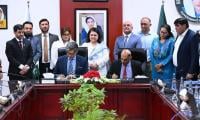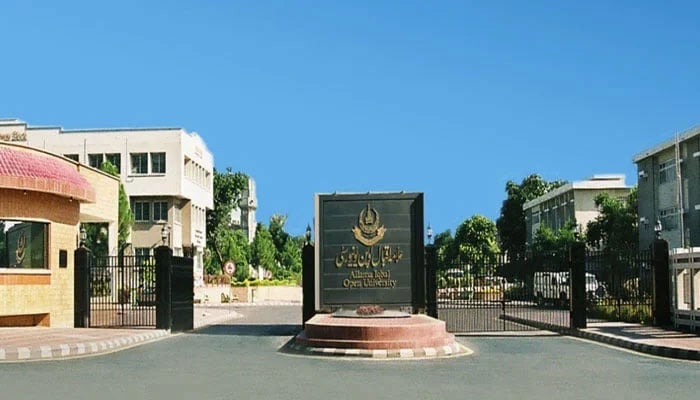
Islamabad: Sightsavers Pakistan, in collaboration with Allama Iqbal Open University (AIOU), convened a high-level roundtable consultation on Climate-Resilient Inclusive Education in Pakistan, bringing together representatives from federal and provincial governments, academia, development partners, civil society organisations, and education experts to discuss how Pakistan’s education system can better respond to growing climate risks while ensuring inclusion for all learners.
The consultation drew on findings from two Data and Research in Education - Research Consortium (DARE-RC) funded research studies that examined how climate-related hazards affect schools, learners, teachers, and communities across Pakistan. The studies revealed that climate disruptions including floods, heatwaves, smog, water scarcity, and other environmental hazards are increasingly affecting educational continuity, health, wellbeing, and learning outcomes, with disproportionate impacts on girls, children with disabilities, and learners from marginalised communities.
Opening the event, Dr. Zaigham Qadeer, Director General of the Pakistan Institute of Education (PIE), emphasised the urgent need to strengthen the resilience of Pakistan’s education system in the face of increasing climate-related disruptions. He highlighted the importance of generating actionable recommendations that can inform education policy and planning processes at both federal and provincial levels.
Speaking on behalf of Sightsavers, Munazza Gillani, Director Pakistan and Middle East, highlighted the need for stronger coordination among stakeholders working on climate change, education, disability inclusion, and disaster risk reduction. She noted that while significant efforts are underway, these often remain fragmented. She called for the establishment of a multi-sectoral platform to facilitate collaboration, knowledge sharing, and collective action to address climate-related challenges facing the education sector.
Presenting the research findings, Dr. Sapana Basnet, Itfaq Khaliq Khan and Dr Sulaman Ijaz from Sightsavers, explained that schools across Pakistan are experiencing multiple and overlapping climate and environmental risks that create compounding effects on education. The studies found that climate-related disruptions are not isolated events but recurring challenges that affect school attendance, learning continuity, health, livelihoods, and social inclusion. The research also underscored the need for locally informed, disability-inclusive, and gender-responsive approaches to climate adaptation within education systems.