Relatively successful Muslim-majority countries such as Malaysia or Turkiye show how people of different religions, cultures and lifestyles can coexist peacefully within a Muslim-majority state. Such lessons would make their political vision far more appealing.
Consider Germany’s Christian Democratic Union (CDU). Although it is a political party rooted in Christian values, it does not interfere with citizens’ freedom of choice. Individuals decide their own lifestyles. No political ideology has the right to dictate what people should eat, what they should wear, what songs they should sing, what films they should watch or whether they must attend church every Sunday.
Once a political party accepts the republican idea and participates in democratic practice, it must also accept the sovereignty of individual thought. Political parties gain support by keeping people satisfied, not by imposing their will upon them. Lasting political support cannot be secured through coercion.
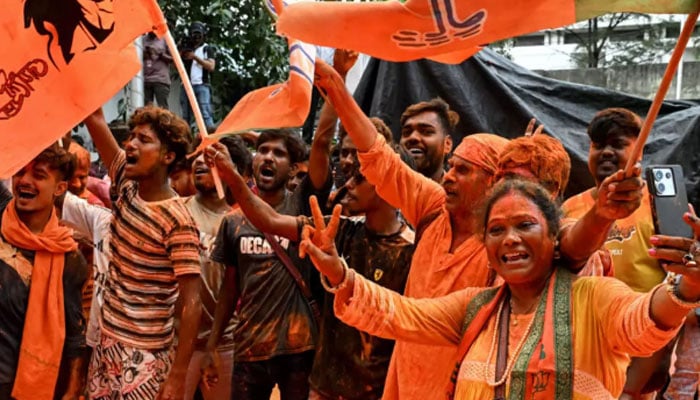
For Bangladesh, witnessing the apparent success of Hindutva politics in India, which thrives on hatred and division, and attempting to follow the same path would be a grave mistake. The path of unity and friendship, exemplified by Germany’s Christian Democrats, is far more sustainable. Their leader, former Chancellor Angela Merkel, was herself the daughter of a Christian pastor, yet she welcomed Syrian Muslim refugees with compassion.
In Bangladesh, since the Permanent Settlement of 1793, hardline Hindutva and a saffron cultural outlook disguised as progressivism have often looked down upon Muslim and Islamic culture. The secularism that developed in colonial Calcutta under British patronage was, in many respects, a form of cultural superiority that marginalised Muslims while elevating Hindu identity. Within education, cultural practice and social life, one could proudly practice Hinduism while still being regarded as progressive. Yet Muslims were often expected to downplay their religious identity and present themselves as merely secular in order to gain acceptance from the cultural gatekeepers of that tradition. While many educated people in Kolkata have moved beyond such outdated thinking, a section of Dhaka’s newly educated and influential class continues to carry the burden of that Hindutva-inflected secularism.
In Europe, after centuries of conflict among different Christian denominations, the modern secular idea emerged: regardless of religious identity, citizenship alone should guarantee equal rights within a state. Similarly, the Charter of Madinah recognised the equal rights of people from different faiths. As a result, Jews and Christians have lived for centuries in many Muslim-majority Arab societies with legally recognised rights.
South Asia, too, has historical examples of coexistence. During the Sultanate, Mughal and Nawabi eras, people of different religions participated in state affairs, while prosperous farmers and artisans were identified more by their professions than by their faith. In Bengal during the Sultanate period, both Hindu and Muslim poets, lyricists and writers flourished under royal patronage. Yet much of this rich literary and cultural history has been overshadowed by narratives that present a narrowly defined Bengali culture, constructed during the colonial era in Calcutta, as the sole bearer of a thousand years of heritage.
Since the 1990s, Dhaka has witnessed the resurgence of a certain saffron-tinged progressive cultural elitism. In reaction to that phenomenon, a new form of Islamic cultural paternalism has also emerged.
Eastern Bengal has traditionally been a land of songs and poetry. Music is woven into the everyday lives of its people. Jari, Sari, Murshidi, Marfati, Bhatiyali and Bhawaiya songs became integral parts of lived culture. Since the Sultanate era, Hindu and Muslim artistic traditions have blended into a shared cultural heritage.
Turkiye under Recep Tayyip Erdogan’s administration is considerably influenced by Islamic values. Yet ancient Greek heritage and Sufi traditions continue to flourish there. Ancient sculptures are displayed openly in museums and public spaces. Poetry, music and dance associated with Jalaluddin Rumi remain part of daily cultural life.
Against this backdrop, it becomes difficult to justify the actions of hardline religious activists in Bangladesh who cut the hair of Bauls, attack shrines, disrupt cultural events or halt film screenings. It is impossible to prove oneself more Muslim than Turkiye, the heir to the Ottoman tradition.
There is perhaps no greater mistake than becoming the very thing one is fighting. In opposing Hindutva in India, becoming the same would be an even greater error. Looking at the broader picture, one might argue that had Bangladesh not shared a border with India, it might have evolved into a Muslim-majority country more akin to Malaysia or Turkiye. But neighbours cannot be changed.
Some of Dhaka’s saffron-leaning progressives acquire a little education, imitate the accents of Nadia (the district also known as the ‘Oxford of Bengal’) and display toy-like aristocratic identity on social media. They mock Islamists every morning and every night in an effort to conceal their own insecurities. There is little basis for claims of inherited superiority. Those who were quickest to flatter the British, or later the ruling authorities, often secured a share of wealth and privilege and came to see themselves as an elite. It is unwise to respond with extremism merely because such people express condescension.
A man who migrated to the capital in search of fortune and found favour within the structures of power may have grandchildren who, following the cultural formulas of the Bengal Renaissance, learned to mock religion in the name of secularism. Meanwhile, the descendants of prosperous rural farmers and artisans often retain a natural Muslim identity.
The person who appears to be related to a British king or a Swedish queen may well have had a grandfather who grew up alongside yours, celebrating Eid and Puja together, playing football during the monsoon, falling in love with the same village girls and singing songs of separation while watching boats drift down the river after marriage, carrying loved ones away to distant villages. People who emerged from such warm shared lives now find themselves trapped by various ideologies and driven towards mutual destruction.
What greater tragedy could there be than this: 78 years after independence, India and Pakistan continue to experience ever-deepening inequalities between rich and poor. More than 50 years after Bangladesh’s independence, the widening gap between wealth and poverty remains the country’s central challenge. To distract people from this fundamental problem, artificial divisions – Hindu versus Muslim and Shariati versus Marfati – are constantly amplified. Media figures, intellectuals, politicians, oligarchs and elements of the deep state play this dangerous game daily.
Whether it is Hindutva, Islamism, leftism or any variety of nationalism, any politics that fails to reduce inequality and secure the fundamental human rights of ordinary people is a failed politics – and ultimately an inferior one.
The writer is the editor-in-chief of E-SouthAsia. He can be reached at: [email protected]