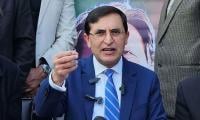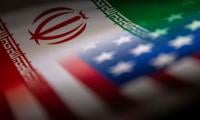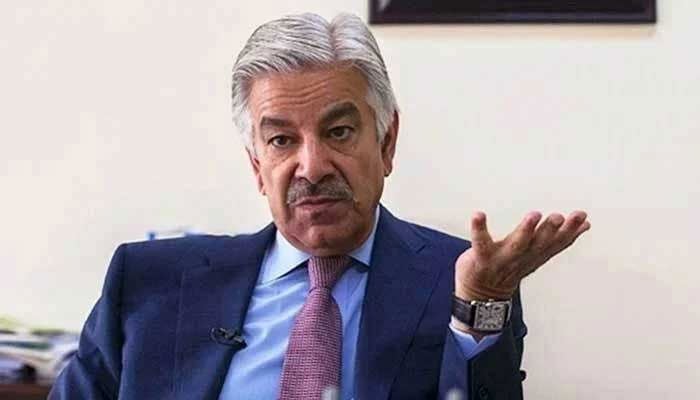
ISLAMABAD: Minister for Defence Khawaja Muhammad Asif on Tuesday said that Pakistan could be a major beneficiary of economic sanctions being lifted on Iran as a result of a peace deal with the United States.
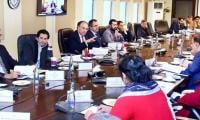
“As sanctions on Iran are being lifted on the export of gas and petroleum products, Pakistan will benefit immensely from this development,” the defence minister said while taking part in the budget debate in the National Assembly. He was of the view that Balochistan would be the major beneficiary of the relaxation of restrictions on Iran’s export of petroleum products. “Let us see how we can move towards these developments so that we can maximise our dividends,” he said.
He said all political forces must share responsibility for insecurity in Balochistan, warning against political point-scoring on terrorism linked to Afghanistan. Khawaja Asif said 4,917 soldiers, law enforcement personnel and civilians had been martyred since 2022 by militants in KP and Balochistan, adding that Afghan authorities had engaged in talks but refused written assurances that their soil would not be used for attacks in Pakistan.
Khawaja Asif said Pakistan’s civil and military leadership had led diplomatic efforts towards the success of a peace deal between Iran and the United States. “After last year’s victory against a five-times larger adversary, it was the second major event which raised Pakistan’s prestige and had no precedence in the past,” he said.
He said the nation should be thankful to Prime Minister Shehbaz Sharif and Field Marshal Asim Munir for making the “impossible possible” and noted that Indian PM Narendra Modi congratulated US President Donald Trump on the peace deal without crediting Shehbaz Sharif, calling it a “diplomatic triumph” Pakistan should celebrate as a united nation. He said external hands were involved in unrest in Azad Jammu and Kashmir (AJK) and that the 12 refugee seats in its Legislative Assembly could not be abolished.
The defence minister said individuals sent by former ISI DG Lt Gen (retd) Faiz Hameed attended meetings at the residence of then Speaker Asad Qaiser, which he and PPP lawmakers also joined to discuss drafts of anti-money laundering laws, NAB bills and other legislation, with “corrections made where necessary”. He said all political forces were responsible for what he described as shifting power centres, asking: “Who left these grey areas to continue expanding?” and adding that they were allowed to grow rather than being curtailed.
Federal Minister for Kashmir Affairs and Gilgit-Baltistan Engineer Amir Muqam added that the federal government had worked to implement commitments with the AJK government and stressed sustained dialogue for governance and economic stability, noting that Kashmir Action Committee talks had produced a 38-point agreement on key issues. Amir Muqam stressed that erstwhile Federally Administered Tribal Areas (FATA) and Provincially Administered Tribal Areas (PATA) continued to face economic challenges and required continuation of tax exemptions. Federal Minister for Religious Affairs Sardar Muhammad Yousaf said the government had presented a balanced budget to take the economy forward and it included several measures for public relief. Minister for Railways Hanif Abbasi said Pakistan is the safest country for investment in the region. Appreciating the role of civilian and military leadership, PPP lawmaker Abdul Qadir Patel said Pakistan’s efforts for peace between the US and Iran would be remembered for decades.
Minister for National Health Services Mustafa Kamal emphasised the need to control population growth. He appreciated the removal of General Sales Tax on contraceptives in the budget, stressing that it would have an impact on population control. Saba Talpur called for improved Pakistan Railways infrastructure and higher budget allocations, while Sanaullah Khan Mastikhel said the budget neglected youth, agriculture and industry. Sehar Kamran demanded a higher salary increase for government employees. Nauman Shaikh urged job creation and economic direction, and Atif Khan called for accountability over agreements with Independent Power Producers. PTI’s Junaid Akbar Khan criticised the finance minister as disconnected from the public, alleging aggressive revenue collection by the FBR, predicting a mini-budget, and calling the budget anti-people amid falling FDI. He also said Khyber Pakhtunkhwa was being denied electricity and unfairly blamed for power theft, stressing federal responsibility and development of former FATA.