ISLAMABAD: The Senate Standing Committee on Kashmir Affairs, Gilgit-Baltistan and States and Frontier Regions (SAFRON) on Tuesday expressed serious concern over illegal forest cutting in Gilgit-Baltistan and emphasised the need for effective enforcement mechanisms and a transparent permission system to ensure sustainable forest management.
After a detailed briefing, committee chairman Senator Asad Qasim constituted a sub-committee to examine the matter.
The committee meeting, presided by Senator Qasim, reviewed Trophy Hunting Programme in Gilgit-Baltistan, wherein it was informed that the programme generated Rs1.008 billion (Rs1,008.72 million) during the last five hunting seasons (2021-2026). Of this, 80 per cent (Rs806.977 million) was distributed to local communities, while 20 per cent (Rs201.741 million) was retained by the government.
The committee was informed that wildlife conservation in Gilgit-Baltistan was regulated under the GB Wildlife Preservation Act, 1975, which provides for controlled and regulated hunting under various schedules. Officials further told the committee that the region’s first national park, Khunjerab National Park, was established in 1975.
According to them, the concept of Participatory Natural Resource Management gained prominence in the late 1980s, paving the way for greater community involvement in conservation efforts.
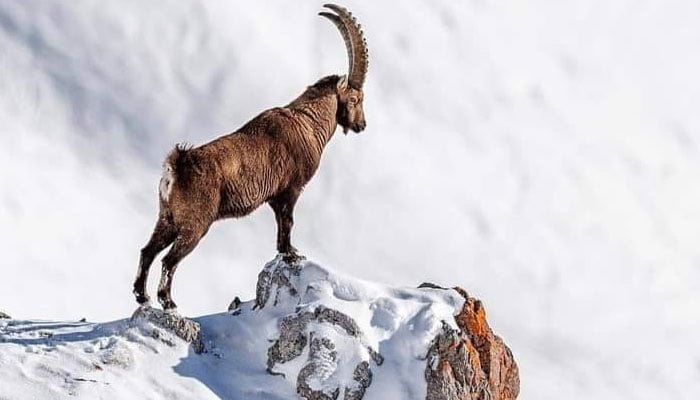
During the last five years, a total permissible quota of 590 animals was allocated under the programme, of which 181 permits were issued to foreign hunters and 138 to national and local hunters. A total of 319 hunts were successfully conducted, including 17 Astor markhor, 39 blue sheep and 263 Himalayan ibex.