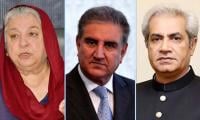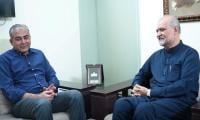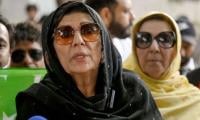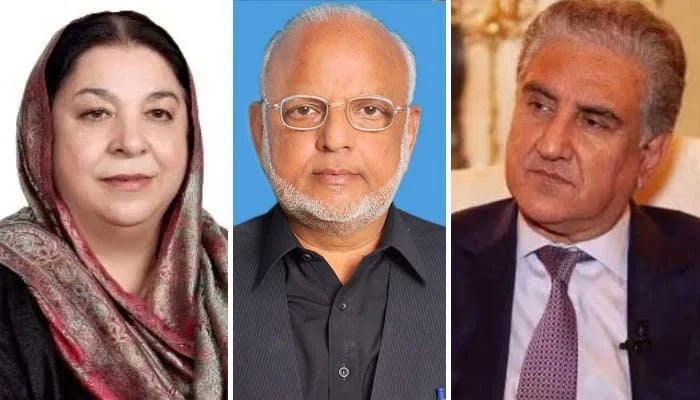
LAHORE: Imprisoned Pakistan Tehreek-e-Insaf (PTI) leaders Shah Mahmood Qureshi, Dr Yasmin Rashid, Mian Mahmood-ur-Rashid, Ejaz Chaudhry and Omar Sarfraz Cheema have proposed a “Charter of Pakistan” as a prerequisite to any “Charter of Economy”.
They said constitutional supremacy, political stability and respect for democratic principles must come before meaningful economic reforms take root. In a letter conveyed through their counsel, Rana Mudassir, the PTI leaders responded to Prime Minister Shehbaz Sharif’s recent call for a “Charter of Economy”. Acknowledging the need for a national consensus to steer the country out of its current challenges, they maintained that Pakistan’s foremost requirement is a comprehensive “Charter of Pakistan” that addresses the country’s constitutional and political issues.
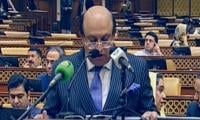
The response came after Shehbaz Sharif, during his address to the National Assembly on June 13, reiterated his appeal for a “Charter of Economy” and a “Charter of Democracy”. The prime minister urged political stakeholders to rise above partisan differences in the national interest, stressing that Pakistan remains a shared responsibility despite varying political ideologies.
The PTI leaders, however, questioned whether an economic charter alone could deliver lasting progress in an environment where, in their view, constitutional supremacy is not fully upheld and political and economic stability remain elusive. They argued that sustainable economic growth is impossible without political stability, noting that investors and businesses thrive only in societies governed by the rule of law, constitutional order and institutional certainty.
The letter contended that economic reforms cannot succeed unless the underlying causes of the country’s political and governance crises are addressed. Drawing on a traditional analogy, the PTI leaders said merely changing the tools used to solve a problem is ineffective if the root cause remains unaddressed. According to the signatories, a “Charter of Pakistan” should bring together political parties, state institutions and all centres of influence in a collective commitment to the supremacy of the Constitution. They proposed that such a charter should guarantee respect for the public mandate, end political engineering, ensure that institutions operate strictly within their constitutional roles, establish transparent and impartial accountability mechanisms, and protect key national policies including the National Action Plan and core economic strategies from political disruption.
The PTI leaders argued that successful nations first established clear political frameworks and democratic rules before achieving economic progress. In their view, political stability serves as the foundation for economic stability, rather than being its consequence. Concluding their letter, the PTI leaders urged the prime minister to move beyond political statements and initiate a broad-based national dialogue aimed at forging a “Charter of Pakistan”, which they believe is essential for resolving the country’s long-standing political and economic challenges.