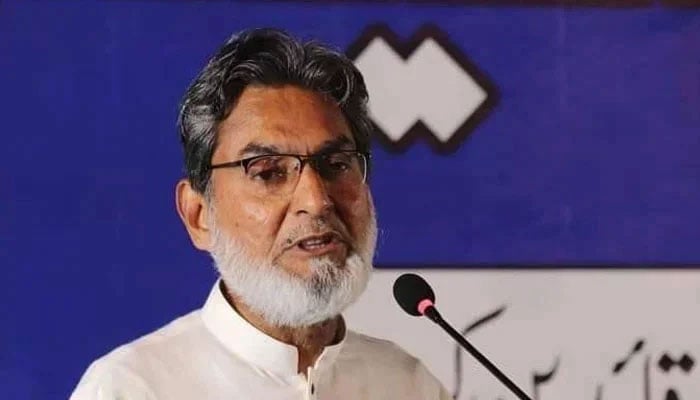
Karachi Metropolitan Corporation (KMC) City Council opposition leader Saifuddin Advocate has criticised the proposed KMC budget for 2026-27, describing it as being based on unrealistic revenue estimates, and expressing concern over both revenue generation and development spending.
In a set of budget proposals submitted to the mayor, the municipal commissioner and the KMC financial adviser, Saifuddin urged the city administration to prepare the budget in line with actual income projections instead of inflating its overall size.
He said that empowering elected representatives, union committees (UCs) and council standing committees can significantly improve revenue collection and strengthen oversight of development schemes. He also voiced concern over the low utilisation of last year’s development budget.
He pointed out that although Rs7.4 billion had been allocated for CLICK projects, only Rs3.57 billion was spent. Similarly, nearly half of the Rs9 billion earmarked under the District Annual Development Programme remained unused.
Saifuddin said the previous fiscal year’s budget stood at approximately Rs55.5 billion, while the proposed budget for 2026-27 has been increased to around Rs60 billion despite a reduction of nearly Rs7 billion in CLICK-related allocations. He argued that the figures suggest an attempt to artificially inflate the budget size.
He demanded that all KMC development projects be monitored by the relevant UCs, and that revenue generated through the Municipal Utility Charges & Tax and marriage hall fees be spent in consultation with local elected bodies, in line with commitments previously made by the mayor.
Saying that the current council is likely entering its final year, he said roads, sewerage lines and other civic infrastructure remain in poor condition across most UCs. He proposed a special package of Rs100 million for each UC, with spending decisions to be made in consultation with local representatives.
He said that under the proposal, Rs50 million would be allocated by the KMC and another Rs50 million would be secured through the Sindh government. Saifuddin also recommended forming oversight committees comprising representatives of all parliamentary groups in the council for major city projects. Such committees, he said, would help ensure transparency, quality control and timely completion of schemes, and curb corruption.
He also suggested placing graveyards under the administrative control of the relevant UCs, with revenue to be shared equally between the KMC and local bodies. In addition, he called for council committees to be granted oversight and decision-making powers in revenue-generating departments, including advertisements and land management, with 25 per cent of collected revenue allocated to UCs to improve local accountability and collections. The opposition leader stressed that development schemes should be planned and implemented in consultation with UCs to ensure equitable distribution of projects across the city.
He also called for complete details of all tenders, including project locations and costs, to be published on the KMC website and displayed at project sites to promote transparency. Questioning the revenue projections in the proposed budget, Saifuddin noted that last year’s expected income from Octroi & Zila Tax, grant-in-aid and Sindh government transfers had been estimated at Rs28 billion, but actual receipts amounted to only Rs22 billion. Despite this, the new budget projects Rs38 billion under the same heads without providing a clear justification.
He also criticised the inclusion of Rs850 million in expected recoveries from K-Electric dues, pointing out that no such recoveries had been realised during the past three years. Similarly, he said that the KMC’s own-source revenue had been projected at Rs12 billion despite actual collections of only Rs5.7 billion in the previous year, undermining the claims of financial self-sufficiency.
Saifuddin observed that no revenue had been received last year from betterment charges payable by the Sindh Building Control Authority or from toll tax collected through the excise department.
He added that advertisement revenue fell far short of expectations, with only Rs150 million collected against a target of Rs350 million, despite extensive advertising installations across the city.
He estimated that annual earnings from advertisements should range between Rs700 million and Rs800 million. He also pointed out that only Rs250 million had been received from the sale of a property against an expected Rs1.4 billion.
Saifuddin said revenue collection remains weak across almost all departments, and the failure of the Sindh government to provide adequate funds, coupled with ineffective utilisation of available resources, has worsened Karachi’s civic problems. He also expressed concern that employees have not received their outstanding dues despite a Rs2.7 billion bailout package provided by the provincial government for that purpose.