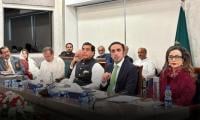
ISLAMABAD: The Senate Standing Committee on Finance has strongly opposed a proposal to provide tax exemption on the import of aircraft and parts by Pakistan International Airlines Corporation Limited (PIACL), asking the government to provide such incentives to all the airlines.
The Senate Standing Committee on Finance opposed this proposal, labelling it discriminatory.
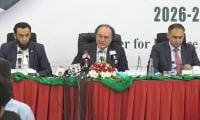
The Senate Standing Committee on Finance continued scrutiny of Finance Bill 2026-27 even on Sunday. It approved the digitisation of Federal Board of Revenue (FBR) and FBR’s faceless Inland Revenue system.
One of the major decisions taken during the meeting was the approval of a new framework empowering the FBR to conduct re-audits of business records under specified circumstances.
Under the approved proposal, a commissioner will be authorised to order a re-audit in cases where irregularities are suspected, subject to prior approval from the chief commissioner. The registered persons will be provided a full opportunity to present their position before any order is finalised.
The committee also approved provisions allowing the revaluation of inventory held by registered persons. The revised valuation of stock will be determined by a cost accountant, while inventory re-audits will be conducted only by accountants selected from an approved FBR panel. Commissioners will additionally be authorised to seek answers to specific questions from taxpayers during proceedings.
The committee held an extensive discussion on FBR’s proposal to establish a National Faceless Centre and introduce a faceless audit and assessment system. According to FBR officials, taxpayer cases will be assigned through automated algorithms, audits and assessments will be conducted electronically and direct interaction between tax officers and taxpayers will be significantly reduced.
FBR Member Ahmed Atiq Sarwar informed the committee that the proposed system seeks to separate audit functions from assessment functions and minimise opportunities for corruption. He stated that all tax transactions are proposed to be conducted electronically and that the identity of officers operating within the faceless system would remain confidential.
Senator Sherry Rehman expressed concerns regarding the practical implementation of the proposal, particularly in view of connectivity challenges.
Senator Talha Mahmood questioned the transition from conventional enforcement mechanisms, asking, “What did we do before the automated system?”
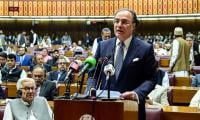
Finance Minister Muhammad Aurangzeb informed the committee that the government’s objective was to reduce excessive human intervention while maintaining effective oversight.
The finance minister further stated, “Our effort is to minimise human intervention,” while emphasising that powers were being restructured to improve efficiency and transparency.
Senator Saleem Mandviwala questioned the effectiveness of faceless operations where field enforcement remained necessary.
Following detailed deliberations, the Senate Standing Committee approved the proposal for the establishment of National Faceless Centre. The committee also approved a series of stringent enforcement measures aimed at integrating businesses into the digital tax system and combating fake invoicing. Under the approved proposals, businesses that fail to integrate with the digital system within the prescribed period may face fines. Repeated violations may attract additional penalties and may result in the sealing of business premises.
The committee approved strict action against fake and fictitious tax invoices. Persons issuing fake invoices may be fined an amount equivalent to the full value of the invoice. A public list of fake invoice issuers may also be published, while tax credits obtained through fictitious invoices will be automatically cancelled. Additional measures include a 20 percent penalty where discrepancies are detected between input tax and output tax, along with surcharges and further penalties for incorrect input tax claims. The committee approved the proposed framework for penalties and enforcement against fake invoices.
Another significant amendment approved by the committee related to the disposal of seized goods. The committee recommended that vehicles transporting seized goods should not automatically be confiscated. The committee also approved amendments relating to the auction of seized goods. Under the revised framework, e-auctions will be permitted.
The committee reviewed a proposal granting customs and tax concessions for the import and lease of aircraft, spare parts and operational equipment for Pakistan International Airlines (PIA). Officials informed members that the concessions were intended to support operational and maintenance requirements, with customs authorities monitoring quantities and utilisation.
During the discussion, committee proposed broadening the facility to all airlines. The committee agreed with the recommendation and amended the proposal to extend the exemption framework beyond PIA to all eligible airlines.
The committee also approved sales tax exemptions for the import of bulletproof vehicles required for the SCO Summit and for counter-terrorism operations. Under the approved mechanism, import of such vehicles will require clearance from both the Ministry of Foreign Affairs and the Ministry of Interior. The committee introduced amendments to impose limits on the number of vehicles that may be imported, while authorising the Ministry of Interior to determine operational requirements for counter-terrorism purposes.
Lastly, retail-packed products will be taxed at 12 percent, which may lead to higher prices for various packaged food and beverage items. The changes will also apply to products such as infant formula, edible oils, confectionery items, agricultural medicines, pesticides, branded footwear, and clothing. According to authorities, the objective is to broaden the tax base, improve economic documentation and enhance revenue collection.
The proceedings were temporarily adjourned earlier in the day due to the absence of the finance minister and minister of state. The session resumed upon the arrival of Finance Minister Muhammad Aurangzeb.