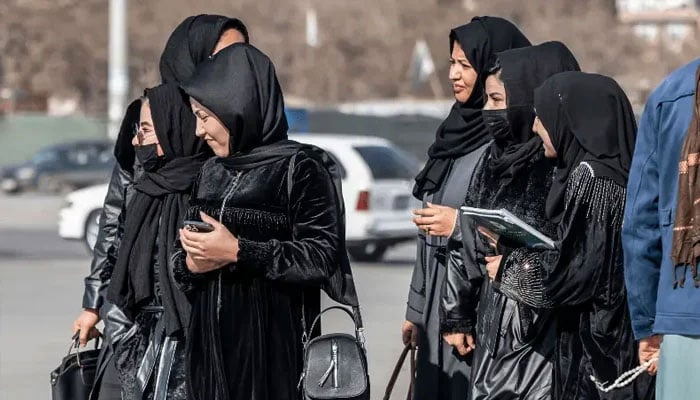
Nearly five years after the Taliban returned to power in August 2021, Afghanistan has become the site of what many human rights advocates, legal scholars and international observers increasingly describe as the world’s most comprehensive system of gender-based oppression.
What initially appeared to some as temporary restrictions imposed by a newly installed regime has evolved into a deliberate and institutionalised framework of exclusion, repression and authoritarian control.
During the UNSC briefing on June 8, 2026, Metra Mehran, founder of the Afghanistan Justice Archive, characterised Afghanistan under Taliban rule as a system of “gender apartheid” defined by the systematic, institutionalised and deliberate oppression of women and girls. Her assessment reflects a growing recognition that Taliban policies are not isolated measures but components of a broader governing ideology designed to dominate society through fear, coercion, surveillance and social control.
The scale of this transformation becomes even more alarming when viewed through Afghanistan’s demographic realities. Afghanistan’s population is estimated at approximately 42 million people. Women and girls constitute nearly half of the population, representing approximately 20.5 million individuals. The country’s median age is only 18.9 years, while nearly 63 per cent of Afghans are under 25. Approximately 46 per cent of the population is younger than 15 years of age, making Afghanistan one of the youngest societies in the world.
These figures reveal the magnitude of what is unfolding. Taliban policies are not affecting a marginal segment of society; they are shaping the lives and futures of nearly half the population while influencing the development prospects of an entire generation.
Since returning to power in August 2021, the Taliban have issued more than 230 decrees, directives, regulations, and administrative orders targeting women and girls. These measures have systematically dismantled rights relating to education, employment, healthcare, political participation, freedom of movement, freedom of expression and access to public life. No country in the world today imposes restrictions on women as extensive as those currently enforced in Afghanistan.
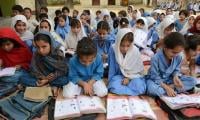
Perhaps the most visible manifestation of this repression is the exclusion of girls from education. More than 2.2 million Afghan girls are currently deprived of access to secondary schools and universities, making Afghanistan the only country in the world where girls are formally prohibited from pursuing education beyond the primary level.
The scale of this reversal is historic. Female school enrollment had increased from fewer than 100,000 girls in 2001 to more than 3.5 million by 2020. Women represented approximately 39 per cent of university students and participated across sectors as teachers, doctors, journalists, entrepreneurs, civil servants, judges, parliamentarians and community leaders. Much of that progress has now been erased.
The Taliban’s Promotion of Virtue and Prevention of Vice (PVPV) framework has become the principal mechanism for enforcing restrictions on women. Through this apparatus, authorities have sought not merely to regulate women’s behaviour but to remove women from public life altogether. Restrictions increasingly target women’s voices, faces, movement, employment and participation in society. The objective is exclusion rather than accommodation.
Recent legal developments show this repression becoming increasingly institutionalised. In January 2026, Taliban authorities introduced a new Criminal Procedure Code that further formalised unequal legal status between men and women. Human rights advocates criticised the legislation for codifying male dominance within households and weakening protections available to women. The code also criminalises criticism of Taliban leadership, imposes severe penalties for certain political offences, and obliges citizens to report activities involving government opponents, further restricting dissent and civic activism.
In May 2026, Taliban authorities ratified a Code on Judicial Separation of Spouses that has been criticised for facilitating child marriage and restricting women’s ability to seek separation or divorce. Together, these measures form part of a legal architecture designed to institutionalise gender inequality and political obedience.
The consequences extend beyond rights and freedoms into economic survival. UNDP estimates that restrictions on women’s participation in the workforce cost Afghanistan more than $1 billion annually, or about 5.0 per cent of GDP. Before the Taliban takeover, women represented about 22 per cent of the labour force; today, their participation has fallen sharply. Meanwhile, 21.9 million Afghans require humanitarian assistance, including 10.7 million women and girls. Restrictions on female aid workers have also reduced the effectiveness of humanitarian operations across the country.
Healthcare outcomes are also deteriorating. Afghanistan records one of the highest maternal mortality rates in Asia, estimated at approximately 620 maternal deaths per 100,000 live births. Restrictions on women’s education threaten the future availability of female doctors, nurses and midwives, potentially worsening already fragile health indicators.
The Taliban’s repression also disproportionately affects Afghanistan’s ethnic and religious minorities. Shia and Ismaili communities continue to face discrimination, exclusion, and security threats. Women belonging to these communities frequently experience multiple layers of marginalisation based on both gender and religious identity.
Yet perhaps the most revealing aspect of Taliban governance is how these restrictions are enforced. Women have been arrested for participating in peaceful protests, advocating for girls’ education, travelling without a male guardian, violating dress regulations, working with civil society organisations, operating businesses or publicly criticising Taliban policies.
Numerous reports have documented allegations of torture, prolonged isolation, sexual violence, forced confessions, forced nudity, rape, gang rape and threats against family members involving women detained by Taliban authorities. Human Rights Watch, Amnesty International and the UN Special Rapporteur have repeatedly warned that these practices create an atmosphere of fear intended to suppress resistance and discourage women from participating in public life.
The significance of these abuses extends beyond the individual victims. They reveal that Taliban rule is maintained not solely through legal decrees but through surveillance, intimidation, detention, and punishment.
Indeed, the number of women affected extends far beyond those formally arrested. Every one of Afghanistan’s approximately 20.5 million women and girls now lives under a system that regulates education, employment, mobility, public participation, dress and personal autonomy. By scale alone, this represents one of the largest state-directed exclusion campaigns against women in modern history.
Perhaps the most important policy question confronting the international community is whether engagement with the Taliban has achieved its intended objectives.
Since 2021, many governments and international organisations have pursued cautious engagement in the hope that diplomatic dialogue, humanitarian cooperation, and economic incentives might encourage moderation. The evidence increasingly suggests the opposite. Rather than softening their policies, Taliban authorities have progressively expanded restrictions on women while consolidating political power.
Diplomatic accommodation has coincided with the institutionalisation of repression rather than its reduction. This reality presents difficult challenges for UNAMA, donor governments, humanitarian agencies and multilateral organisations. While engagement remains necessary to address humanitarian needs and regional security concerns, there is growing concern that political normalisation risks conferring legitimacy upon a system built on discrimination and coercion.
Afghanistan has become more than a humanitarian crisis. It is a test of international law, multilateralism and the credibility of global human rights norms. The response to Afghanistan will help determine whether principles such as equality, non-discrimination and universal human rights remain enforceable standards or merely aspirational rhetoric.
What is unfolding today is not simply a rollback of women’s rights. It is the construction of a system in which the exclusion of women serves as a foundation for broader authoritarian control. The oppression of women is not an unintended consequence of Taliban governance; it is one of its central pillars.
History will judge not only those who imposed this system but also those who chose to normalise it. The world’s response will help determine whether gender apartheid becomes an accepted feature of international politics or a challenge the international community is willing to confront.
The writer is a public policy expert and leads the Country Partner Institute of the World Economic Forum in Pakistan. He tweets/posts @amirjahangir and can be reached at: [email protected]