From 2005 to the latest reported budget numbers, defence expenditure as a share of total federal government expenditure has fallen from 24.45 per cent to around 15.9 per cent. That is a decline of 8.55 percentage points over 21 years. In relative terms, defence share of the federal spending pie has shrunk by about 35 per cent.
In 2005, defence consumed roughly one rupee out of every four rupees spent by the government. By the latest reported budget numbers, it consumes roughly one rupee out of every six. The popular perception is that defence has taken over the budget. The numbers tell a different story: defence spending has risen in rupee terms, but its share in total federal expenditure has declined significantly.
A shrinking budget forced Pakistan’s armed forces to think differently. Pakistan could not match the larger economies platform for platform. The answer was integration: linking sensors, radars, command systems, electronic warfare, drones and aircraft into one combat network. The focus shifted from buying more to connecting better.
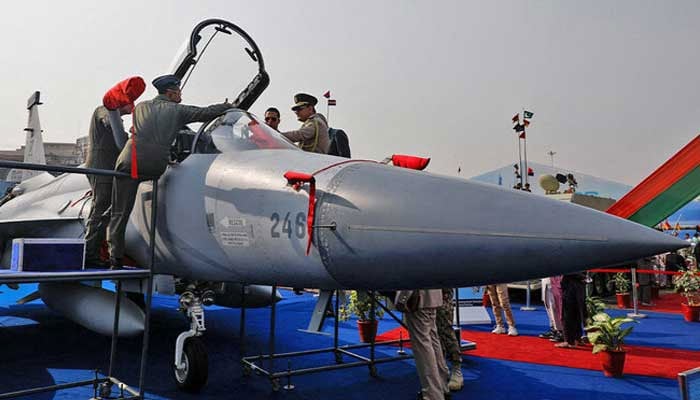
According to Reuters, US President Trump told Republican lawmakers at the White House that “five jets” have been shot down during the Pakistan-India hostilities. The larger point is technical, not political. May showed that air power is no longer a contest of aircraft alone. It is a contest of kill chains: sensors, data links, electronic warfare, command systems, pilots, missiles and timing. The platform matters. The network matters more. Wealth buys aircraft. Integration creates air power.
Yes, defence’s share fell by 35 per cent; integration rose. The lesson from May is that budgets buy platforms; doctrine creates capability. Pakistan could not win a cheque-book competition. Pakistan won through integration.
Now look at the second number: defence spending per active military personnel. According to data compiled by the Stockholm International Peace Research Institute (SIPRI) and active-duty troop strength estimates from the International Institute for Strategic Studies (IISS) Military Balance, the US spends around $712,000 per soldier. Saudi Arabia: $324,000. Israel: $285,000. China: $165,000. India: $61,000. Bangladesh: $22,000. Pakistan: around $18,000.
The implication is clear. Pakistan’s military is not built around abundance. It is built around constraints. Its comparative advantage is not expenditure per soldier; it is adaptation under pressure. A low-cost force, operating in a high-threat environment, must extract more capability from every rupee. That means better doctrine, better training, better integration and better use of technology.
The other implication is also difficult to ignore. Pakistan has a large army. Pakistan does not have a high-cost army. Pakistan spends around $18,000 per active soldier. The US spends 40 times more. Yet military effectiveness is not a linear function of expenditure. May’s confrontation reinforced an important lesson: money buys platforms, but doctrine, training, integration and leadership convert platforms into capability. Pakistan’s defence share fell by 35 per cent. Its answer was not extravagance. Its answer was integration.
The writer is a columnist based in Islamabad. He tweets/posts @saleemfarrukh and can be reached at: [email protected]