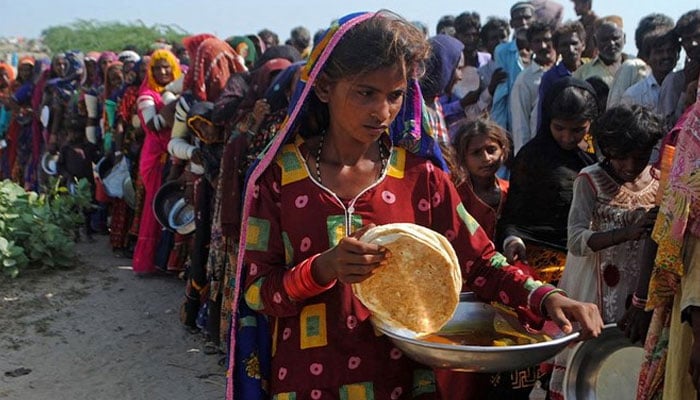
ISLAMABAD: Pakistan’s poverty rate surged to 28.9 percent in 2024-25, reversing more than a decade of steady gains and pushing an additional 7 percentage points of the population back below the poverty line, according to the government’s own Pakistan Economic Survey 2025-26 released on Thursday.
The sharp reversal, from a historic low of 21.9 percent in 2018-19, marks one of the most significant welfare setbacks in the country’s recent history. “The latest estimates, however, indicate a reversal in this declining trend,” the survey stated. “The national poverty headcount increased to 28.9 percent in 2024-25, compared to 21.9 percent in 2018-19.”
The poverty line itself told a story of soaring inflation. It increased from Rs 3,757.85 per adult equivalent per month in 2018-19 to Rs8,484 in 2024-25, “reflecting substantial inflation over the period.”
Rural areas, where the majority of Pakistan’s poor live, bore the brunt of the reversal. Rural poverty jumped from 28.2 percent to 36.2 percent over the same period, while urban poverty rose from 11.0 percent to 17.4 percent. “Poverty remained significantly higher in rural areas,” the survey said. At the provincial level, every major province saw poverty worsen. Balochistan remained the poorest, with 47.0 percent of its population living below the poverty line, up from 41.8 percent in 2018-19. Khyber Pakhtunkhwa followed at 35.3 percent (up from 28.7 percent), Sindh at 32.6 percent (up from 24.5 percent), and Punjab at 23.3 percent (up from 16.5 percent).
The survey also documented a sharp rise in income inequality. The national Gini coefficient, a measure of inequality where higher numbers indicate greater disparity, increased from 28.4 in 2018-19 to 32.7 in 2024-25. “This suggests that the recent rise in poverty was accompanied by wider disparities in income distribution,” the survey said. Urban inequality rose from 31.0 to 34.4, while rural inequality climbed from 23.4 to 29.2. Sindh recorded the highest inequality among provinces at 35.9.
A separate analysis in the survey warned that external geopolitical shocks could push even more people into poverty. “The shock is strongly regressive. It hurts the poor first and the poor most,” the survey said, citing a UNDP assessment that 8.8 million people across the region could be pushed into poverty under even a short disruption scenario.
The survey warned that the Middle East conflict could worsen poverty further. “Another external shock can therefore quickly weaken purchasing power, raise food insecurity and strain remittance-receiving families,” it said. “Around 55 percent of Pakistan’s remittances originate from the Middle East.”