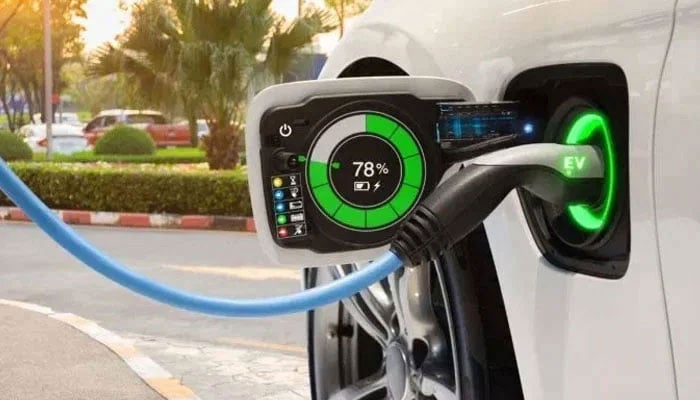
LAHORE: The proposed Customs (Amendment) Bill, 2026 has raised concerns among industry stakeholders, who caution that limiting duty relief to CKD (completely knocked down) electric vehicles could undermine Pakistan’s targets for vehicle electrification, energy security and environmental sustainability.
Under the proposed amendment, electric commercial vehicles such as buses and trucks would continue to attract 30 per cent customs duty along with an additional 6.0 per cent regulatory duty. Industry representatives argue that this places electric commercial vehicles, despite their higher FOB/CFR values and greater economic and environmental benefits, at a relatively heavier tax burden than passenger electric vehicles, which offer comparatively lower utility in terms of public transport and freight efficiency.
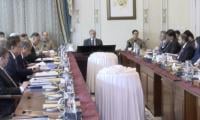
The concerns were raised during a sub-committee meeting on the auto policy co-chaired by Federal Minister for Power Awais Ahmed Khan Leghari, Minister for Climate Change Musadik Malik, and Special Assistant to the Prime Minister on Industries and Production Haroon Akhtar.
The meeting was attended by senior officials, including Lt Gen Zafar Iqbal of the National Task Force on Power, DG SIFC Major General Asadullah Cheema, Secretary Industries and Production Saif Anjum, Secretary Commerce Jawad Paul, Chairman National Tariff Commission Jawwad Uwais, and Dr Najeeb Ahmad Memon, Director General of the Tax Policy Office at the Ministry of Finance, along with representatives of the auto industry.
Participants discussed accelerating the adoption and local manufacturing of new energy vehicles (NEVs) in line with national objectives on energy security, environmental protection and industrial development, as well as increasing exports of vehicles and auto parts, maximising local value addition through appropriate tariff measures, generating employment opportunities, and preventing the entry of substandard, obsolete or non-compliant vehicles and parts, while safeguarding consumer interests.
Stakeholders argued that the current taxation structure imposes a disproportionately higher burden on electric commercial vehicles despite their stronger economic and environmental contributions. They noted that such vehicles significantly reduce fuel consumption, lower transport costs and cut carbon emissions, yet remain more heavily taxed than passenger EVs.
Industry officials stressed that Pakistan’s broader policy objectives, including achieving 30 per cent electrification, reducing the fuel import bill, lowering dependence on imported crude oil and addressing environmental challenges, require equal incentives for both CKD and CBU (completely built unit) electric vehicles during the market development phase.
They warned that restricting incentives to CKD models alone could slow the adoption of electric commercial transport and weaken the implementation of the Auto Industry Development and Export Policy (AIDEP) and the National EV Policy.
Participants emphasised that the meeting focused on promoting electric vehicles and developing a long-term strategy for NEVs in Pakistan. Industry officials said traditional internal combustion engine vehicles had delivered limited gains in localisation and exports, whereas EVs could help build a new industrial ecosystem based on advanced technology, environmental sustainability and export-oriented manufacturing.
They added that electric mobility could help reduce the country’s oil import bill, create employment opportunities, introduce modern technologies and support the development of local manufacturing and value-added industries.
At the same time, participants urged policymakers to maintain a balanced approach towards conventional vehicles, cautioning against measures that could adversely affect existing investments in the auto sector.
The meeting also discussed the importance of maintaining a reasonable duty differential between CBU and CKD imports to protect local assembly operations while ensuring a competitive market environment. Industry representatives said a clear and predictable tariff framework was essential to encourage long-term investment in the EV sector.
Stakeholders further proposed standardising duty structures for certain categories currently facing higher CBU clearance rates, particularly electric 4x4 vehicles, to improve market competitiveness and consumer access.
The discussion also differentiated fully electric vehicles from hybrid and plug-in hybrid electric vehicles (PHEVs). Industry officials argued that hybrid and PHEV models still rely significantly on combustion engines and therefore should not be classified as pure EVs.
“Hybrid and PHEV vehicles generally run only 50 to 60 kilometres on electric power before switching to petrol, meaning they remain largely dependent on conventional fuel,” an official observed during the meeting.
Participants concluded that Pakistan requires a clear and consistent policy direction to accelerate investment in fully electric mobility, strengthen local manufacturing, support exports of vehicles and auto parts, and enhance long-term competitiveness in the automotive sector.
They also stressed that promoting electric mobility would not only support environmental goals but also help manage rising energy costs and advance industrial modernisation in the coming years.