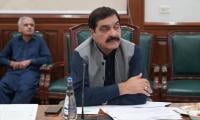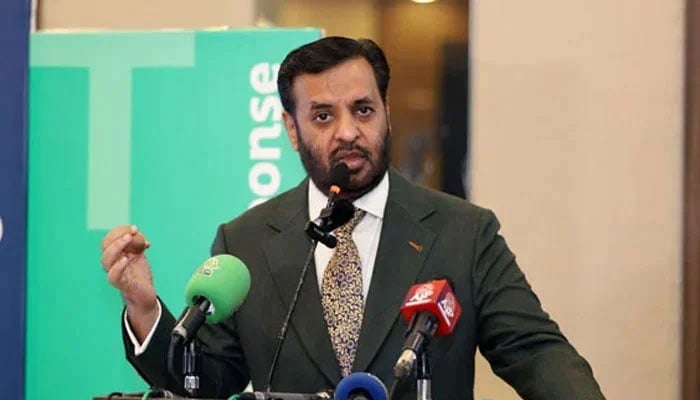
ISLAMABAD: Federal Health Minister Syed Mustafa Kamal announced on Tuesday that Pakistan would introduce a regulatory framework for herbal and traditional medicines within weeks, saying the country could no longer ignore a sector that was becoming an increasingly important component of healthcare amid rising disease burden and growing pressure on hospitals.
Addressing the inaugural session of a two-day international exhibition and seminar on herbal, traditional, Unani and homeopathic medicines in Islamabad, Kamal said the government had completed work on the proposed legislation and sent it to the Ministry of Law for review, adding the Drug Regulatory Authority of Pakistan (Drap) would soon have formal regulations in place for the sector.
“We feel that herbal medicines are the need of the time,” the health minister said, noting that despite the widespread use of traditional remedies in Pakistan, the sector had long operated without a comprehensive legal and regulatory framework.
He clarified that the conference was not being held in opposition to modern medicine and stressed that every system of healthcare had its own importance and role. “This conference is not against Western medicine. Every field has its own significance,” he said.
The minister said Pakistan’s healthcare system was facing unprecedented pressure due to rapid population growth and the increasing burden of disease. He noted that hospitals across the country were struggling to cope with patient loads despite continued expansion of healthcare infrastructure.
“We build hospitals but do not wait for patients. They become full from the very first day,” he remarked, warning that simply increasing the number of hospitals would not be sufficient to address the country’s health challenges.
He claimed that an average patient in Pakistan takes around eight days to recover from illness compared to approximately three days in many developed countries, arguing that greater emphasis should be placed on disease prevention and alternative approaches to healthcare.
Expressing concern over the country’s demographic and health trends, he said more than six million children were being born in Pakistan every year, while the number of people suffering from various illnesses continued to rise.
“Diseases are increasing at such a pace that even if we build hospitals in every street, they will still not be enough,” he said, adding that Pakistan was approaching a critical stage in terms of healthcare challenges and required urgent reforms.
The minister noted that around 85 per cent of medicines used in Pakistan were manufactured locally but said the pharmaceutical industry remained heavily dependent on imported raw materials.
He said recommendations emerging from the two-day conference would be reviewed carefully and assured participants that the government would take practical steps to support the development and regulation of traditional and herbal medicines.
“I promise that we will not lag behind on this issue,” he added.
The international exhibition and seminar has been organised jointly by the OIC Standing Committee on Scientific and Technological Cooperation (Comstech), Drap and the Ministry of National Health Services to explore ways of integrating traditional and complementary medicine into Pakistan’s healthcare system.
Speaking at the event, Comstech Coordinator General Prof Dr Muhammad Iqbal Choudhary said Unani medicine and other traditional systems represented centuries of accumulated knowledge and continued to benefit millions of people worldwide.
He stressed that the future of traditional medicine depended on scientific research, clinical validation and evidence-based approaches, adding that Comstech would continue supporting research, capacity building and international collaboration among OIC member states in this field.
Drap Chief Executive Officer Dr Obaidullah said traditional and complementary medicine remained an important source of healthcare, particularly in rural areas, but emphasised that greater scientific research and clinical evidence were needed to integrate herbal and traditional medicines effectively into the national health system.
The exhibition features participation from 53 institutions and companies associated with herbal, homeopathic, Unani and traditional medicines, while 15 leading firms have established exhibition stalls to showcase their products and technologies.
Diplomats and representatives from Jordan, Palestine, Sudan, Yemen, Mauritania, Thailand, Kazakhstan, Indonesia and the Turkish Republic of Northern Cyprus, along with representatives of the Russian Embassy, attended the opening ceremony.
Experts participating in the seminar are expected to discuss herbal medicines, clinical trials, regulatory frameworks, international quality standards, export opportunities, medicinal plant research and strategies for integrating traditional medicine into mainstream healthcare.
Participants are expected to formulate recommendations and a roadmap aimed at strengthening research, regulation, industrial development and an effective incorporation of traditional medicines into Pakistan’s national health system.