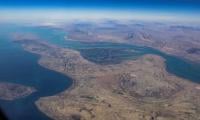
The United States on Tuesday launched strikes against Iran after President Donald Trump said Tehran had shot down a US Apache helicopter in the Strait of Hormuz, deepening doubts about prospects for peace between the two countries.
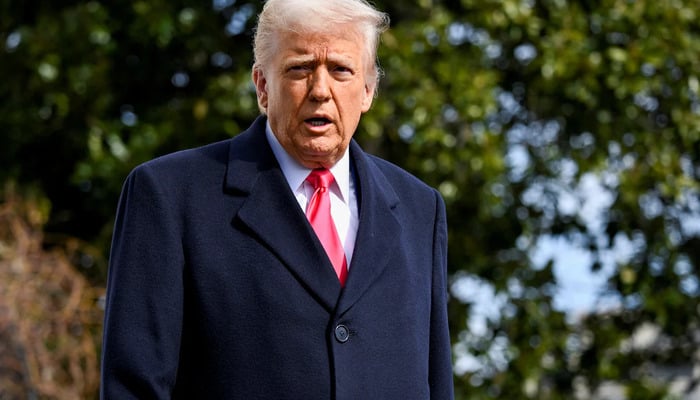
"They shot down a helicopter, and we are responding as we speak," Trump told ABC News. "I believe the response should be very strong, very powerful, and that's what this one is.
Iran's state media reported that Qeshm island in the Strait of Hormuz was attacked and that a projectile hit was confirmed in Sirik. Explosions were heard in eastern areas of Hormozgan, according to Iran's Fars news agency.
Trump earlier said the two US pilots involved in the incident were uninjured.
The Apache was brought down by a one-way Iranian attack drone, according to a U.S. official who spoke on condition of anonymity.
Iran's Foreign Minister Abbas Araqchi did not directly address the helicopter incident, but said foreign forces in the region risked being involved in accidents or crossfire.
"To reduce risk, best solution is for them to leave," he said on social media.
Iran's state media later cited a military source as saying that no offensive air military operations have been conducted in the Strait of Hormuz in the past 24 hours.
The source was also quoted as saying that there would be a decisive response in the event of renewed "hostility by the enemy" in response to the helicopter incident.
Trump told The Wall Street Journal during a phone call on Tuesday that the incident "wasn’t a big deal" and stressed that “the pilot is fine."
However, the episode could well add further strain to efforts to broker a peace deal to end the wider Middle East war and reopen Hormuz, a vital conduit for petroleum and other commodities.
Trump has repeatedly said Iran and the United States are close to an agreement, though there have been few signs of progress since a tenuous ceasefire took effect in early April.
A US Navy surface drone found and rescued the two crew, the US military said, after the US Army attack helicopter went down in waters near Oman's coast while on patrol at around 3am on Tuesday (2300 GMT on Monday).
The US military's Central Command gave no reason for the crash. It said the soldiers were rescued after two hours and said they were in stable condition - a more cautious assessment than Trump's description.
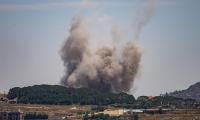
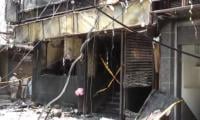
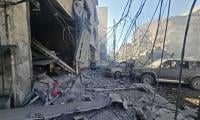
In a parallel conflict, Israel struck the historic port city of Tyre in southern Lebanon, killing at least eight people. It was the deadliest strike on the city since fighting erupted in Lebanon in early March, when Hezbollah launched rockets at Israel.
A video verified by Reuters showed debris strewn across a road at the site of the attack.
Israel's refusal to end its campaign against Iran-backed Hezbollah has hindered Trump's efforts to extend a tenuous ceasefire in the wider US-Israeli war with Iran into a durable settlement.
Iran and Israel exchanged airstrikes earlier this week, killing two people in Tehran.
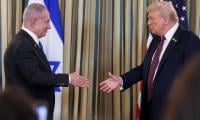
Trump told Axios on Monday he warned Israeli Prime Minister Benjamin Netanyahu not to return to war with Iran: "I said, 'Bibi, you better be careful, or you will be on your own very soon.'"
Tehran has long said any peace deal with Washington depends in part on an end to fighting in Lebanon.
In northern Israel on Tuesday, Israeli troops operating in the Ramim Ridge area close to Lebanon's border killed one person in an incident in which they returned fire, the military said.
Israel has never halted its Lebanon campaign, which has killed thousands of people, saying the conflict should be treated separately from any US-Iranian ceasefire. Hezbollah has also continued its attacks.
At the same time, Tehran has continued to block most shipping through the Strait of Hormuz, which before the war carried a fifth of the world's crude oil and liquefied natural gas. Washington has imposed its own blockade of Iranian ports.
US Energy Secretary Chris Wright said on Tuesday that ship traffic through Hormuz is rising "very meaningfully", but added it would take many months to get back to normal flows of energy once the war is over.
Trump has said any peace deal must ensure Iran cannot develop a nuclear weapon. Iran's demands include the lifting of international sanctions, the release of billions of dollars in frozen assets and recognition of its control of the strait.
Iran fired missiles at Israel on Sunday in response to strikes against Lebanon's Hezbollah in the southern suburbs of Beirut, before Israel struck back despite Trump's efforts to dissuade Israeli Prime Minister Benjamin Netanyahu from doing so.
The Israeli leader said of Iran that the "fire on that front is contained" hours after Tehran said it had stopped its military action.
But both sides warned they could resume hostilities, even as Trump indicated diplomatic efforts were progressing.
Iran and Israel "were going back and forth and now they both agreed through me to stop and we're in the final throes of what will be a very, very good deal," Trump told reporters earlier Tuesday.
When asked whether a deal would be a matter of days or weeks, he said it would take "two or three days".
Following Trump's comments, oil prices fell around 5% to below $90 a barrel.
The conflict has severely disrupted shipping via the Strait of Hormuz, through which about a fifth of global oil usually passes, while Washington has imposed a blockade on Iranian ports.
Trump had earlier urged both sides to stop "shooting" and said that "final negotiations" towards peace would proceed.
In the recent escalation of attacks, Iran fired nearly 30 missiles at Israel, according to the Israeli military, while Israel struck military sites in the Islamic republic.
Iranian state media reported on Tuesday that three people including two members of the "Army Air Defence Force" were killed in Israeli strikes a day earlier. No casualties were reported in Israel following the exchange.
Iranian media reported early Tuesday that Tehran's international airport — closed during the missile exchanges — had reopened, allowing flights carrying Hajj pilgrims from Saudi Arabia to land.