Today is World Environment Day, and the UNEP has rightly chosen the #NowForClimate campaign as its theme to promote climate action. Its Emissions Gap Report says global greenhouse gas emissions in 2035 must fall by 35 per cent from 2019 levels to meet the Paris Agreement’s 2 C pathway and by 55 per cent for a 1.5 C pathway. Present pledges to reduce emissions do not match those numbers and require climate action.
Even a cooperative world would struggle with these numbers. The world being asked to act on them is fragmented and anxious. Climate action now competes with wars, sanctions, trade tensions, energy insecurity and debt pressures. Governments still talk about emissions cuts, but public money is often diverted to immediate crises. Long-term resilience is then postponed until the next flood, heatwave or price shock forces a more expensive response.
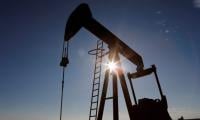
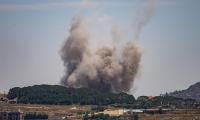
The Middle East crisis has revived old anxieties about oil, gas and shipping routes. Fuel-importing developing countries are forced to divert scarce resources from adaptation and social protection toward expensive energy imports. Some economies also fall back on coal or delay cleaner energy plans to secure supply at any cost. That short-term response worsens the emissions problem it seeks to solve.
The technological rivalry between Washington and Beijing now extends to the tools of decarbonisation. Solar panels, batteries, electric vehicles, critical minerals and clean technology standards were expected to accelerate the transition to low-carbon economies. They are increasingly viewed through the lens of tariffs, export controls, industrial subsidies and supply chain restrictions. When access to clean technologies becomes contingent on geopolitical alignment, many economies face higher costs and fewer choices. Climate action will suffer if green technology becomes another arena for great-power exclusion.
Adaptation finance has moved from conference language to fiscal necessity. UNEP estimates that developing countries will need $310 billion to $365 billion a year for adaptation by 2035, while international public adaptation finance stood at only $26 billion in 2023. That gap means delayed installation of early warning systems, delayed upgrades to drainage systems, delayed receipt of resilient seed by farmers and delayed preparation by hospitals for heat emergencies. Treating adaptation as a charity is a huge blunder. It is cheaper to protect people before disasters than to borrow after them.
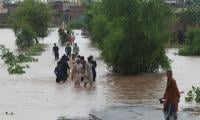
For Pakistan, this fragmented world is not an abstraction. Climate shocks are already straining our development choices and we have to deal with them on our own. The 2022 floods caused more than $30 billion in damage and economic losses. The 2025 monsoon reminded Pakistan that 2022 was not an isolated disaster. NDMA has also warned that the 2026 monsoon could bring rainfall 22-26 per cent above normal.
Pakistan, therefore, speaks from experience when it asks for climate justice. But climate justice cannot be reduced to sympathy after each disaster. Countries such as Pakistan are expected to invest in adaptation, rebuild after floods, protect the poor and decarbonise, even as large shares of public revenue go into debt servicing. UNCTAD reported that developing countries paid $921 billion in net interest on public debt in 2024. The World Bank has reported that developing countries paid out $741 billion more in principal and interest on external debt than they received in new financing between 2022 and 2024. Debt service is now a climate constraint.
A fairer climate bargain should include predictable grants, concessional finance, debt relief instruments and faster disbursement aftershocks, not only fresh loans carrying climate labels. Pakistan should press this point with confidence. It should also recognise that international finance will flow more easily when domestic climate spending is credible. Unsafe settlements, construction on floodplains, broken drainage, degraded forests, wasteful irrigation and inefficient energy use cannot be remedied by international sympathy.
The IMF’s Resilience and Sustainability Facility provides Pakistan with a platform to link climate action with public finance reform. The RSF supports reforms to integrate climate risk into budget and investment planning, improve water system resilience, strengthen disaster response and build climate risk systems. These reforms can help Pakistan show that its own planning, procurement and public investment decisions are beginning to absorb climate risk.
Pakistan’s IMF programme also carries a tension that should not be brushed aside. Under the EFF, the government is pressed to contain circular debt, recover costs and reduce untargeted subsidies. Under the RSF, it is expected to promote resilience, efficiency and mitigation. Tension arises when distributed solar is treated primarily as a threat to grid revenue rather than as the fastest available route to cleaner, cheaper, and more secure energy. Pakistan cannot ignore the fiscal arithmetic of capacity payments. However, it should also not discourage clean energy from protecting legacy contracts.
Pakistan’s NDC 3.0 commits to reducing projected 2035 emissions by 50 per cent, with 17 per cent unconditional and 33 per cent conditional on international finance, technology transfer and capacity support. That commitment will remain weak unless it is reflected in development spending, municipal planning, energy regulation, agricultural extension, social protection and disaster risk financing.
World Environment Day will pass before Pakistan’s forthcoming budget is presented in parliament. That budget will show whether climate action has entered economic policy or still sits outside it as a donor-funded annex. Pakistan has sought to create diplomatic space amid a difficult geopolitical moment, including by mediating between the US and Iran and convening regional consultations. A country that seeks room for mediation in geopolitics should also seek room for leadership in climate diplomacy.
Pakistan can speak with credibility because it has suffered climate shocks that it did little to cause. It will speak with greater authority if its budget protects adaptation, its energy policy encourages renewables without hiding the cost of bad contracts, and its provinces treat heat, floods, water stress and smog as development failures rather than seasonal emergencies. By doing so it can turn #NowForClimate into # AlwaysForClimate.
The writer heads SDPI, chairs the board of the National Disaster Risk Management Fund, and serves on the ADBI’s Advisory Board. He posts on LinkedIn @Abidsuleri