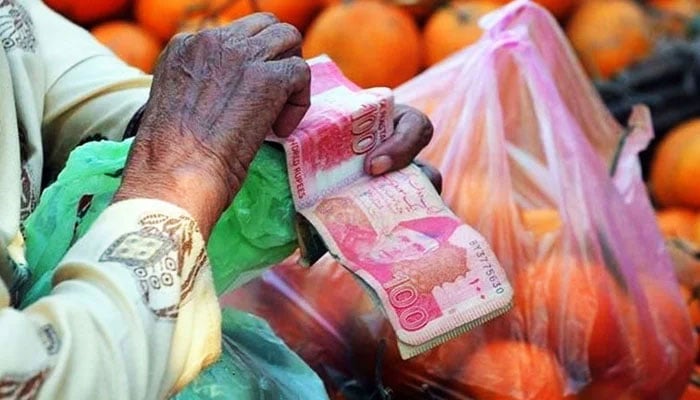
ISLAMABAD: Pakistan’s inflation surged to a 22-month high of 11.7 percent in May 2026, driven by soaring fuel and transport costs linked to tensions in the Strait of Hormuz, official data showed Monday. This month’s reading is more than triple the 3.46 percent recorded in the same month a year ago.
The consumer price index (CPI) or headline inflation, climbed from 10.8 percent in April to 11.7 percent in May, the steepest reading since June 2024. The eleven-month (July-May) average inflation for the current fiscal year stands at 6.7 percent, compared with 4.6 percent for the same period a year earlier. The 6.7pc average inflation is well above the State Bank of Pakistan’s 5–7 percent target ceiling, the Pakistan Bureau of Statistics reported.
The central bank had already raised its policy rate by 100 basis points to 11.50 percent on April 27 in response to mounting price pressures. Transport costs led the surge, jumping to 36.8 percent year-on-year from 29.9 percent in April. Petrol and diesel prices remain roughly 48 percent and 38 percent above their pre-conflict levels, respectively. Motor fuel alone rose 51.9 percent annually, liquefied hydrocarbons 49.4 percent, and electricity charges 36.5 percent. Gas charges were up 22.9 percent over the same month last year.
Housing and utilities inflation held elevated at 16.8 percent, while food and non-alcoholic beverages edged up to 7.9 percent from 7.6 percent. Clothing and footwear rose to 8.8 percent from 6.2 percent, and furnishing and household equipment to 5.1 percent from 3.8 percent in April.
Among food staples, wheat surged 62.1 percent year-on-year, wheat flour 54.4 percent, and onions 52.7 percent. Tomatoes rose 25.8 percent, meat 14.1 percent, and wheat products 12 percent. Some relief came from potatoes, which fell 36 percent, chicken 21 percent, gram pulse 18.7 percent, and eggs 18.5 percent, while sugar dropped 14.6 percent and fresh vegetables were cheaper by 5.8 percent.
On a monthly basis, prices rose a modest 0.5 percent in May, easing sharply from a 2.5 percent increase in April.
The Wholesale Price Index, which typically feeds into retail prices with a lag, stood at 12.7 percent in May 2026, down from 13.6 percent in April but sharply higher than the 0.36 percent recorded in May 2025, suggesting producers’ cost burdens have yet to fully pass through to consumers.
Core inflation, which strips out volatile food and energy prices, also broadened. Urban core rose to 9.0 percent from 8.0 percent in April, while rural core edged slightly lower to 8.4 percent from 8.5 percent, a sign that price pressures are spreading beyond the energy sector.