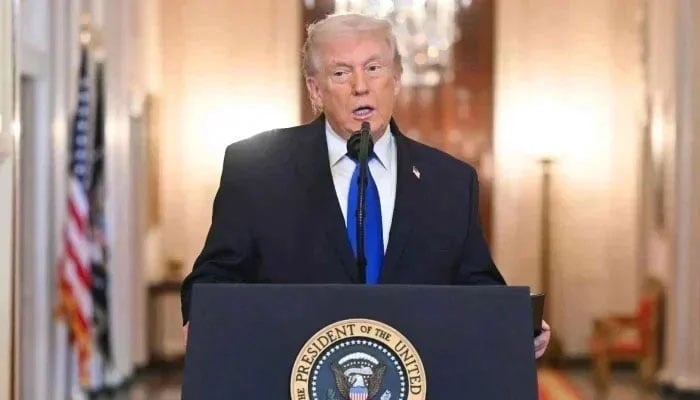
TEHRAN/WASHINGTON: US President Donald Trump said on Monday he had productive calls with Israeli Prime Minister Benjamin Netanyahu and Iran-backed militia Hezbollah, raising hopes a truce in Lebanon could hold despite Iranian state media suggestions that it could collapse.
On social media, Trump said the armed group, through intermediaries, pledged it would not attack Israel while Netanyahu agreed to pull back any troops preparing to attack Lebanon. But Israeli strikes on southern Lebanon and Hezbollah attacks on Israeli troops there continued on Monday evening.
Earlier, the Iranian state news agency Tasnim said Tehran was halting indirect negotiations with the US after Israel ordered its troops on Sunday to push deeper into Lebanon, complicating diplomatic efforts to end three months of war. Trump told an NBC reporter that he had not heard from Iran on any suspension of the indirect talks.
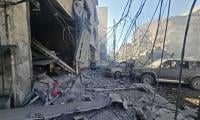
Netanyahu ordered attacks on the Hezbollah-controlled southern suburbs of Beirut on Monday, and that was expected to be an air assault as Israel has launched several times since the ceasefire went into effect in mid-April.
Trump also said Hezbollah had to stop attacks on Israel: “Likewise, through highly placed Representatives, I had a very good call with Hezbollah, and they agreed that all shooting will stop,” he said in the post.
Later, Lebanon’s presidency said Hezbollah agreed to a US proposal on a mutual cessation of attacks that would be expanded to all Lebanese territory. This suggested the group’s pledge did not extend to northern Israel, where the group has repeatedly attacked since the ceasefire went into effect.
No US president has ever spoken with Hezbollah, with or without intermediaries. The group is designated as a terrorist organisation by the United States.
US President Trump insisted Iran talks were moving at a “rapid pace” despite the negotiations to end the Mideast war appearing in deep trouble on Monday, with Iran’s Revolutionary Guards warning of new fronts.
“Talks are continuing, at a rapid pace, with the Islamic Republic of Iran,” Trump said in a social media post made shortly after another post in which he said he had persuaded Israel and Iran-backed Hezbollah to de-escalate.
Weeks of indirect talks between the US and Iran marked by threats and several waves of air strikes have so far failed to bring about an end to the war or the reopening of the Strait of Hormuz.
The latest US-Iran exchange of fire overnight coincided with Israel expanding its ground offensive in Lebanon.The United States had backed Israel’s operations against Hezbollah, while still trying to come to an agreement with Iran to end the war it launched alongside Israel in late February, and to reopen Hormuz and impose controls on Iran’s nuclear programme.
But Iran again said on Monday it had not engaged in any nuclear negotiations and insisted that Israel must halt its offensive in Lebanon before any wider deal to end the war could be agreed.
Ahead of a UN Security Council emergency meeting on Lebanon, the UN Secretary-General Antonio Guterres’s spokesman said: “We are deeply alarmed by the escalation in military activities across southern Lebanon and beyond.”
The US naval blockade on Iran’s ports and the escalation in Lebanon were “clear evidence of US non-compliance with the ceasefire”, Iran’s chief negotiator Mohammad Bagher Ghalibaf posted on X.
Late on Monday, Tasnim reported that “the Iranian negotiating team is suspending dialogues and exchange of texts through mediators”, blaming Israel’s actions in Lebanon.And in a message carried by state TV, the Revolutionary Guards intelligence body said that “Iran considers crossing the red lines in Lebanon and Gaza to mean direct war”.
It added: “In return, it is determined to carry out defensive operations by taking meaningful actions and opening new fronts, in addition to preserving the Strait of Hormuz equation.”Speaking to NBC, Trump said “It doesn’t mean we’re going to go and start dropping bombs all over there” and insisted Washington would maintain its naval blockade.
Tasnim reported that Iran would continue to block the Strait of Hormuz and, with its allies, “activate other fronts, including the Bab al-Mandab Strait” at the entrance of the Red Sea.
Tehran’s Houthi allies in Yemen have previously attacked shipping in and around the latter strait, the closing of which could disrupt millions more barrels of oil that Saudi Arabia exports daily through its Red Sea port of Yanbu.
In a sign of the ongoing danger to shipping in the Gulf, the UKMTO maritime agency reported a “large explosion” on a cargo vessel off the coast of Iraq, “following a hit from an unknown projectile”.
Speaking at a weekly briefing, Iranian foreign ministry spokesman Esmaeil Baqaei said: “No negotiations have taken place on the details of the nuclear file. At this stage, our priority is ending the war.”
Trump has insisted that Iran’s nuclear programme be part of the deal, saying that Tehran must not get nuclear weapons. Iran has always denied having such ambitions.“We insist that a ceasefire in Lebanon is an essential condition for any deal aimed at ending the war,” Baqaei said, adding: “The United States is also violating the ceasefire, including this morning.”
The US military said it had carried out “self-defence strikes” on Iranian radar and drone control sites over the weekend -- its third such wave in just over a week -- after a US MQ-1 drone was downed.
Shortly afterwards, the Revolutionary Guards told state media they had targeted an airbase used by the US military for the attack.They did not identify the country hosting the base, but Kuwait’s military said its air defence had intercepted “hostile missile and drone attacks”.
Trump earlier reiterated on social media that he believed Tehran wants to reach a deal. But hopes of a breakthrough were tempered by comments by Iranian officials criticising the “constantly changing” US negotiating stance.
Iranian Foreign Minister Abbas Araghchi also raised Lebanon, where another ceasefire is in place, as a stumbling block. “Violation on one front is a violation of the ceasefire on all fronts. The US and Israel are responsible for the consequences of any violation,” he said on X.
Responding to Israeli evacuation warnings to Beirut residents, the commander of Iran’s Khatam al-Anbiya Central Command, Ali Abdollahi, said in a statement carried by state media that people living in northern Israel should “leave the area if they do not want to be harmed”.
Meanwhile, Pakistan on Monday stressed the need for a sustained ceasefire in the Middle East, saying it was essential to “prevent any breakdown” in understanding achieved between the United States and Iran, Geo News reported.
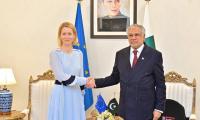
Deputy Prime Minister and Foreign Minister Ishaq Dar held a phone call with Iran’s Foreign Minister Abbas Araghchi, discussing the current regional situation and developments of mutual interest, read a statement issued by the Foreign Office.
During the call, DPM Dar conveyed Pakistan’s concerns over Israel’s ceasefire violations in Lebanon. He emphasised the importance of ensuring that “the ceasefire is sustained in order to prevent any breakdown of existing understandings”, read the communique.
In the telephonic conversation with Dar, the Iranian foreign minister voiced concern over recent developments in the region, including ceasefire violations by Israel and orders regarding potential attack in parts of Beirut.
Acknowledging Pakistan’s constructive role in regional diplomacy, Araghchi requested Islamabad to continue its efforts to “help facilitate de-escalation” in the region and support efforts to maintain the ceasefire.
Deputy Prime Minister/Foreign Minister Senator Mohammad Ishaq Dar Monday received a telephone call from Egypt’s Foreign Minister, Badr Abdelatty and discussed the latest developments in the region, APP reported.
They emphasised the need for sustained diplomatic engagement to promote peace and stability, particularly at this stage. Both sides agreed to remain in close contact.
Oil prices jumped and equities struggled on Monday as Middle East peace talks stumbled and tensions mounted between Iran and the United States.Crude futures shot around seven percent higher after an Iranian news agency announced Tehran had suspended the negotiations with Washington via mediators.
The spike in oil prices sucked the air out of an AI-fuelled stocks rally. Wall Street had been set for a higher open, but the oil price rise sent New York’s main three indices lower as trading got underway.
The S&P 500 and tech-heavy Nasdaq Composite managed to poke into positive territory, helped by gains of more than four percent in Nvidia shares.Brent North Sea Crude: UP 6.6 percent at $97.15 a barrel; West Texas Intermediate: UP 7.6 percent at $94.01 a barrel
Iranian President Masoud Pezeshkian on Monday promised Japan to enable the passage of its ships through the Strait of Hormuz. “We will try to provide a smooth and easy passage for Japanese ships,” Pezeshkian told Japanese Prime Minister Sanae Takaichi during a phone conversation, according to the presidency.
France’s President Emmanuel Macron said on Monday he had encouraged his US counterpart Donald Trump to pursue his “determined efforts” to reach a ceasefire deal with Iran to end the Middle East war.
In a phone call on Sunday night, “I welcomed the determined efforts he is making to swiftly reach an agreement between the United States and Iran, which represents a unique opportunity to build a new security framework that brings together all the parties concerned, in order to allow for lasting stabilisation of the region,” Macron said on X.
France said it had detained a Russia-linked oil tanker in the Atlantic, with the Kremlin comparing the latest seizure aimed at tackling Moscow’s sanctions-busting shadow fleet to “international piracy”.
The Tagor was detained on Sunday morning in international waters with the help of Britain and other partners, after its Russian captain refused to comply with orders, prosecutors said.Iran on Monday hanged two men convicted of ransacking and burning a mosque during anti-government protests that shook the country in December and January.
“Mehrdad Mohammadinia and Ashkan Maleki, the main perpetrators of the arson attack and destruction of a mosque, were hanged this morning,” Iran’s judiciary announced through its Mizan news agency.
Iran’s Revolutionary Guards navy said 15 ships, including 4 oil tankers, passed through Strait of Hormuz after obtaining permission from Iran in the last 24 hours, Fars reported.Iran will not issue invitations to state officials or foreign guests for this year’s anniversary ceremony marking the death of the Islamic Republic’s founder Ruhollah Khomeini, the event organiser said on Monday, Iran International reported.
The secretary of the central committee organising the June 4 ceremony said no official invitations had been sent to ministers, lawmakers, heads of institutions or military commanders. He said the decision was made for several reasons known to the system’s decision-makers.
Israeli Prime Minister Benjamin Netanyahu said on Monday that he had told US President Donald Trump that Israel would attack “terror” targets in Beirut if Hezbollah did not cease its attacks on Israeli cities.“At the same time, the IDF will continue to operate as planned in southern Lebanon,” Netanyahu said in a statement, referring to the Israeli military.