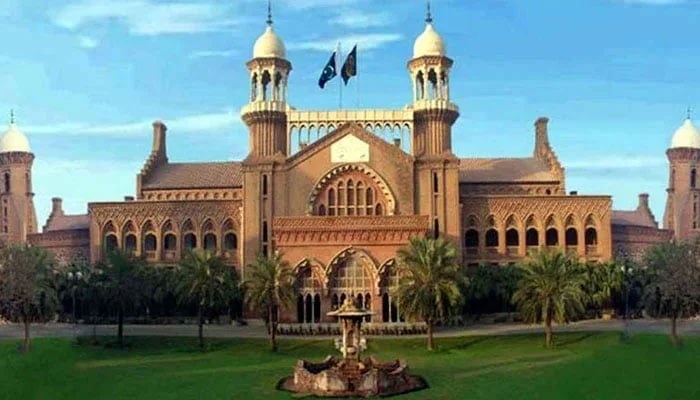
LAHORE: The Lahore High Court (LHC) has issued an important ruling regarding dower (Haq Mehr) in family disputes.
In the 11-page judgment, Justice Sajid Mahmood Sethi held even if dower is not mentioned in marriage contract (Nikahnama), a separately executed agreement determining dower remains legally enforceable.
The court ruled disputes relating to dower fall within the jurisdiction of Family Courts. It further observed under the Constitution, high court’s jurisdiction cannot be used as a substitute for an appeal against decisions of subordinate courts.
The court clarified dower is a mandatory obligation upon the husband and a legal right of the wife, which cannot be silently extinguished during the marriage. A husband has the legal authority to increase the amount of dower or add property to it even after marriage.
The court noted the e-stamp policy is intended for tax regulation purposes, and a dower agreement written on ordinary stamp paper is not invalid. Dower may be determined orally, in writing, or even after marriage, and Muslim family laws permit a husband to enhance the dower after marriage.
The court held Nikahnama is not the sole or final document governing terms of dower, as dower can be settled before, during, or after marriage. It further ruled if a person alleging forgery refuses forensic examination of signatures, such a stance is not acceptable. Family Courts are not bound by strict technical requirements of Civil Procedure Code or the law of evidence.
The court held a husband is bound not only by the dower recorded in the Nikahnama but also by commitments made in a separate agreement.
A woman had filed a claim seeking recovery of a five-marla house as part of her dower and maintenance expenses during “iddat” period. She contended on the day of marriage, her husband had executed a separate agreement promising to give her a five-marla house.
The judgment states dower is wife’s legal and religious right. It is neither a favour nor a matter of husband’s discretion but rather a debt owed by him.
The court emphasised a wife’s failure to demand dower during marriage cannot be treated as a waiver of her right, since many women do not assert their rights due to social and family pressures.
The husband argued before the court the agreement concerning five-marla house was forged and had been prepared later. However, both witnesses to the document appeared before the court and confirmed its authenticity. The court observed burden of proving forgery lies on the person making allegation.
It noted the husband opposed forensic examination of signatures and thumb impressions, which weakened his case. The court remarked a person telling the truth should not fear scientific examination.
The court further held the fact that only Rs5,000 was recorded as dower in the Nikahnama did not invalidate separate agreement. According to the court, family matters require courts to consider social realities in addition to technical legal points, and primary objective of Family Courts is to resolve family disputes with fairness and balance.
The court dismissed the appeal filed by citizen Muhammad Khan, upheld Family Court’s decision, and confirmed the ruling in favour of Anwar Bibi regarding her dower claim.