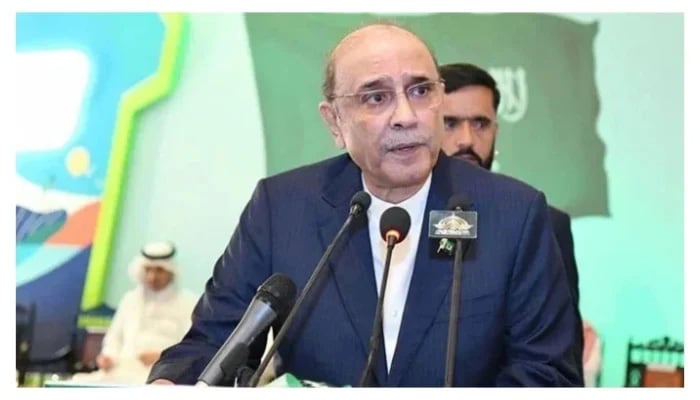
Islamabad : President Asif Ali Zardari has called for collective action to protect current and future generations from the harmful effects of tobacco products.
“The time has come that besides other measures, our parliament and provincial legislatures also make laws and create effective enforcement mechanisms to protect our people and future generations [from tobacco harms] and effectively resist the merchants of death,” the president said in a message on 'World No Tobacco Day' being marked today (Sunday).
He said besides parliament and the government, parents, teachers, artists, poets, singers, musicians, actors, playwrights, healthcare professionals and community leaders also had a role in shaping awareness, discouraging the use of tobacco products and creating an ecosystem to protect people.
“Change at the household and community level can contribute meaningfully to national progress in public health,” he said.
President Zardari said it had been almost 400 years since early writings first drew attention to the health hazards of tobacco.
He said for decades, there had been a strong consensus in the scientific and health community that tobacco products posed serious health and economic risks.
The president said the successive governments around the world, working with civil society, had taken a range of measures through regulation and awareness to reduce tobacco use.
He, however, noted that tobacco use continued to pose a serious threat to public health and economic well-being across the world, including Pakistan.
“The World Health Organisation estimates that tobacco causes more than seven million deaths every year worldwide, including around 1.6 million deaths from second-hand smoke exposure. These figures should compel us to reflect on the scale of a public health challenge that continues to affect millions of people and families,” he said.
President Zardari said children and young people remained particularly vulnerable.
He said the tobacco and nicotine industry continued to target younger generations through evolving products and marketing approaches designed to create and sustain addiction.
"Early exposure to nicotine heightens the risk of lifelong dependence, adverse health outcomes and limited future opportunities," he said.
The president said the latest research showed that globally and in Pakistan, the use of cigarettes, e-cigarettes, vaping devices, nicotine pouches and other nicotine products presented growing public health concerns.
He said there was evidence of concerning patterns of poly-substance use, where tobacco and nicotine products might coexist with other harmful substances, creating serious risks for young people and communities.
President Zardari said stronger awareness, regulation and prevention efforts were essential.
He said that widespread second-hand smoke exposure increased children’s vulnerability to asthma, pneumonia, ear infections, low birth weight and sudden infant death.
“The impact extends beyond health, placing a heavy burden on families and health systems. Tobacco products are also closely linked with a growing burden of non-communicable diseases, including cardiovascular disease, cancer and chronic respiratory conditions,” he said.
The president noted that those illnesses affected individuals and families in deeply personal ways and placed sustained pressure on the hospitals, clinics and public health services.
He said for many households, the impact was not abstract.
"A working-age parent falling ill, repeated hospital visits, the cost of long-term treatment and reduced earning capacity can quickly strain already limited household resources. These pressures are felt in everyday life, from missed school days for children to the difficulties families face in managing routine expenses," he said.