Pakistan’s trade future depends on one big shift: from tariff walls to trade strength. By cutting policy distortions, lowering production costs, powering industry through domestic electricity, diversifying exports and opening stronger routes to neighbouring markets, Pakistan can turn trade from a source of pressure into a driver of growth, stability and regional influence.
In Pakistan, trade policy is closely linked with economic governance because it influences industrial development, export competitiveness, import regulation, revenue collection, foreign exchange stability, employment generation and access to international markets. International trade has long been considered an important component of Pakistan’s economy, while services trade, digital trade, information technology and digital financial services are increasingly viewed as emerging areas for expanding exports and improving the country’s integration with global markets.
The role of the trade policy is therefore not limited to controlling imports or promoting exports; it also provides a framework for value addition, market diversification, industrial upgrading, and the movement of goods and services across borders. Pakistan’s trade policy has passed through different phases of liberalisation, protection and reform. A major shift occurred between 1996/97 and 2002/03, when Pakistan removed most traditional quantitative restrictions, reduced the unweighted average tariff from about 42 per cent to 17.3 per cent and simplified the tariff structure from 14 slabs to 4 slabs. This period helped Pakistan benefit from the global trade expansion of the early 2000s, and the country’s exports, measured in nominal US dollars, increased by 110 per cent between 2001/02 and 2007/08.
However, later policy changes again increased tariff complexity; by 2009/10, Pakistan’s tariff structure had expanded to at least 9 standard rates ranging from zero to 50 per cent, while 54 per cent of tariff lines in 2010/11 were subject to at least one SRO-related special condition. These figures show that Pakistan’s trade policy has been shaped not only by export targets and import controls, but also by tariff rationalisation, regulatory duties, customs administration, SRO-based concessions, preferential trade agreements and sector-specific protection.
Successive trade policy frameworks have sought to shift Pakistan from traditional export sectors toward more competitive, value-added sectors. The 2015–18 trade policy framework focused on improving Pakistan’s share of global trade, expanding market access, and negotiating bilateral, regional and multilateral trade arrangements. Its priority markets included countries and regions such as China, Iran, Afghanistan, the EU, Saarc, Asean and the GCC, while its sectoral focus included textiles, leather products, surgical goods, sports goods, meat, horticulture, basmati rice and other export-oriented products.
The 2020–25 framework placed stronger emphasis on export diversification, competitiveness, tariff reduction on raw materials, technology-based production, pharmaceuticals, engineering goods, automobile parts and improved standards for entering international markets.
This shift reflects Pakistan’s effort to align its trade policy with evolving global business trends, in which digitalisation, technology, quality standards, efficient supply chains and product diversification are becoming central to export success. The Covid-19 pandemic further highlighted the importance of flexible and forward-looking trade policy. Disruptions in global supply chains affected exports and imports, while demand increased for pharmaceutical goods, medical supplies, masks, protective garments, food products and online trade platforms.
For Pakistan, this created space to rethink trade priorities by linking domestic production with international demand, especially in pharmaceuticals, health-related goods, agri-food products, textiles and digital services. From an empirical perspective, evidence from 1990 to 2023 indicates that Pakistan’s trade policy must be understood within the broader macroeconomic framework, as economic growth is linked to the money supply, government expenditure, and trade openness. The study reports positive coefficients for money supply (0.350) and government expenditure (0.102), while trade openness shows a negative coefficient of -1.90, indicating that trade policy outcomes depend on the broader quality of economic management and institutional coordination.
Pakistan’s trade policy remains constrained by a long-standing inward-looking and import-substitution approach that has limited the country’s ability to build a competitive, diversified and export-oriented economy. Although trade policy frameworks have repeatedly aimed to expand market access, promote value addition, and diversify exports, Pakistan’s trade structure continues to rely heavily on a narrow range of low-value sectors, particularly textiles and basic agricultural products.
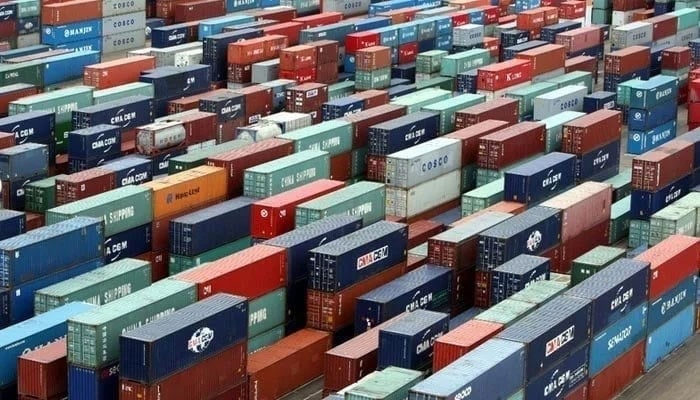
Recent evidence also shows that sectors with comparative advantage, such as textiles, agriculture, meat, and pharmaceuticals, have not fully achieved their export potential due to low productivity, outdated technology, weak quality standards, limited market diversification, high energy costs and insufficient integration with global value chains. Similarly, Pakistan’s heavy reliance on imported fuel, machinery, fertilisers, raw materials and intermediate goods has contributed to persistent trade deficits, exchange-rate pressures, inflationary effects and vulnerability to global supply-chain shocks.
The issue is further deepened by weak economic governance in trade policymaking. Pakistan’s trade regime has been shaped by high tariffs, regulatory duties, import restrictions, SRO-based concessions, complex procedures and fragmented institutional coordination. The lack of effective coordination between key institutions, including the Ministry of Commerce, the Ministry of Foreign Affairs, tariff reform bodies, customs authorities and other economic agencies, has reduced the coherence of trade diplomacy and weakened Pakistan’s ability to benefit from regional and global markets.
Pakistan is also not part of any major trading bloc and has not fully utilised the potential available in bilateral and regional trade agreements with Asian and South Asian economies. As a result, the country’s strategic location has not been effectively leveraged as a trade advantage, while its policy focus has often remained more aligned with protectionism and geopolitics than with competitiveness and geoeconomics. Pakistan’s trade policy challenge is structural rather than temporary. The core issue is that the country’s trade regime has not yet evolved into a coherent, outward-looking and competitiveness-driven framework capable of strengthening exports, reducing import dependence, improving industrial productivity and integrating Pakistan with regional and global value chains.
Exports remain concentrated in a narrow range of low-value products, while the import bill is driven largely by essential inputs such as fuel, machinery, fertilisers, raw materials and intermediate goods. Furthermore, high tariffs, regulatory duties, import restrictions, weak institutional coordination, and limited regional integration have created an anti-export bias and reduced domestic firms’ ability to compete internationally.
Therefore, the way forward is not merely to control imports or set export targets, but to redesign trade policy as a long-term economic governance tool. This requires reforms in tariff rationalisation, export diversification, technology adoption, quality standards, energy efficiency, trade diplomacy, institutional coordination and market-oriented industrial policy to enable Pakistan to expand exports, attract investment, improve productivity and achieve sustainable economic growth.
Pakistan’s trade policy needs a shift from a protection-oriented approach to a performance-based framework that supports long-term export competitiveness. The immediate priority is to simplify the tariff structure, reduce unnecessary regulatory duties, remove ad-hoc SRO-based distortions and lower the cost of imported inputs, machinery and technology for productive sectors. Such reforms would improve exporters’ competitiveness, reduce incentives for smuggling and under-invoicing and address the anti-export bias created by excessive protection.
Pakistan also needs to broaden its export base beyond textiles and basic agricultural products by promoting high-potential sectors such as pharmaceuticals, meat processing, engineering goods, automobile parts, IT, digital services and value-added agriculture. These sectors require modern technology, recognised quality standards, efficient logistics, affordable energy, and easier access to finance, especially for SMEs and new exporters. A key long-term priority should be domestic electricity generation, particularly through renewable and locally available energy sources, to reduce dependence on imported fuel, lower the import bill and provide reliable energy to producers and traders.
Pakistan should also strengthen trade with neighbouring countries through a geoeconomic approach, improved border systems and practical regional connectivity. This can reduce geopolitical tensions, expand nearby markets, lower transport costs and help Pakistan leverage its location to gain a trade advantage. A transparent and coordinated reform roadmap can make trade policy a driver of productivity, investment, employment and sustainable export-led growth.
The writer is a research associate at the Sustainable Development Policy Institute (SDPI), Islamabad.