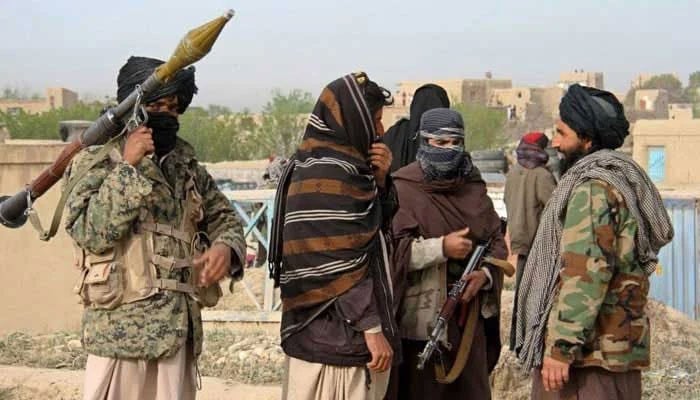
Nearly five years after the Taliban seized Kabul in August 2021, Afghanistan stands dangerously suspended between statehood and strategic collapse. What was presented to the world under the Doha framework as a transition toward peace, inclusivity and stability has instead evolved into a system defined by political exclusion, economic breakdown, militant sanctuary and ideological rigidity.
The tragedy is not confined to geopolitics alone. It is the Afghan people, nearly 40 million of them, who continue to suffer the consequences of Taliban rule every single day.
The Taliban had committed under the Doha process that Afghan soil would not be used against other countries and that an inclusive political order would emerge through intra-Afghan dialogue. Instead, the post-2021 landscape reflects the complete reverse. Afghanistan has increasingly become a hub for regional militancy, while political power remains concentrated within a narrow, Kandahar-centric structure dominated by hardline loyalists and former insurgent commanders.
The demographic imbalance within the Taliban’s governance model is impossible to ignore. Afghanistan is ethnically diverse: Pashtuns account for roughly 40-45 per cent of the population, Tajiks nearly 27 per cent, Hazaras approximately 10-15 per cent, Uzbeks around 9.0 per cent, with Turkmen, Baloch, Nuristanis, and other minorities forming the remainder. Yet more than 85 per cent of key ministries reportedly remain under Pashtun control and are closely linked to the Kandahar Shura and Rahbari network.
The Taliban’s 49-member cabinet includes only two Tajiks, two Uzbeks, two Baloch representatives and one Nuristani. There is no Hazara representation whatsoever. Even more strikingly, there is not a single woman in the governing structure of a country where women constitute nearly half the population.
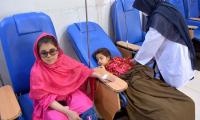
Afghanistan has effectively become one of the only modern states where women have been systematically erased from public life. Before 2021, nearly 3.5 million Afghan girls attended schools and universities. Women served as ministers, judges, professors, journalists, doctors, police officers and entrepreneurs. Today, most girls above sixth grade remain deprived of formal education, women are restricted from large parts of the workforce and female participation in governance has almost entirely disappeared.
The consequences extend beyond human rights. Afghanistan’s economy has been stripped of nearly half its productive capacity. International financial institutions estimate that restrictions on women could cost Afghanistan billions of dollars annually in lost economic productivity. Youth unemployment is soaring, poverty levels have deepened, and humanitarian dependency continues to expand.
Yet while Afghan society internally contracts, militant ecosystems inside the country continue to grow.
Multiple international assessments, including reports by the United Nations Security Council Monitoring Team, Russian security analyses and assessments by the Shanghai Cooperation Organisation and Collective Security Treaty Organisation, indicate that Afghanistan now hosts more than 20 terrorist organisations with an estimated 20,000 to 23,000 fighters operating across different regions.
These include the TTP, Islamic State Khorasan Province, Al-Qaeda and the East Turkestan Islamic Movement. Security assessments suggest that TTP alone maintains approximately 6,000-7,000 fighters inside Afghanistan, while ISIL-K is believed to possess between 2,000 and 3,000 militants with expanding operational capability. These are not dormant networks. They are active, organised and increasingly regional in orientation.
Pakistan has borne the brunt of this security spillover. According to security data, the TTP conducted more than 600 attacks inside Pakistan during 2025 alone, resulting in nearly 2,000 deaths and over 3,600 injuries. Since the Taliban takeover in Kabul, more than 8,000 Pakistanis, including civilians and security personnel, have reportedly been killed in attacks linked to militant sanctuaries operating from Afghan territory.
Pakistani security operations during 2025 reportedly neutralised over 3,079 terrorists, including more than 245 confirmed Afghan nationals. The trend reportedly continued into 2026, including intelligence-based operations in Datta Khel involving Afghan militants with documented cross-border operational histories.
Islamabad argues that it pursued extensive diplomatic engagement before escalating military responses. Pakistani officials cite four foreign minister-level visits, more than 225 border coordination meetings, over 836 protest notes and 13 formal diplomatic demarches requesting action against terrorist sanctuaries and more than 50 militant camps operating across Afghan territory.
Yet little substantive action followed. Instead, Pakistan increasingly concluded that the Taliban leadership was either averse or strategically unwilling to dismantle militant infrastructures linked to cross-border terrorism.
Under Article 2(4) of the UN Charter, states retain sovereignty and territorial integrity, while international law simultaneously recognises the inherent right of self-defence against armed attacks. Pakistan has increasingly framed its security posture through this legal prism, particularly after repeated attacks targeting civilians, infrastructure, and military personnel.
This security context reportedly informed intelligence-based precision operations such as Operation Ghazab Lil Haq, which targeted verified terrorist hideouts and logistical hubs associated with cross-border militancy. Pakistani officials maintain that these operations adhered to internationally recognised principles of proportionality, precaution, and distinction.
Islamabad argues that, unlike militant organisations such as the TTP and allied extremist factions, Pakistani operations deliberately avoid civilian targeting and focus exclusively on verified militant infrastructure. However, a recurring challenge emerges from the operational tactics used by militant groups themselves. Pakistani security narratives increasingly accuse the Taliban and TTP of embedding operational infrastructure within civilian-populated areas, effectively using local populations as human shields to complicate military targeting and generate propaganda narratives surrounding civilian casualties.
This tactic is not new. During the insurgency against the former Afghan Republic, Taliban fighters frequently launched attacks from civilian neighbourhoods, villages, mosques and populated compounds. Critics argue that the same operational strategy continues today, with TTP elements operating from civilian-dense areas near border regions while casualty narratives are amplified politically after retaliatory actions occur.
The regional consequences are no longer limited to Pakistan. Regional spillover is expanding rapidly, with attacks linked to militant networks operating from Afghan territory, while infiltration routes across Central Asia continue to deepen security concerns for neighbouring states.
China, Russia, Tajikistan, Uzbekistan and other regional actors increasingly fear that Afghanistan’s instability could transform into a wider transnational security crisis. For Beijing, which seeks regional connectivity through the Belt and Road Initiative and expanded economic integration across Central and South Asia, Afghanistan’s growing militant ecosystem represents a strategic liability rather than an economic opportunity.
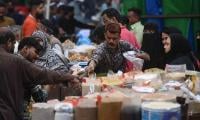
Meanwhile, Afghanistan’s population continues its silent descent into economic despair. Nearly two-thirds of Afghans now reportedly require humanitarian assistance. Millions face acute food insecurity. The banking sector remains weak, investment has collapsed, and sanctions combined with governance restrictions continue isolating Afghanistan from the global economy.
The most dangerous reality, however, may be the generational dimension of this crisis. Afghanistan’s median age is under 19 years old. An entire generation is now growing up amid economic collapse, restricted education, ideological control and shrinking opportunities. This creates fertile ground for radicalisation, organised crime, forced migration and long-term instability.
Afghanistan once had the potential to serve as a bridge among South Asia, Central Asia, China, and West Asia. Instead, it risks becoming the epicentre of a new regional security disorder. The Taliban continue to present themselves as protectors of Afghan sovereignty. Yet genuine sovereignty cannot coexist with militant sanctuaries, systemic exclusion, economic implosion and the suppression of nearly half the population.
The harsh reality is that Afghanistan’s greatest victims today are not foreign powers or regional actors but ordinary Afghans, trapped between ideological governance, militant entrenchment, collapsing opportunity and international isolation. And unless Afghanistan fundamentally changes course, the country risks remaining not a symbol of post-war recovery, but a permanent fault line of instability at the heart of Asia.
The writer is a public policy expert and leads the Country Partner Institute of the World Economic Forum in Pakistan. He tweets/posts @amirjahangir and can be reached at: [email protected]