Islamabad : At a time when Pakistan continues to grapple with economic uncertainty, energy pressures and infrastructure deficits, the China-Pakistan Economic Corridor (CPEC) remains one of the country’s most ambitious and transformative development initiatives. More than a decade after its launch, the project is no longer limited to roads and power plants; it is increasingly shaping Pakistan’s industrial, technological and strategic future.
As the flagship project of China’s Belt and Road Initiative, CPEC has brought investment exceeding $25.9 billion into Pakistan and generated more than 261,000 jobs across multiple sectors. China also accounted for 53.2 per cent of Pakistan’s foreign direct investment between July 2025 and February 2026, underlining Beijing’s central role in Pakistan’s economic landscape.
The scale of infrastructure development under CPEC is unprecedented in Pakistan’s recent history. More than 510 kilometres of modern road infrastructure have been developed, dramatically improving connectivity between major commercial centres and remote regions.
Among the most important projects is the 392-kilometre Sukkur-Multan Motorway, which reduced travel time from 11 hours to just four while creating nearly 29,000 jobs during construction. The second phase of the Karakoram Highway between Havelian and Thakot shortened travel time from five hours to two, strengthening trade and tourism links with northern Pakistan.
Equally transformative has been Pakistan’s energy sector revival under CPEC. Years of crippling electricity shortages had stalled industrial productivity and burdened households. Today, CPEC-backed projects are supplying thousands of megawatts to the national grid.
The 886-kilometre Matiari-Lahore HVDC Transmission Line can transfer 4,000MW of electricity and deliver around 35 billion kilowatt-hours annually, serving nearly 10 million households.
Major power projects include the 1,320MW Sahiwal Coal Power Plant, which supplies electricity to nearly four million families through super-critical technology backed by a $1.8 billion investment. The 720MW Karot Hydropower Project serves around five million people while reducing carbon emissions by 3.5 million tons annually.
The 884MW Suki Kinari Hydropower Project is expected to save 1.28 million tons of coal annually and cut carbon dioxide emissions by 3.2 million tons. Meanwhile, the K-2 and K-3 nuclear power plants generate 2,200MW of electricity and reduce emissions equivalent to planting 140 million trees.
Renewable energy has also become an important component of the partnership. The Dawood and Sachal wind power projects together provide nearly 100MW of clean energy while significantly reducing carbon emissions.
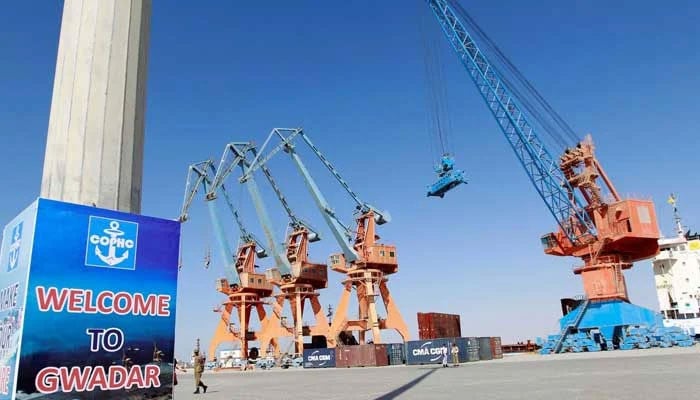
The transformation of Gwadar Port remains one of CPEC’s defining symbols. Once a small fishing town, Gwadar is steadily evolving into a regional connectivity hub equipped with deep-water berths capable of handling large cargo vessels and oil tankers. Supporting infrastructure such as the New Gwadar International Airport, a state-of-the-art 4F-grade facility capable of hosting the world’s largest civil aircraft, further enhances the city’s strategic importance.
Social development projects have also expanded under the corridor. The China-Pakistan Friendship Hospital in Gwadar has treated more than 350,000 patients, while a seawater desalination plant now provides over 3,000 tons of fresh water daily to residents facing chronic water shortages.
Urban mobility has improved through projects such as the Lahore Orange Line Metro Train, Pakistan’s first metro rail system. Spanning 27 kilometres with 26 stations, the line has transported over 280 million passengers during the past five years.
CPEC is now entering a second phase focused on industrialization, agriculture, technology and people-to-people exchanges. The Rashakai Special Economic Zone in Khyber Pakhtunkhwa already hosts 27 enterprises, while the Haier-Ruba Special Economic Zone has generated $400 million in output, paid $120 million in taxes and created 6,000 jobs.
Perhaps the most symbolic development is Pakistan’s growing cooperation with China in space technology. Pakistan is expected to become the first foreign country to send an astronaut to China’s Tiangong Space Station. Several Pakistani satellites, including PAKSAT-MM1 and PRSS-1, have already been launched with Chinese support. As CPEC 2.0 unfolds, the challenge for Pakistan is no longer whether the corridor matters but how effectively the country can maximise its long-term economic and strategic potential.