LAHORE: Pakistan’s economic crisis is increasingly becoming a structural crisis rooted in the very design of the state. The country’s political and administrative architecture has evolved in a way that leaves governments with shrinking room to manoeuvre while economic problems continue to multiply.
The state apparatus still dominates society with cumbersome rules and excessive bureaucratic control. Despite repeated promises of reform, the colonial-style administrative structure remains largely intact. Bureaucracy continues to enjoy enormous discretionary powers over businesses, investment and public affairs. Successive governments have failed to dismantle this hold because meaningful reforms require sustained pressure from civil society, academia, business groups and political parties. Unfortunately, such collective pressure has rarely emerged in Pakistan.
The result is a state where regulations often obstruct productivity rather than facilitate it. Investors spend more time navigating permissions and uncertainty than focusing on innovation and expansion. Economic efficiency suffers when decision-making remains centralised and overregulated.
Compounding this problem is the country’s long history of conflict and security-centred policymaking. Pakistan has either remained at war or in preparation for war for most of its existence. This reality has profoundly shaped budgetary priorities. National budgets are not prepared in a vacuum; policymakers must balance economic requirements against the demands of powerful institutions and entrenched interests.
This has left fewer resources for education, health, research, infrastructure and social welfare. The opportunity cost of decades of insecurity has been enormous. Countries that invested consistently in human development and industrial modernisation surged ahead, while Pakistan remained trapped in cycles of stabilisation and crisis.
The situation has become even more complicated after the 18th Amendment and the National Finance Commission (NFC) Award. Provinces now receive nearly 59 per cent of federal tax revenues. While provincial autonomy is politically irreversible, the federal government is left with a dangerously narrow fiscal space. The remaining share is insufficient even to cover debt servicing and defence expenditures, let alone development spending and subsidies on electricity and food.
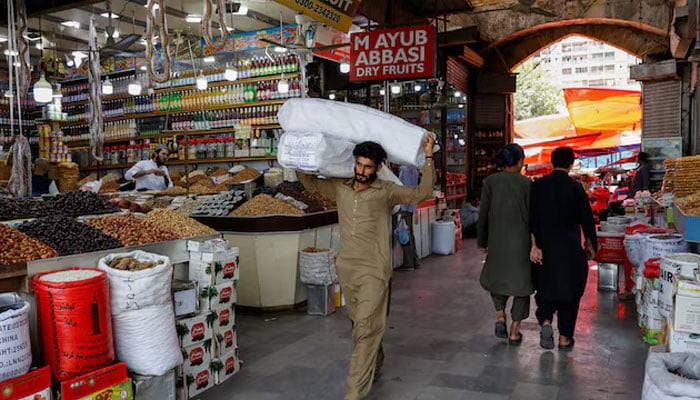
This imbalance explains why Islamabad increasingly relies on indirect taxes and non-divisible levies such as petroleum charges. These taxes are easier to collect and remain outside the divisible pool shared with provinces. However, they disproportionately hurt the poor and middle classes. Rising fuel and energy costs increase transport expenses, food inflation and overall cost of living, making economic growth socially painful and politically unsustainable.
The federal government’s desperation for revenue is visible in every mini-budget and tax measure imposed under IMF programmes. Yet even aggressive taxation cannot resolve the structural imbalance. Without changes in revenue-sharing mechanisms or a substantial increase in the overall tax base, the federation simply cannot meet its growing obligations.
Agriculture taxation remains the clearest example of political paralysis. Since agriculture falls under provincial jurisdiction, no federal government dares legislate in this area. Provincial governments, dominated by influential landed interests, have shown little appetite for meaningful agricultural taxation. As a result, one of the largest sectors of the economy remains undertaxed while salaried classes and documented businesses bear increasing burdens.
Political polarisation has made consensus-building nearly impossible. The federation needs additional resources to finance obligations such as the development needs in Khyber Pakhtunkhwa after the former FATA merger, yet provinces are unwilling to sacrifice their shares. Sindh, in particular, resists any attempt to reopen the NFC debate. In the prevailing political climate, cooperative federalism appears more like a slogan than a functioning reality.
Nothing has fundamentally changed in principle over the decades; only the magnitude of the crisis has increased. Political instability, inconsistent economic policies and weak institutional coordination continue to deny Pakistan the sustained growth necessary for survival.
The harsh reality is that Pakistan’s fiscal crisis cannot be solved through temporary taxation measures or foreign loans alone. It requires a national dialogue on the structure of the federation, the distribution of resources, documentation of agriculture and wholesale trade, reduction in bureaucratic overreach and creation of a genuine tax culture.
Without such reforms, the state will continue squeezing the already taxed segments of society while growth, investment and public trust remain the ultimate casualties.