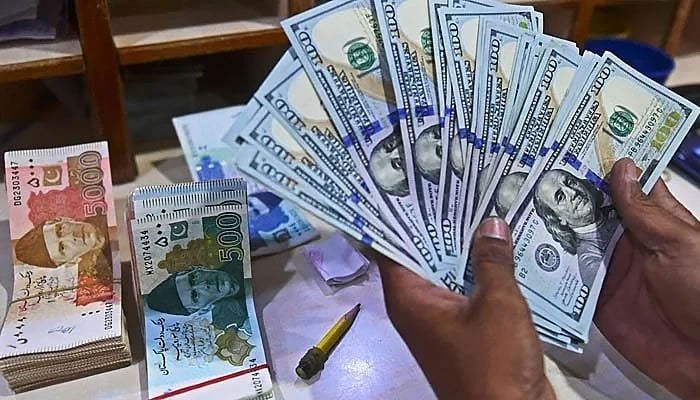
KARACHI: Pakistan’s foreign exchange reserves held by the central bank stood at $17.081 billion as of May 15, following disbursements from the International Monetary Fund under existing loan facilities and proceeds from the issuance of Panda Bonds, the State Bank of Pakistan said on Thursday.
Reserves had totalled $15.867 billion in the previous week.
“During the week ended on May 15, 2026, the SBP’s FX reserves increased by $1,214 million to $17,081. million,” the SBP said in a statement.
“The increase in the SBP’s FX reserves is mainly due to the receipt of funds from the IMF under the Extended Fund Facility (EFF) and Resilience and Sustainability Facility (RSF), and proceeds from issuance of panda bonds. There were some external debt repayments as well,” it added.
The country’s total liquid foreign reserves rose by $1.252 billion to $22.588 billion during the reporting week. The reserves of commercial banks also increased by $38 million to $5.507 billion.
Last week, Pakistan completed its first-ever issuance of yuan-denominated sovereign panda bonds in China’s onshore capital market, raising the equivalent of $250 million in yuan. This issuance occurred just two days after the SBP received approximately $1.3 billion from the IMF under EFF and RSF. Additionally, Pakistan had secured a $3 billion deposit from Saudi Arabia, which included an extension of earlier deposits totalling $5 billion. In April, Pakistan made repayments totalling $3.5 billion to the United Arab Emirates and $1.3 billion for a Eurobond.
Last month, the central bank projected that its FX reserves would exceed $18 billion by the end of this fiscal year.
Analysts said the country’s balance of payments position remains stable in the near term, supported by financing inflows. However, rapid import growth, compared with exports, widens the trade gap, pressures the external account, and drives reliance on external financing.
Pakistan’s current account slipped to a deficit of $324 million in April from a surplus of $1.134 billion in the previous month. The country posted a current account deficit of $12 million in April 2025. The shortfall was $252 million in 10 months of the fiscal year 2026. This compares with a surplus of $1.7 billion seen in the same period last year.